DbcultAccessing Vault...
6.6/10
Senior Film Conservator
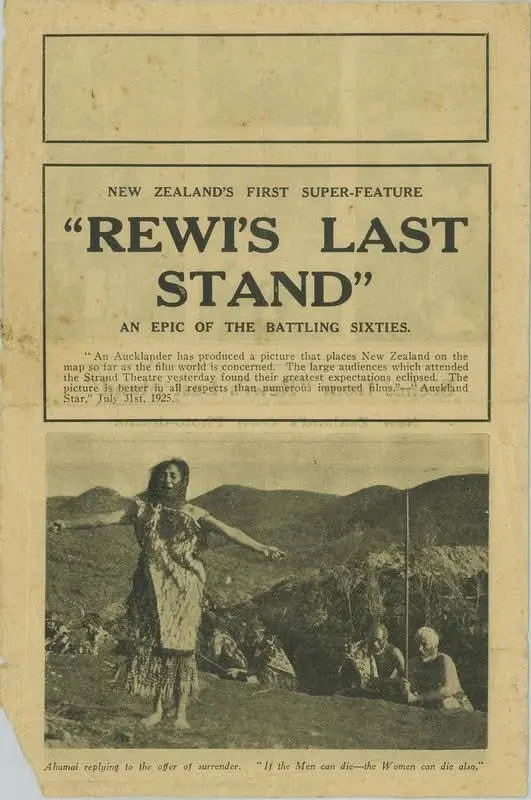
A definitive 6.6/10 rating for a film that redefined the boundaries of cult cinema. Rewi's Last Stand remains a cornerstone of transgressive art.
Is Rewi's Last Stand worth watching today? Short answer: yes, but with significant caveats that demand a discerning viewer. This film, a product of its time, offers a unique, albeit problematic, window into a pivotal moment in New Zealand history, making it essential viewing for historians and those interested in colonial cinema, but potentially frustrating for audiences seeking modern narrative sensibilities or unbiased historical representation.
It's a film for those who appreciate the raw, unfiltered perspectives of early filmmaking, particularly in its portrayal of historical conflicts, and for anyone keen to understand the cinematic lens through which such events were initially framed. Conversely, it is decidedly NOT for viewers seeking a nuanced, contemporary understanding of indigenous perspectives, nor for those who demand fast-paced storytelling and polished production values.
This film works because... it offers an unparalleled, if contentious, historical document of New Zealand's colonial narrative, capturing the anxieties and perspectives prevalent at the time of its production.
This film fails because... its narrative often succumbs to the biases of its era, presenting a one-sided view of the Māori-Pākehā conflict that can feel reductive and culturally insensitive by modern standards.
You should watch it if... you are a student of history, early cinema, or New Zealand culture, prepared to engage critically with its content and context.
Rewi's Last Stand plunges viewers into the fraught winter of 1863, a period defined by simmering fear and escalating conflict in colonial Auckland. The film immediately establishes a pervasive sense of unease, painting a picture of a European settlement gripped by apprehension over the actions of Māori rebels. This opening gambit, while effective in setting a tense atmosphere, immediately signals the film's inherent perspective: one firmly rooted in the colonial experience, viewed through the lens of those who perceived themselves as under threat.
The arrival of Sir George Grey, England's pro-consul, is presented as a moment of hope, a beacon of imperial authority dispatched to 'handle these difficulties.' This framing, while historically accurate in terms of his role, glosses over the deeper complexities of Māori sovereignty and resistance, positioning the conflict as a simple matter of control rather than a clash of legitimate claims. It’s a subtle but crucial distinction that permeates the entire narrative, shaping how characters and events are ultimately portrayed.
Central to the human drama is the burgeoning friendship between Dr. Wake's daughter, Cecily, and the young Englishman, Kenneth Gordon. Their innocent connection provides a fragile counterpoint to the escalating violence, a momentary respite before the harsh realities of the Waikato War consume them. This personal narrative thread is arguably the film's most accessible element, offering a relatable entry point into a historical period that, for many, remains distant and complex. Yet, even here, the romanticized innocence feels somewhat at odds with the brutal backdrop.
As the war intensifies, Gordon's decision to join Von Tempsky's Corps of Forest Rangers marks a definitive shift, pulling the personal into the political. This transition is handled with a sense of inevitability, portraying his enlistment as a duty-bound response to the crisis rather than a multifaceted choice. The film, in this regard, serves as a powerful, albeit one-sided, testament to the perceived heroism and sacrifice of the colonial forces, an aspect that modern audiences will undoubtedly scrutinize for its lack of balance.
The film’s greatest strength, paradoxically, lies in its unflinching commitment to its chosen perspective. It doesn't shy away from depicting the fears and motivations of the European settlers, however narrow that view might be. The visual language of the period, from the austere colonial architecture to the rugged New Zealand landscapes, lends an undeniable authenticity to the setting, even if the narrative itself feels less complete. It works. But it’s flawed.
The cast of Rewi's Last Stand navigates a narrative that often prioritizes historical sweep over nuanced character development, yet several performances manage to etch themselves into the viewer's memory. Frank Remo, as one of the prominent colonial figures, delivers a portrayal marked by a certain stiff-upper-lip resolve that was characteristic of the era's dramatic conventions. His presence grounds the European perspective, embodying the anxieties and determination of the settler community with a stoic gravitas.
Wightman McCombe, likely playing a figure of authority or a military officer, adds a layer of command to the proceedings. His interactions often serve to push the plot forward, particularly in the escalating military engagements. While not deeply introspective, his performance provides the necessary backbone for the film’s depiction of organized colonial response. The dynamic between these European actors often feels like a stage play, with clear lines of dialogue and defined roles, which can sometimes feel dated but is historically fascinating.
The most compelling, and arguably most challenging, performances come from those portraying the Māori characters. Hiti Paerata, in particular, stands out. Given the film’s title and the historical context, one can infer Paerata likely portrays a significant Māori figure, perhaps even the titular Rewi or a close associate. Paerata brings a quiet dignity and a palpable sense of resilience to their role, often communicating more through gaze and posture than through dialogue. In a film that risks reductive portrayals, Paerata’s performance offers a glimpse of the human complexity on the Māori side, subtly challenging the film's dominant narrative.
Nola Casselli and Cadia Taine, likely portraying Cecily and other female characters, embody the vulnerabilities and domestic concerns of the colonial women. Their performances, while constrained by the period’s expectations for female roles, effectively convey the personal stakes involved in the conflict. Their scenes provide a vital emotional counterpoint to the masculine-dominated battle sequences, reminding the audience of the lives disrupted beyond the battlefield. The burgeoning friendship between Cecily and Kenneth Gordon, portrayed by an earnest young actor (Kenneth Gordon himself, or another performer), feels genuinely innocent, yet tragically fragile in the face of war.
The inclusion of 'Rewi Maniapoto' in the cast list itself is a fascinating, almost meta-textual element. While it’s highly improbable the historical Rewi Maniapoto himself participated in a dramatic film of this nature, the listing suggests either an actor named Rewi Maniapoto played the character, or it’s a deliberate nod to the historical figure’s presence within the film’s narrative fabric. If an actor by that name delivered the performance, it adds an unusual layer of authenticity or coincidence. Regardless, the *character* of Rewi Maniapoto, as depicted, is central to the film's tragic arc, representing the defiant spirit of Māori resistance. The actor tasked with this role, whether it was 'Rewi Maniapoto' or another, carries the immense burden of representing a pivotal historical figure, and the film's success in conveying this defiance is largely dependent on that portrayal's power.
The directorial vision behind Rewi's Last Stand is one of stark realism, filtered through the dramatic conventions of its era. The film’s director, with limited resources, manages to evoke a palpable sense of place and period. The cinematography, while not employing the sweeping grandeur of later epics, utilizes the natural rugged beauty of the New Zealand landscape to its full advantage. Wide shots of the terrain, often shrouded in the harsh light of winter, emphasize the isolation and the formidable challenge faced by both sides of the conflict.
Pacing in the film is deliberate, almost stately in its initial build-up. The early scenes in Auckland, establishing the fear and the daily lives of the settlers, unfold with a measured rhythm that allows the tension to slowly simmer. This slow burn is occasionally punctuated by moments of sharp drama, such as the initial skirmishes or the scenes depicting the Forest Rangers in action. While some modern viewers might find this pace somewhat languid, it effectively immerses the audience in the historical context, forcing a contemplation of the slow, grinding nature of historical conflict. It's a testament to a less frenetic form of storytelling, prioritizing atmosphere over constant action.
The tone of the film is predominantly somber, reflecting the gravity of the war. There are moments of fleeting hope, particularly in the interactions between Cecily and Gordon, but these are consistently overshadowed by the pervasive sense of impending doom. The film doesn't shy away from the brutality of war, though it often depicts it with a certain theatricality common in earlier cinema. The scenes involving Von Tempsky's Corps, for example, are shot with a focus on their disciplined movements and daring tactics, conveying a sense of military prowess, even if the actual combat sequences feel stylized.
One particularly striking element is the film's use of natural light and practical locations. The sense of authenticity derived from filming in actual New Zealand landscapes, rather than relying on studio sets, lends a raw, almost documentary-like quality to certain scenes. For instance, the sequences depicting the Forest Rangers moving through dense bush feel genuinely arduous, conveying the physical challenges of the campaign. This commitment to location shooting, for its time, was quite ambitious and contributes significantly to the film’s enduring visual impact, even if it lacks the polished sheen of contemporary blockbusters. It’s a pragmatic aesthetic that ultimately serves the historical narrative well, grounding the drama in a tangible reality.
Compared to other historical dramas of its era, such as perhaps Integritas (if it explored moral dilemmas of war) or even early war films like Stop at Nothing, Rewi's Last Stand distinguishes itself by its specific geographical and cultural focus. While it shares a certain narrative earnestness with these films, its unique setting and the complex, often tragic, subject matter of Māori-Pākehā conflict give it a distinct identity. The film is less about grand heroism and more about the grim realities of a colonial power asserting its will, observed through a distinctly European lens.
Yes, Rewi's Last Stand is absolutely worth watching today, but with a crucial understanding of its historical context. It is not a film to be consumed passively.
It serves as a vital artifact, offering a window into how historical events were interpreted and presented during a specific period of filmmaking. Its value lies less in its entertainment factor and more in its educational and critical potential.
For those interested in the evolution of cinema or the history of New Zealand, it's an indispensable viewing experience. It provides a primary source for understanding colonial perspectives on the Waikato War.
However, viewers must approach it with a critical eye, prepared to deconstruct its inherent biases and acknowledge its limitations in representing the full, complex narrative of the conflict.
At its core, Rewi's Last Stand grapples with profound themes of conflict and connection, though often through a singular, dominant perspective. The most apparent theme is the clash of cultures and the brutal realities of colonial expansion. The film portrays the Waikato War not just as a military engagement, but as a struggle for control, for land, and for differing ways of life. While the Māori perspective is largely inferred or presented through the lens of colonial fear, their resilience and resistance are undeniably present, even if not fully explored.
The personal connections woven into the narrative, particularly the friendship between Cecily and Kenneth, serve as a delicate counterpoint to the widespread conflict. This relationship highlights the human capacity for connection even amidst division, suggesting a longing for peace that transcends the immediate hostilities. Yet, the film's ultimate trajectory suggests that these personal bonds are often fragile, easily broken by the larger forces of history and war. This tension between individual lives and historical tides is one of the film's more enduring, if understated, strengths.
Duty and sacrifice are also central motifs. Kenneth Gordon's enlistment with the Forest Rangers is presented as an act of patriotic duty, a necessary response to the perceived threat. This narrative choice reinforces the colonial ideal of service and heroism, framing the conflict as a righteous undertaking. However, one could argue that this focus on duty inadvertently sidelines the equally profound sense of duty and determination driving the Māori resistance, creating an imbalanced exploration of the theme.
The film also touches upon the theme of fear and its pervasive influence on a community. The opening scenes, depicting Auckland living in fear of Māori rebels, effectively establish this emotional landscape. This fear, while understandable from the settlers' perspective, also serves to justify the aggressive military response, making it a powerful, if manipulative, narrative device. It's a reminder of how collective anxiety can shape public opinion and policy, a lesson that remains relevant even today.
One unconventional observation is how the film, despite its overt colonial bias, inadvertently highlights the sheer tenacity of Māori resistance. While the narrative positions the 'rebels' as a threat, the very existence of a 'last stand' implies a prolonged, valiant struggle against overwhelming odds. The film's title itself, rather than diminishing the Māori, elevates Rewi Maniapoto to a figure of formidable opposition, a testament to a spirit that refused to be easily broken. This unintended consequence of the narrative, where the antagonist's strength is implicitly acknowledged, makes the film more complex than a simple propaganda piece. It forces a viewer to look beyond the surface, to consider what isn't explicitly stated but is powerfully implied.
Rewi's Last Stand is not a film to be enjoyed uncritically, nor is it a forgotten masterpiece waiting for rediscovery in the traditional sense. Instead, it stands as a robust, if flawed, historical document, a cinematic fossil that offers invaluable insights into the mindset of a particular era. Its importance lies less in its artistic perfection and more in its capacity to provoke thought, discussion, and ultimately, a deeper understanding of how history is constructed and presented through the lens of popular culture. It's a challenging watch, certainly, but one that rewards the patient and critically engaged viewer with a unique perspective on a pivotal moment in New Zealand's past. For those willing to look beyond its limitations and engage with its historical context, Rewi's Last Stand offers a powerful, albeit uncomfortable, journey into a troubled past that continues to resonate today. It’s an essential, if imperfect, piece of cinematic heritage.

IMDb 6.4
1931
Community
Log in to comment.