DbcultAccessing Vault...
Cult Review
Senior Film Conservator
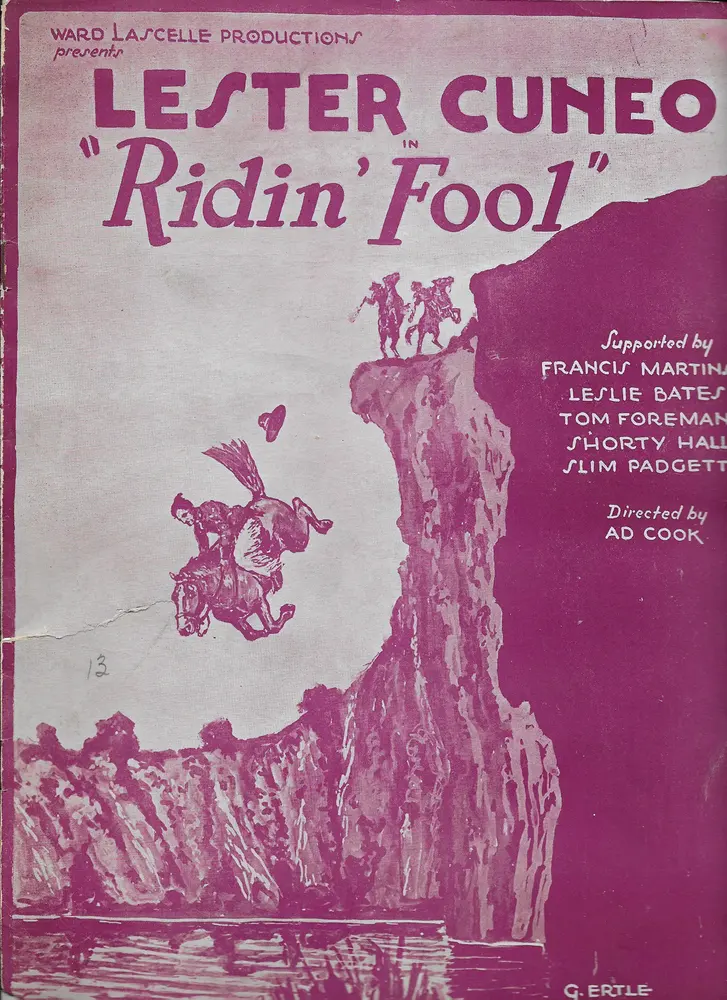
There exists a peculiar, almost haunting quality to the B-westerns of the mid-twenties, a genre often dismissed as mere matinee fodder but which, upon closer inspection, reveals the raw sinews of American myth-making. Ridin' Fool (1924) is a prime specimen of this rugged artistry. Directed by and starring the indefatigable Leo D. Maloney, the film transcends its humble origins through a combination of sheer physical audacity and a narrative pacing that feels surprisingly modern. In an era where cinema was still grappling with its own technical boundaries, Maloney utilized the vast, open canvases of the California scrubland to tell a story that is as much about the landscape as it is about the men who sought to tame it.
To understand Ridin' Fool, one must first appreciate the context of its creation. By 1924, the Western had already begun to bifurcate into two distinct paths: the high-budget, romanticized epics and the 'Gower Gulch' quickies that prioritized action over artifice. Maloney, however, managed to occupy a unique middle ground. His work lacks the saccharine sentimentality found in Nineteen and Phyllis, opting instead for a stoicism that borders on the existential. The 'Fool' of the title isn't a jester, but a man who plays at incompetence to expose the greed of those around him—a trope that would later be perfected by the likes of Clint Eastwood, yet here it feels fresh, unburdened by decades of imitation.
The cinematography in Ridin' Fool is a masterclass in utilizing natural light to convey internal turmoil. The shadows cast by the jagged rock formations aren't just aesthetic choices; they are visual metaphors for the encroaching threats facing our protagonist. Unlike the theatrical, almost stage-bound framing of The Holy City, Maloney’s camera is restless. It follows the horses with a feverish intensity, capturing the spray of dirt and the rhythmic heave of the animals' flanks. This is cinema of movement, a precursor to the kineticism we would later see in the works of John Ford.
The stunts performed by Maloney and his troupe are, quite frankly, terrifying by modern safety standards. There is no CGI to soften the fall, no green screen to simulate the dizzying heights of a canyon chase. When we see a rider plummet or a horse leap across a chasm, the stakes are palpably real. This visceral connection to the physical world is something that has been largely lost in the digital age. It shares a certain DNA with the perilous stunt work in The Phantom Fortune, yet it feels more grounded in the dirt and grime of the frontier.
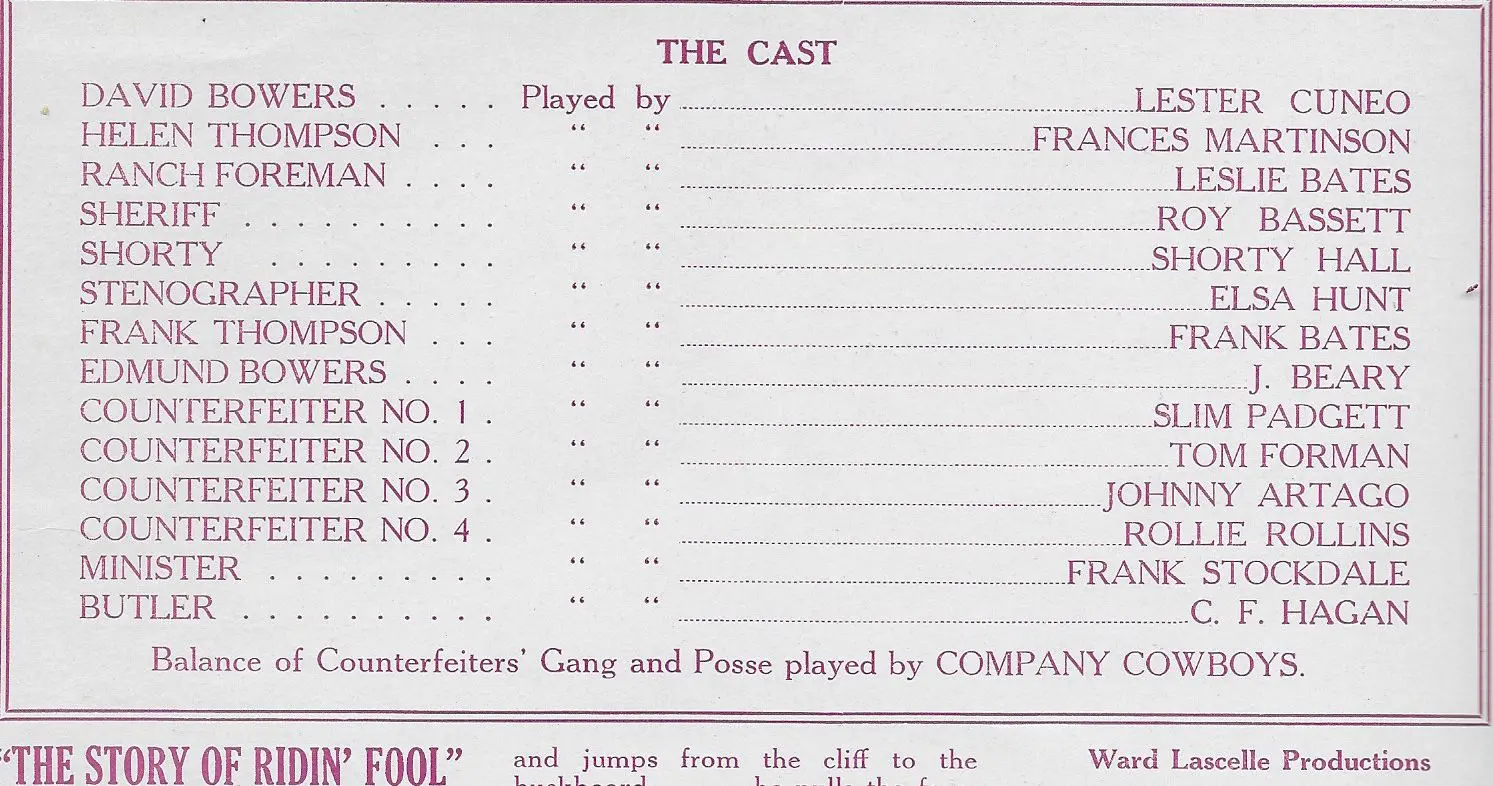
While the film is ostensibly a showcase for Maloney’s equestrian skills, the presence of Elsa Hunt cannot be overlooked. In many Westerns of this period, the female lead was relegated to the role of the 'damsel,' a static prize to be won. Hunt, however, imbues her character with a quiet resilience. Her interactions with Maloney provide the necessary friction to keep the plot from sliding into repetitive action beats. There is a subtextual longing in their scenes together that rivals the more overt romanticism of Who Loved Him Best?, though expressed through glances and shared silences rather than florid title cards.
The supporting ensemble, featuring stalwarts like Lester Cuneo and Roy Bassett, creates a lived-in atmosphere. These are not actors playing cowboys; these are men who look as though they have spent their entire lives in the saddle. Cuneo, in particular, brings a menace to the screen that is far more effective than the cartoonish villainy often found in silent shorts. His performance provides a dark mirror to Maloney’s heroism, suggesting a world where the line between lawman and outlaw is as thin as a razor’s edge.
One of the most fascinating aspects of Ridin' Fool is its refusal to adhere to a strictly linear moral code. There is a moral ambiguity at play here that feels more aligned with the darker themes of The Sons of Satan than with the clear-cut heroics of many of its contemporaries. The 'Fool' operates in the shadows, using deception as his primary weapon. This psychological depth elevates the film above the standard 'shoot-em-up' fare, inviting the audience to question the nature of heroism itself.
When compared to the lighthearted farce of What Happened to Jones or the maritime whimsy of His Briny Romance, Ridin' Fool feels remarkably heavy. It carries the weight of the earth. Even the moments of levity—often provided by the character 'Shorty' Hall—feel tinged with a certain desperation. This is a world of scarcity, where a single mistake can lead to ruin. This sense of impending doom is something it shares with the European sensibilities of Az utolsó éjszaka, suggesting that the Western genre was capable of a universal existentialism that transcended borders.
Leo D. Maloney’s writing deserves significant praise. The script for Ridin' Fool avoids the episodic nature that plagued many silent features. Every scene serves a purpose, building the tension toward a climax that is as satisfying as it is spectacular. The way the plot threads are woven together—the land deed, the hidden identity, the final confrontation—shows a sophisticated understanding of narrative architecture. It lacks the convoluted mystery of The Catspaw, but it gains strength from its streamlined, muscular execution.
The film also toys with the concept of social hierarchy. The 'Fool' is often underestimated because of his perceived status, a theme that echoes the underdog narrative of The Pinch Hitter. However, in the Western setting, this social mobility is achieved through physical dominance and tactical brilliance rather than the structured rules of a sport. It is a quintessentially American fantasy: the idea that a man can reinvent himself through grit and determination.
The preservation of Ridin' Fool allows us to appreciate the subtle textures of the 1920s film stock. The grain of the film adds a layer of grit that complements the dusty setting. There is a sequence involving a chase through a rocky pass that is particularly breathtaking; the way the horses navigate the narrow ledges is captured with a wide-angle lens that emphasizes the scale of the danger. It lacks the supernatural sheen of The Devil-Stone, but its groundedness makes the action feel more immediate and threatening.
Furthermore, the use of title cards in this film is surprisingly sparse. Maloney trusts his actors to convey complex emotions through physicality. This 'show, don't tell' approach is a hallmark of superior silent cinema. It reminds one of the atmospheric tension in Le revenant au baiser mortel, where the mood is built through visual cues rather than explanatory text. In Ridin' Fool, the mood is one of rugged endurance.
Is Ridin' Fool a masterpiece? In the traditional sense of the word, perhaps not. It does not aim for the philosophical heights of the German Expressionists or the technical innovations of the Soviet montage school. However, within the context of the American Western, it is a formidable achievement. It represents a moment in time when the genre was still wild, still exploring its own potential for storytelling. It captures the spirit of the frontier with an honesty that many later, more expensive films would fail to replicate.
The film stands as a testament to Leo D. Maloney’s vision. He was a filmmaker who understood the power of the image and the importance of the stunt. While The Humming Bird might offer more in the way of urban intrigue, and Sawdust might lean into the spectacle of the circus, Ridin' Fool remains focused on the elemental struggle of man against man and man against nature. Even the comedic interludes, which might seem dated to some, serve to highlight the harshness of the world the characters inhabit—much like the contrast between humor and hardship in Squabs and Squabbles.
To watch Ridin' Fool today is to step back into a world where cinema was a visceral, tactile experience. It is to feel the heat of the sun, the bite of the dust, and the thrill of the chase. It is a film that demands to be seen not just as a historical curiosity, but as a living, breathing piece of art. Maloney’s 'Fool' may be a character of the past, but the craftsmanship and passion poured into this film are timeless. For any serious student of the Western or the silent era, this is essential viewing—a dusty, sun-drenched gem that still shines bright after nearly a century.
A note for the modern viewer: While some prints of this film have suffered the ravages of time, the core of the performance and the brilliance of the stunt work remain undiminished. It is a reminder of the ephemeral nature of celluloid and the importance of film preservation.
IMDb 5.5
1934
Community
Log in to comment.