DbcultAccessing Vault...
5.3/10
Senior Film Conservator
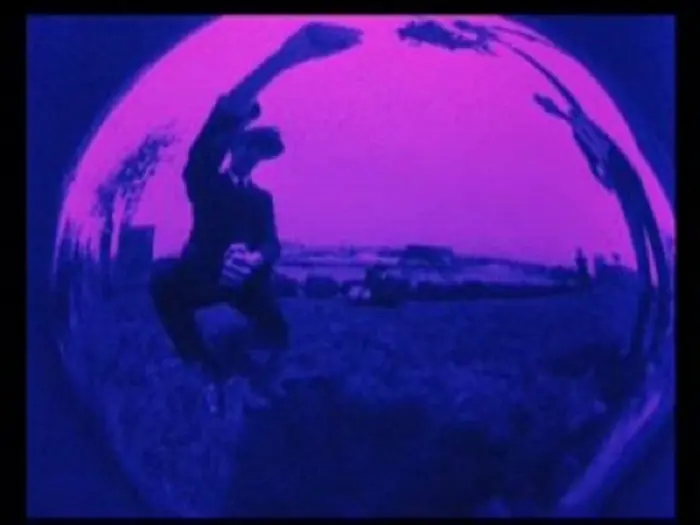
A definitive 5.3/10 rating for a film that redefined the boundaries of cult cinema. Looney Lens: Pas de deux remains a cornerstone of transgressive art.
Cinema, in its nascent decades, was often less about the narrative arc and more about the sheer, unadulterated shock of the visual. In Looney Lens: Pas de deux, we witness a radical departure from the burgeoning realism of the era. While films like The Honor of His House sought to anchor the viewer in moral certainty and domestic stability, Al Brick’s experimental short flings the spectator into a vortex of visual instability. The premise is deceptively simple: two men, a mirror, and the physics of light. Yet, the execution is a profound meditation on the fragility of the human image.
The 'Pas de deux' referenced in the title is not the traditional balletic exchange one might expect from a high-art production of the 1920s. Instead, it is a rhythmic interplay between the performers and their own warped reflections. The spherical mirror acts as a third protagonist, a malevolent yet playful deity that stretches limbs into impossible lengths and compresses torsos into dense, fleshy anchors. This distortion serves as a precursor to the surrealist movements that would soon dominate the European avant-garde, echoing the fragmented identities explored in The White Masks.
Technically, the film is a marvel of early optical trickery. The use of the 'Looney Lens'—a proprietary name for the anamorphic glass employed—creates a visual language that is both claustrophobic and infinite. As the two men move toward and away from the lens, the spatial dimensions of the frame seem to inhale and exhale. It is a breathing cinema. This stands in stark contrast to the static, almost theatrical framing found in During the Plague, where the camera serves as a silent observer of tragedy. Here, the camera is an active participant in the madness.
Al Brick’s performance is one of calculated physicality. He understands that in a world where the body is fluid, every gesture must be amplified. His movements are not merely comedic; they are ontological inquiries. When his arm stretches across the screen like a piece of pulled taffy, we are forced to confront the abstraction of the human form. It evokes a sense of the uncanny that is far more unsettling than the overt deceptions in Somebody Lied. In that film, the lie is narrative; in Pas de deux, the lie is foundational to our visual perception.
Though often dismissed as a mere 'novelty' short, there is a subtext of post-war anxiety lurking beneath the surface of the distortion. The 1920s were a time of rapid industrialization and the mechanization of the self. By reducing the human body to a series of malleable shapes, Brick mirrors the loss of individuality inherent in the modern age. One might compare this to the thematic undercurrents of The City of Masks, where social performance hides the true self. In the 'Looney Lens' universe, there is no true self to hide; there is only the reflection, constantly shifting, never landing on a definitive 'truth'.
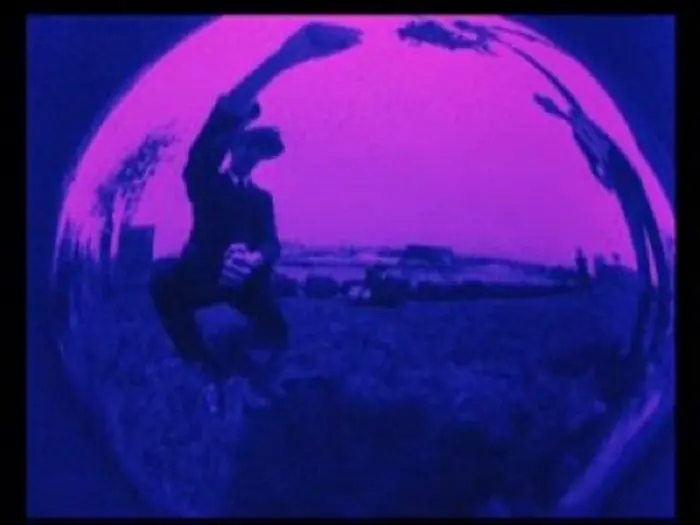
The interaction between the two men is also noteworthy. There is a competitive edge to their movements, a struggle for dominance within the center of the mirror’s focus. This reflects the Darwinian undertones often seen in silent comedies like Be a Little Sport, though stripped of that film’s lighthearted optimism. Here, the struggle is existential. To be out of focus is to cease to exist; to be in the center is to be mutated. It is a cynical, albeit hilarious, take on the human condition.
When placed alongside La luz, tríptico de la vida moderna, the 'Pas de deux' reveals itself as a more focused, albeit more narrow, exploration of 'the modern.' While 'La luz' uses a triptych to explore the breadth of life, Brick uses a single, warped point of view to explore its depth—or lack thereof. There is a certain purity in this limitation. By removing the distractions of plot and setting, the film forces us to reckon with the medium itself. It is a proto-structuralist work that anticipates the flicker films of the 1960s.
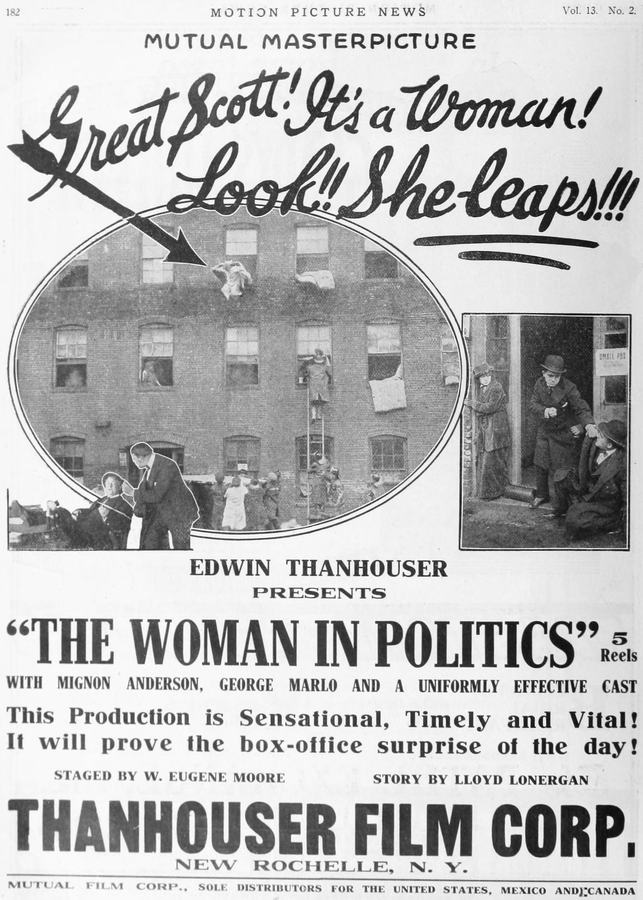
Even in the realm of comedy, the film stands apart. Compare it to the situational humor of Once a Mason or the slapstick of Boman på utställningen. Those films rely on social gaffes and physical mishaps within a recognizable world. Pas de deux creates a world where the mishap is the world itself. The comedy is not in the fall, but in the fact that the floor and the ceiling are indistinguishable from the person falling. It is a sophisticated, cerebral humor that requires the audience to find joy in the collapse of order.
As we look back from the vantage point of the 21st century, the 'Looney Lens' series feels like a missed opportunity for cinema to have taken a much stranger path. While mainstream film eventually settled into the continuity editing and three-act structures of Alias Mary Brown or the dramatic weight of The Faded Flower, Brick’s work reminds us that the camera was once a tool for total visual revolution. It was a time when a filmmaker could be a 'Torch Bearer' (referencing The Torch Bearer) for a new way of seeing.
The film concludes not with a resolution, but with a lingering sense of vertigo. The two men do not exit the frame; they simply dissolve into the curvature of the glass. It is an ending that feels remarkably contemporary—a dissolution of the self into the digital or, in this case, optical ether. It shares a spiritual kinship with the identity-blurring narratives of Der Mann ohne Namen - 1. Der Millionendieb, where the protagonist is defined by his absence and his ability to shift shapes. Brick, however, does not need a plot to achieve this; he only needs the glass.
Looney Lens: Pas de deux is a visceral reminder that cinema is, at its core, an act of light and shadow. It eschews the sentimentality of Winter Has Came and the moralizing of Queens Are Trumps in favor of a pure, unadulterated aesthetic experience. For the modern viewer, it is a brief but potent injection of surrealism, a five-minute journey into a world where the only constant is change. Al Brick may not be a household name, but in this short, he proved himself a master of the plastic arts, carving beauty out of the warped and the weird. It is essential viewing for anyone interested in the boundaries of the frame and the limitless possibilities of the lens.
IMDb 4.8
1935
Community
Log in to comment.