DbcultAccessing Vault...
6.1/10
Senior Film Conservator
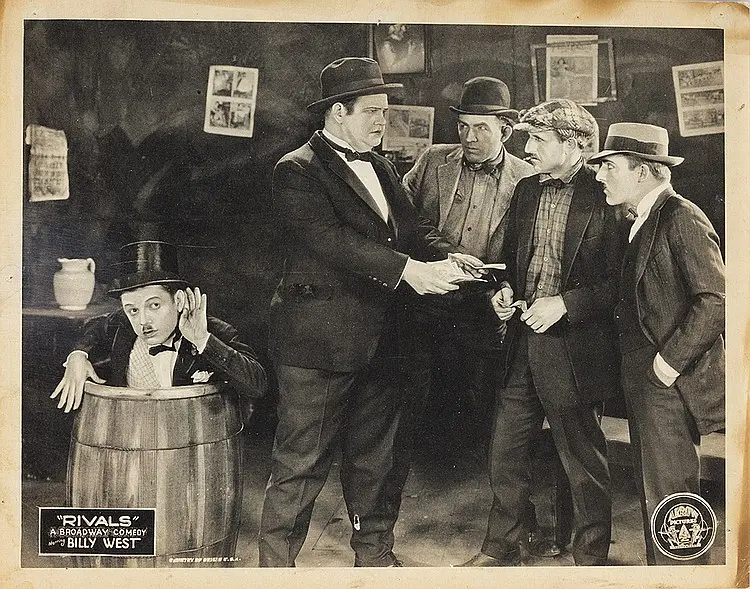
A definitive 6.1/10 rating for a film that redefined the boundaries of cult cinema. Rivals remains a cornerstone of transgressive art.
Rivals, a 1920s silent comedy, is a radiant explosion of rivalry and physical humor that feels both of its time and strikingly modern in its structural audacity. Ethelyn Gibson and Oliver Hardy, two titans of slapstick, play vaudeville stars locked in a grudge-fueled competition to outshine each other’s stage acts. Their rivalry escalates from petty sniping to full-blown sabotage, culminating in a farcical finale that redefines the boundaries of theatrical chaos. The film’s genius lies in its ability to weaponize absurdity—every misdirected letter, every misplaced prop, every collision of timing and timing gone awry, becomes a masterstroke of comedic escalation.
From the opening scene, Rivals establishes its tone with a series of rapid-fire gags. Gibson’s character, a prim and proper tragedienne, receives a letter declaring her rival’s (Hardy’s) latest act a "masterpiece of mediocrity." Hardy, dressed in a comically oversized top hat, storms into her dressing room, only to trip over a misplaced prop ladder—a gag that sets the stage for the film’s relentless physical comedy. The writers, working in tandem with the era’s visual storytelling constraints, deploy a script that prioritizes visual wit over dialogue, allowing the actors to communicate volumes through exaggerated expressions and kinetic movement.
The film’s second act is a masterful study in escalating stakes. A charity fundraiser, meant to showcase both performers in a collaborative performance, spirals into a series of misunderstandings. Gibson’s character, attempting to outshine Hardy, accidentally locks herself in a dressing room. Hardy, in a desperate bid to salvage the event, dons a series of increasingly ridiculous costumes, each more absurd than the last. The standout moment? A "gypsy princess" number that involves Hardy being hoisted aloft by a malfunctioning pulley system, only to crash into a box of costumes. These sequences, while rooted in slapstick tradition, feel fresh due to the actors’ commitment to the chaos.
Ernie Young, as the hapless stagehand, steals scenes with his deadpan reactions to the mayhem. His attempts to maintain order amidst the performers’ antics—like catching a flying script or avoiding a falling chandelier—add a layer of meta-humor. Similarly, Billy West’s cameo as a critic, whose scowling face appears in a newspaper clipping, becomes a recurring visual punchline. The writers’ use of recurring motifs—the newspaper, the pulley, the misplaced letter—creates a sense of cohesion that elevates the film beyond mere gag sequences.
The climax, a duet between Gibson and Hardy, is a tour de force of silent film innovation. The two performers, now forced into a joint performance after a botched charity event, attempt a romantic ballad that devolves into a slapstick ballet. Gibson’s character, in a moment of exasperation, pulls off Hardy’s wig, revealing his bald pate, while Hardy retaliates by slipping on a banana peel. The sequence is a triumph of choreography, blending acrobatics with musical parody. It’s a scene that would feel at home in Felix Puts It Over, but here it’s elevated by the performers’ chemistry and the writers’ clever integration of visual gags.
Comparisons to other comedies of the era are inevitable. All Wet shares Rivals’ love for aquatic gags, but Rivals distinguishes itself with its focus on theatrical rivalry. Meanwhile, Unclaimed Goods’s reliance on mistaken identity is echoed here, but Rivals’ humor is more visceral, rooted in physical comedy rather than verbal wordplay. The film’s influence can also be seen in later works like Hello, Mars!, which similarly uses absurd scenarios to critique societal norms, albeit with a sci-fi twist.
Technically, Rivals is a marvel. The editing is brisk, with cross-cutting sequences that juxtapose Gibson’s and Hardy’s misadventures, creating a sense of simultaneity. The use of shadows and lighting—particularly in the dressing room scenes—adds depth to the visual storytelling. The score, though uncredited, is a character in itself, punctuating gags with a jaunty melody that enhances the comedic timing.
What sets Rivals apart is its thematic resonance. Beneath the layers of slapstick lies a poignant commentary on the performative nature of rivalry. Gibson and Hardy’s characters, for all their antics, are trapped in a cycle of one-upmanship, their competition a metaphor for the futility of ego. The film’s resolution—both performers realizing their futility and joining forces to save the charity event—is a sly subversion of the typical slapstick trope, offering a bittersweet coda to the chaos.
For modern audiences, Rivals serves as a bridge between the slapstick traditions of the 1920s and the more narrative-driven comedies of the 1930s. Its influence is evident in King Tut-Ankh-Amen’s Eighth Wife, where physical comedy is used to deconstruct historical narratives. Yet Rivals remains unique in its ability to balance pure farce with subtle social critique.
Viewers should be prepared for a relentless pace, with jokes that demand close attention. The film’s reliance on visual gags means it rewards repeated viewings, as new details emerge with each watch. Fans of silent film will appreciate the era-specific humor, while newcomers may find the pacing initially disorienting but ultimately addictive.
In conclusion, Rivals is a testament to the enduring power of physical comedy. With its impeccable casting, inventive gags, and thematic depth, it stands as a cornerstone of 1920s cinema. For those seeking a laugh that transcends time, this film is an essential watch. Compare it to the similarly spirited Smarty or the more chaotic Cheating the Public, but be prepared to be charmed by Rivals’ unique brand of rivalry-based hilarity.

IMDb —
1929
Community
Log in to comment.