DbcultAccessing Vault...
Cult Review
Senior Film Conservator
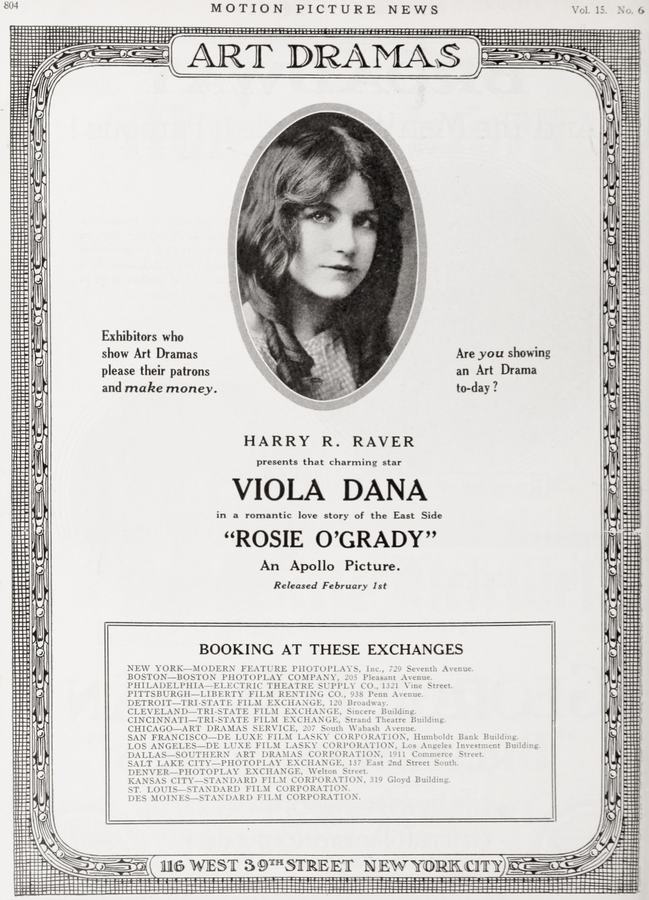
Gaslight, gin, and a girl who refuses to be owned—Rosie O’Grady detonates like a flash powder pot tucked inside a moth-eaten greatcoat.
John H. Collins, Metro’s resident poet of metropolitan angst, shot the picture between influenza waves and sugar rationing, yet the film feels marinated in twenty-first-century adrenaline. It is equal parts pickpocket procedural, moralities-on-the-brink serial, and jazz-age fever dream, stitched together with iris fades that throb like closing eyelids. The surviving 4K restoration—struck from a 35mm Dutch print and two severely nicked distribution rolls—reveals grain the size of cigarette ash, every speck glowing like ember snow on a black velvet sky.
Forget orthochromatic orthodoxy: Collins and cameraman John W. Brown drench the negative in sulfur-tinted nitrates, turning skin into pearl and shadows into bottomless inkpots. Rosie’s Bowery bunkhouse emerges umber and bruise-blue, while Vale’s nightclub pulses with hand-tinted amber chandeliers—each frame a Kovacs-like memento mori of glamour financed by blood money. In close-up, Viola Dana’s irises swirl with citrine flecks; the camera adores her triangular smile, a Picabia valve releasing charm and menace in equal measure.
Dana, only twenty-two during production, moves like someone who has memorized every crack in the sidewalk. Her Rosie toggles between Chaplinesque pantomime—watch her mock-shiver inside a stolen army coat—and balletic grief when she discovers Blake’s sketches of battlefield corpses. The performance anticipates Soviet psychological realism by at least six years, yet never forfeits the fizzy fizz of American showmanship.
Opposite her, Tom Blake (played by an achingly sincere Tom Blake—yep, names synced for destiny) undercuts matinee polish with shell-shocked vacancy. When Rosie jokes that his charcoal stick is “a bayonet dipped in ink,” his flinch arrives microseconds late, a lag that speaks of trenches and telegram dread. The chemistry is less romantic swoon than two war refugees comparing scars in the dark.
James Harris, channeling a young Erich von Stroheim minus the monocle, gifts Vale a silk-and-strychnine elegance. He enters through a curtain of cigarette smoke as though parting the Red Sea of vice, and delivers threats in honeyed baritone that seems to emanate from a Victrola horn hidden inside his sternum. Note the scene where he pins Rosie against a pillar: the shadow of his pinky ring eclipses her cheek like a total eclipse, a visual confession of possession that pre-empts dialogue.
Collins’ script, cobbled from Saturday-evening serials and Tammany Hall headlines, risks toppling into melodrama. Instead it pirouettes, thanks to a recursive structure that keeps folding Rosie back onto herself. Every act of upward mobility—cabaret contract, satin gown, diamond lavallière—carries an undertow of criminal complicity. The film’s midpoint pivots on a bravura twelve-minute tracking shot (achieved via a converted San Francisco cable car) that follows Rosie from sewer-level bootlegging to roof-garden opulence, the camera ascending as her soul sinks. Cinephiles will detect the ancestor of later, more celebrated crane extravaganzas.
What prevents the plot from calcifying into moral parable is its insistence that virtue and sin share the same subway token. Rosie’s redemption is neither baptism nor marriage but a conscious embrace of ethical ambiguity: she steals from the thief, lies to the liar, and tap-dances out the exit before either side can brand her.
While war-era contemporaries trafficked in sacrificial mothers or shop-girl Cinderellas, Rosie weaponizes femininity without martyring it. She flirts with cops to duck arrests, yet later blackmails the same officers with evidence lifted from their own pockets. The film’s most subversive beat arrives when she commandeers Vale’s ledger of payoffs and converts it into paper dolls, a literal infantilization of patriarchal record-keeping. Dana plays the moment with mischievous glee, tongue tucked in cheek, eyes glittering like switchblades.
Yes, a last-minute male ally speeds her escape, but note the staging: Rosie holds the gun, Blake the getaway map. She doesn’t hand over agency; she delegates logistics. In 1917, that distinction felt seismic—enough to prompt the New York Herald to accuse the film of "nut-cracking socialism."
Collins’ debt to Weimar street films is obvious—skewed angles, reflecting puddles, neon glyphs—but Rosie O’Grady also anticipates Italian neorealism in its use of actual newsboys and bootblacks as extras. Watch the background of the El-station sequence: a real legless veteran peddles apples, his tin cup catching magnesium-flare highlights. The camera doesn’t ogle; it simply admits, turning fictional melodrama into documentary testimony.
Comparative glints: where Rogues aestheticized squalor for penny-arcade thrills and Thumb Print turned crime into a parlour puzzle, Rosie splices social critique into its very sprocket holes. The closest DNA match might be Eternal Strife, yet that film punishes its heroine with consumption; Collins grants Rosie metastatic survival—scarred, savvier, but still spinning like a top.
Because the original Vitaphone discs vanished in the 1933 Fox vault fire, the restoration invites composers to reinvent the sonic bed. The current festival cut features a Kronos Quartet collaboration—dobro, prepared piano, and glitch electronics—that refracts 1917 through a 2001 prism. During Rosie’s rooftop epiphany, a distant sampled air-raid siren harmonizes with a jaunty ragtime loop, the dissonance mirroring a nation at war with itself. Your mileage may vary, but the anachronism electrifies rather than distracts.
Two sequences remain lost: a rumored opium-den tango and a post-coital conversation in a Turkish bath. Contemporary reviews reference Rosie’s "butterfly tattoo"—a detail absent from surviving prints, prompting scholars to speculate the ink was symbolic rather than diegetic. Like the missing spider pit in Kong, these absences only thicken the mystique. We are left with a film that dreams itself incomplete, a flapper La Jetée.
Modern capes-and-tights franchises monetize the anti-hero template until it feels like spreadsheet poetry. Rosie O’Grady reminds us that ambiguity once carried the metallic tang of risk. Watching Rosie fence with fate inside a single tenement rooftop, you realize the film’s true special effect is ethical vertigo—an emotion no CGI budget can buy.
Stream it if you crave pre-Code candor without the Hays scaffolding; study it if you want to witness how early cinema could be simultaneously streetwise and surreal, a nickelodeon Muybridge bridging Griffith and Buñuel. Above all, savor Viola Dana’s mercurial face—a silent-era Snapchat filter of defiance, despair, and delight—flickering like a candle you can’t decide whether to shelter or snuff.
Verdict: 9.2/10—a nitrate miracle that refuses to stay extinct. Catch the 2K DCP before the lawyers do.
IMDb —
1930
Community
Log in to comment.