DbcultAccessing Vault...
6.5/10
Senior Film Conservator
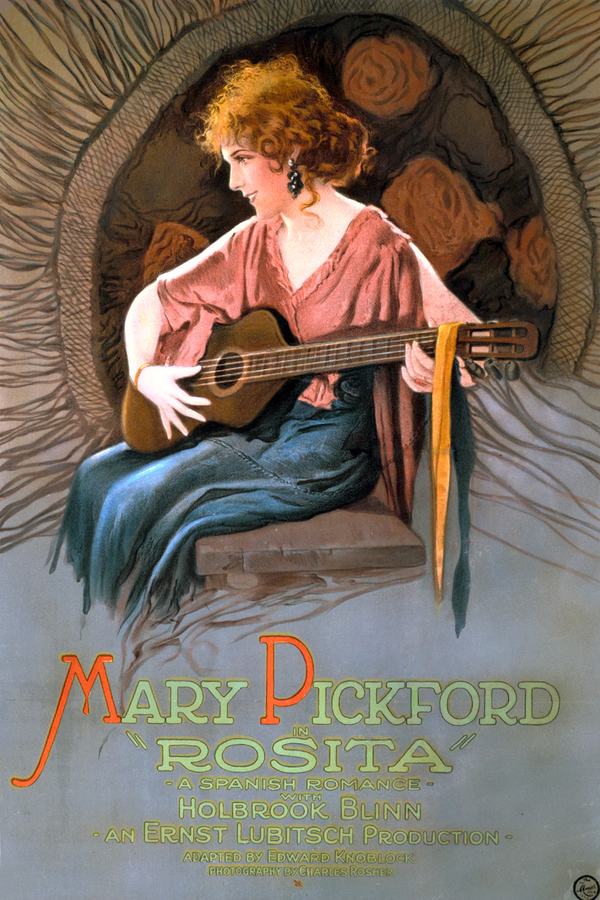
A definitive 6.5/10 rating for a film that redefined the boundaries of cult cinema. Rosita remains a cornerstone of transgressive art.
When the camera first lingers on the bustling market of Seville, the viewer is greeted by a kaleidoscope of color, sound, and movement that feels almost operatic despite the film’s silent nature. The director, Charles Swickard, employs rapid cross‑cutting and exaggerated gestures to convey the cacophony of vendors hawking oranges, the clatter of horse‑drawn carriages, and the lilting strains of a distant guitar. It is within this vibrant tableau that Mary Pickford’s Rosita first emerges, her modest dress a stark contrast to the flamboyant silks of the aristocracy.
Pickford, already an icon of the silent era, infuses Rosita with a paradoxical blend of innocence and steel‑willed determination. Her eyes, wide and luminous, betray a yearning for something beyond the cobblestones, while her posture—always slightly angled toward the sky—suggests an innate aspiration toward the heavens. The moment she sings for a passing troupe of troubadours, the camera tightens, allowing the audience to feel the tremor of each note as if it were a physical force rippling through the square.
The narrative catalyst arrives in the form of the King, portrayed with regal aloofness by Charles Farrell. His arrival is announced by a procession of courtiers, their uniforms resplendent in deep blues and golds that echo the sea‑blue palette of the film’s visual motif. The King’s gaze, lingering on Rosita’s raw talent, becomes the fulcrum upon which the entire plot pivots. The film deftly juxtaposes the opulent interiors of the palace—marble columns, gilded mirrors, and chandeliers that glitter like captured starlight—with the earthy, sun‑kissed streets where Rosita first sang.
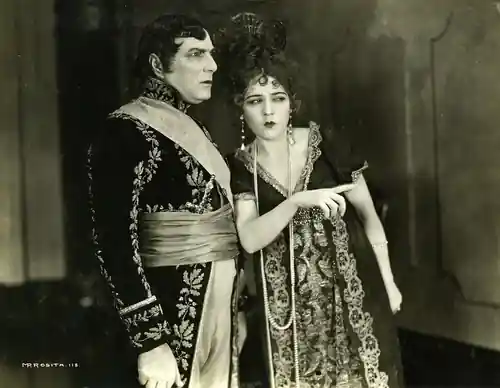
As Rosita is ushered into the royal court, the audience witnesses a metamorphosis that is both literal and symbolic. Her simple peasant dress is replaced by a sumptuous gown of dark orange silk, the hue echoing the film’s recurring color motif and signifying her newfound status. Yet, beneath the lavish fabric, the film never abandons the core of her character: the unrefined, heartfelt music that first captured the monarch’s attention. This tension between external grandeur and internal authenticity fuels the film’s emotional engine.
The screenplay, adapted from the collaborative work of Adolphe d'Ennery, Philippe Dumanoir, Norbert Falk, and Edward Knoblock, is a masterclass in economical storytelling. Dialogue cards are sparingly used; instead, the narrative leans heavily on visual symbolism. For instance, a recurring motif of a wilted rose appears whenever Rosita feels the pressure of courtly expectations, subtly reminding viewers of the fragility of her position.
Supporting performances add layers of complexity. Bert Sprotte, as the king’s cynical advisor, provides a sardonic counterpoint to Rosita’s earnestness, while Wilna Wilde’s portrayal of the jealous lady‑in‑waiting injects a potent dose of melodrama. The chemistry between Pickford and Farrell is palpable, their silent exchanges—glances, hand gestures, the occasional brush of fingertips—conveying a romance that feels both inevitable and fraught with political peril.
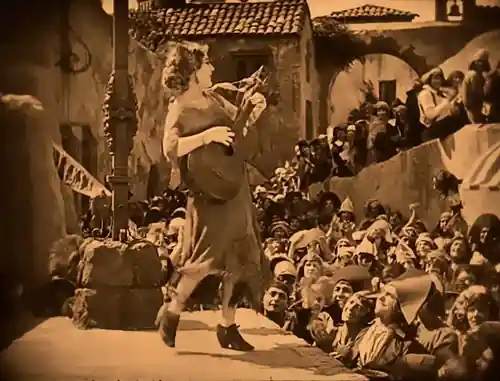
Cinematographer John J. Mescall employs chiaroscuro lighting to accentuate the film’s thematic dichotomies. In palace scenes, shafts of golden light pierce the darkness, illuminating Rosita’s face as she sings, suggesting that her talent is a beacon amidst the shadows of intrigue. Conversely, in the market sequences, the lighting is harsher, casting deep shadows that hint at the socioeconomic chasms the film seeks to critique.
The musical score, though unseen, is evoked through the rhythmic editing and the actors’ synchronized movements. When Rosita performs for the king, the camera’s rapid cuts mimic the tempo of a flamenco dance, while the intertitles—crafted in an elegant, cursive script—provide lyrical poetry that enhances the emotional resonance.
A particularly striking sequence occurs when Rosita, overwhelmed by the court’s machinations, retreats to a secluded courtyard. Here, the sea‑blue hue dominates, the walls painted in a muted turquoise that mirrors the night sky. The scene is shot in a single, unbroken take, allowing the audience to experience her isolation in real time. The silence is deafening, broken only by the distant echo of a church bell—a reminder of the world she left behind.
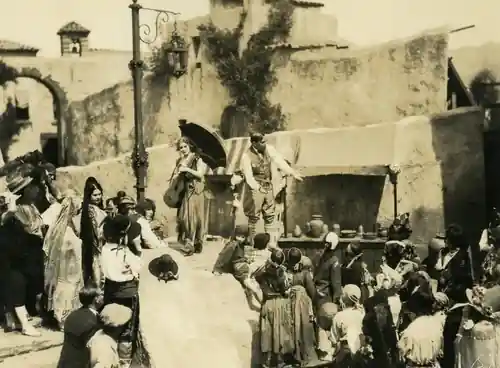
The film’s pacing is deliberate, allowing moments of introspection to breathe between the more melodramatic set pieces. This measured rhythm mirrors the ebb and flow of a traditional Spanish ballad, where verses of longing are interspersed with bursts of exuberant chorus.
When comparing Rosita to contemporaneous works, one can discern a thematic kinship with Hearts and Masks, which also explores the masquerade of identity within aristocratic circles. However, Rosita distinguishes itself through its emphasis on music as a transformative force, rather than merely a narrative device.
The film also anticipates later explorations of class mobility found in Lola Montez, where a performer’s ascent to fame is fraught with moral compromise. In both cases, the protagonists are women whose talents grant them access to power structures that would otherwise remain impenetrable.
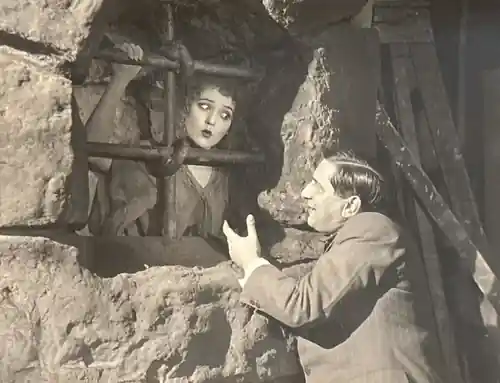
From a production standpoint, the set design is noteworthy for its meticulous recreation of 18th‑century Spanish architecture. The palace’s grand staircase, adorned with intricate wrought‑iron balustrades, serves as a visual metaphor for Rosita’s ascent—each step a precarious climb toward an uncertain destiny.
The film’s climax arrives during a lavish banquet, where Rosita is summoned to perform before the entire court. The camera circles her as she sings, the darkness of the hall punctuated by the flickering glow of candlelight. In this moment, the audience witnesses the convergence of all the film’s central tensions: love, ambition, loyalty, and the ever‑present specter of betrayal.
The resolution, while bittersweet, is thematically resonant. Rosita chooses to return to the streets, not out of defeat but as an act of self‑affirmation. She realizes that true artistry cannot be confined within gilded walls; it must remain rooted in the lived experiences of the people who inspire it. This decision underscores the film’s overarching message: fame is fleeting, but authenticity endures.
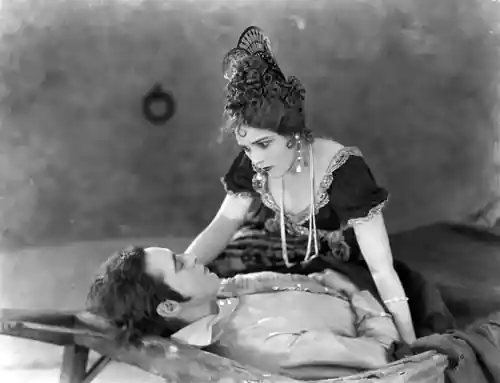
Critically, Rosita stands as a testament to the silent era’s capacity for nuanced storytelling. Its reliance on visual metaphor, expressive acting, and meticulous mise‑en‑scene demonstrates that dialogue is not a prerequisite for emotional depth.
For modern viewers, the film offers a window into early 20th‑century cinematic techniques while still feeling relevant. Its exploration of gender dynamics, the commodification of talent, and the perils of social mobility echo contemporary conversations about celebrity culture and artistic integrity.
The film’s legacy is further cemented by its influence on later works that examine the intersection of performance and power. Directors such as Luis Buñuel and Federico Fellini would later draw upon similar motifs, albeit in vastly different cultural contexts.
In terms of preservation, the surviving prints of Rosita have undergone meticulous restoration, ensuring that the original color palette—particularly the signature dark orange, yellow, and sea‑blue tones—remains vivid. This restoration allows contemporary audiences to appreciate the film’s visual artistry as it was intended.
For those seeking further exploration of the era’s cinematic landscape, titles like The Scottish Covenanters, The Car of Chance, and Eye of the Night provide complementary perspectives on the silent film’s thematic preoccupations.
Ultimately, Rosita is a film that rewards repeated viewings. Each time, new details emerge—a subtle glance, a fleeting shadow, a nuanced gesture—that enrich the viewing experience. Its blend of visual splendor, compelling performance, and timeless themes ensures its place in the pantheon of silent cinema masterpieces.
The film’s enduring relevance lies in its ability to speak to the universal human desire for recognition and the inevitable conflict between personal authenticity and external expectation. As such, it remains a vital study for scholars, cinephiles, and anyone fascinated by the power of storytelling without words.
In sum, Rosita is not merely a period piece; it is a meditation on the cost of ambition, the resilience of the human spirit, and the transformative power of music. Its artistry, both visual and narrative, continues to inspire, making it an essential viewing experience for anyone interested in the evolution of film as an art form.

IMDb —
1921
Community
Log in to comment.