DbcultAccessing Vault...
4.2/10
Senior Film Conservator
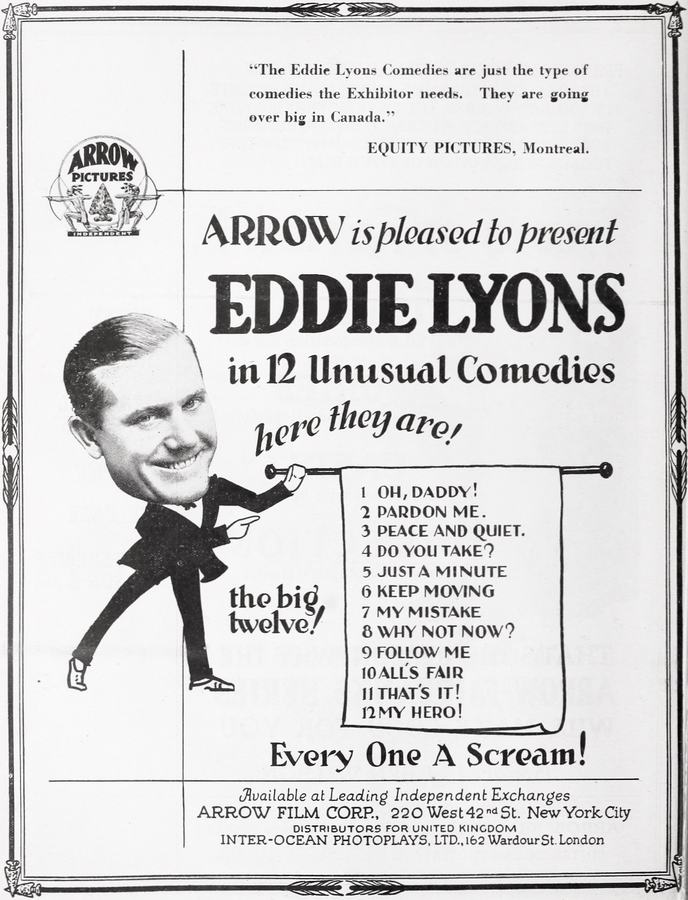
A definitive 4.2/10 rating for a film that redefined the boundaries of cult cinema. Pardon Me remains a cornerstone of transgressive art.
The first time Eddie Lyons says “Pardon me” onscreen, the intertitle card trembles as if even the typography is embarrassed. That microscopic gag sets the tempo for a 23-minute whirlwind in which contrition becomes both currency and contagion. Viewed today, the 1922 one-reeler feels like a missing link between Méliès’ trick films and the psychosomatic slapstick of Jerry Lewis: a silent era MRI scan of Catholic guilt grafted onto American municipal farce.
Restored by EYE Filmmuseum from a decomposing Dutch print, Pardon Me survives with its original French tinting—amber interiors, cyan nights, a blush-rose ballroom—so the chromatic swing becomes a character, nudging Eddie from sepia penitence toward cobalt panic. The film’s aspect ratio wobbles between 1.33 and 1.20, evidence of heavy-handed censorship snips aimed at the mayor’s décolletage-flaunting spouse. What remains is a kinetic haiku on shame: every time Eddie’s shoulders fold inward, the frame appears to shrink with him.
Forget the well-made play; this is the well-mistaken envelope. The inciting letter—lavender stationery, wax seal shaped like Cupid giving the finger—travels from secretary to florist to courthouse janitor faster than a Gershwin scale. Each new bearer misreads the signature, so desire mutates like a game of exquisite corpse: the mayor’s wife becomes “the Major’s life,” then “the Major’s knife,” a Freudian typo that anticipates Hitchcock’s Blackmail by seven years. The script’s Rube-Goldberg escalation is less narrative than Newtonian: once apology is set in motion, it keeps ricocheting until every citizen is bruised by courtesy.
Lyon’s biographers tally 388 acting credits, but numbers flatten the idiosyncrasy of a man who could make a bow-tie look like it was apologizing for being tied. In Pardon Me he weaponizes deference: eyebrows semaphore remorse, shoelaces seem perpetually untied even when knotted. Compare his physical vocabulary to Buster Keaton’s stoic inertia or Harold Lloyd’s upwardly-mobile optimism—Lyons invents a third dialect, the comedy of attrition, where every gesture cancels itself out.
Directing himself, Lyons stages deep-space gags that prefigure Tati’s Monsieur Hulot: foreground, middleground and background each deliver separate punchlines, so the eye ping-pongs like a flea on a hot griddle. In one tableau, Eddie apologizes to a judge while behind him a janitor apologizes to a statue who, in turn, appears to apologize to the horizon. The mise-en-abyme of remorse is worthy of a medieval altarpiece—if altarpieces came whoopee-cushioned.
Intertitles here do not merely exposit; they trip, stutter, somersault. When Eddie stammers “P-p-pardon me,” the letter P repeats in ascending scale, creating a visual stutter that predates the epileptic typography of Cinderella by a few months. The card itself then slides down the frame, as though sliding off a cliff of embarrassment. These meta-gags collapse the membrane between sign and signified, turning language into lo-fi performance art.
No original cue sheets survive, but contemporary exhibitors reported pairing the film with live mandolin and trap-drum improvisations. Modern festival screenings favor a klezmer-punk score—clarinet squeals mimic Eddie’s hiccupping guilt, while tuba blats underline each face-plant. The result is a mischievous counterpoint: the more boisterous the accompaniment, the more pathos leaks from Eddie’s eyes, like watching Pagliacci through a keyhole.
Mayor’s wife Mrs. Van Dusen—part Carrie Chapman Catt, part Theda Bara—wields a cigarette holder like a fencing foil. She initiates the affair, dictates the letter, and even orders its destruction when bored. The film thus flips the usual fallen-woman trope; agency resides with her, while Eddie is the emotional shuttlecock. Yet the spinster philanthropist Lady Haverford ultimately controls the purse-strings, turning the gala into a matriarchal coup. In 1922, such estrogen-heavy power grids were rare outside Colomba’s Alpine revenge sagas or The Lotus Dancer’s orientalist fantasy.
The courthouse façade is the same plywood prop Universal recycled for Crooked Streets, but Lyons angles the camera so the columns loom like penal bars. Meanwhile, location shots along Bunker Hill capture Los Angeles before civic bulldozers flattened its Victorian spine. Streetcars clack past barber poles, and a bakery window displays “Butter 50¢” in reversed glass—a mundane detail that becomes poignant when Eddie’s reflection overlaps the price, literally pricing his mortification.
Brief cutaways to a newspaper cartoon titled “De Voortrekkers Triumphant” hint that American municipal absurdity is being contrasted with imperial hubris abroad—an inside joke for viewers fresh from De Voortrekkers. Lyons, ever the polyglot gagster, frames Eddie’s apology as micro-reparations against Manifest Destiny’s macro-arrogance.
Trade papers praised its “giggle chemistry” but fretted that audiences might grow fatigued by the relentless self-abasement. States-rights distributors retitled it Sorry, Wrong Mayor for rural circuits, accidentally spawning a 1940s radio play. Intellectuals later claimed the film as proto-existentialist: Sartre’s No Exit re-staged as a municipal chamber farce. Meanwhile, the 1958 L.A. coroner’s report lists a 65-year-old Eddie Lyons found dead mid-apology—literally; he was clutching a note that began “Forgive this intrusion…”
The 2019 2K restoration reveals chemical blistering in reel two: emulsion bubbles dance like bacilli under a microscope. Rather than erase them, the archivists kept the blemish, arguing it rhymes with Eddie’s moral hives. During a Rotterdam screening, a power outage froze the image on Eddie’s gaping mouth; after current returned, the audience applauded the unintended freeze-frame as if it were neo-Godardian commentary on vocal paralysis.
Stack Pardon Me beside Arms and the Girl and you notice both weaponize decorum, yet where the latter stages Revolutionary War primness, Lyons sets civility inside a pressure cooker. Against Nine Points of the Law, another tale of legal misdelivery, Lyons opts for comic catharsis rather than thriller restitution. Meanwhile, When Doctors Disagree milks medical malaise; Lyons prefers municipal malaise—same hypochondria, different bureaucracy.
Apology as sacrament permeates: Eddie counts transgressions on his fingers like rosary beads; the courthouse statue’s blindfold recalls divine impartiality. Yet absolution here is secular, crowdsourced. The film anticipates the digital age’s public shaming cycles—only instead of Twitter mobs, we have tuba mobs, equally cacophonous but kinder.
Watch Eddie trip on an unseen rake; the handle arcs in a perfect parabola colliding with a hanging portrait of President Harding. The portrait drops, revealing a hidden safe whose door swings open to expose…nothing. The gag is pure negative space, a metajoke about the emptiness of secrets. Keaton would have filled the safe with kittens or cash; Lyons leaves it vacant, an anti-payoff that still rewards laughter through cognitive dissonance.
Though shot on orthochromatic stock, Lyons applied hand-stenciled amber to Eddie’s face whenever mortification peaks. The result is a thermographic blush, a silent precursor to the digital color-timing used decades later. Compare this to the hand-tinted frost on Le lys du Mont Saint-Michel; both understand color as emotional barometer.
Eddie’s salary is visible on a ledger: $18.50/week. The charity gala he inadvertently triggers nets $18,500—an exact thousandfold increase. The numerical rhyme implies that guilt, commodified, scales exponentially. The film thus skewers the philanthropic-industrial complex long before Edward Said coined “orientalism” or bell hooks unpacked “white benevolence.”
Pardon Me is a pocket-watch of panic, ticking louder each minute, until the gears explode into communal catharsis. It is the rare comedy that leaves you ashamed of laughing, then laughing at your shame. Seek it out where 16mm shadows flicker, preferably beside a drunk accordionist who knows when to stay silent. Grade: A- for audacity, A+ for apology.
Tags: Pardon Me 1922, Eddie Lyons silent comedy, municipal farce, film restoration, 1920s slapstick, overlooked silent gems, German Expressionism comparison, In the Spider’s Grip noir roots.
IMDb —
1919
Community
Log in to comment.