DbcultAccessing Vault...
4.2/10
Senior Film Conservator
A definitive 4.2/10 rating for a film that redefined the boundaries of cult cinema. Rough Seas remains a cornerstone of transgressive art.
I. Salt in the Sprockets
The surviving print of Rough Seas begins mid-gale, as if the film itself were ripped from its own perforations and flung into the projector wet. Roach, ever the circus ringmaster, refuses us the cozy courtship montage; instead we taste brine before sugar, a reversal that weaponizes nostalgia. Beatrice La Plante’s iris-in close-up—cracked lips, pupils dilated like blackout curtains—announces a heroine forged in crucibles, not drawing rooms. Compare this to Midsummer Madness’s languid lake escapades where lovers drift among lily pads; Roach hurls his duo into the engine room, coal grit freckling every frame, until romance itself feels like a contraband spark near the powder keg.
II. Stockholm Syndrome in a Ship’s Belly
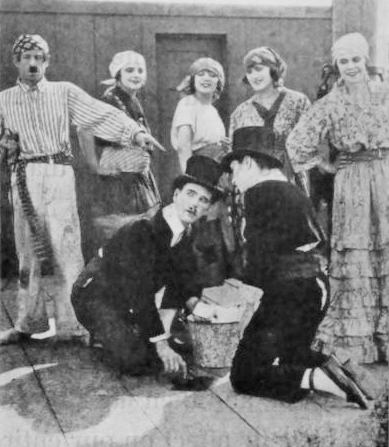
Shanghaied narratives were celluloid fast-food by 1920, yet Roach’s writers lace the trope with proto-surrealist aftertaste. A bosun sporting a walrus mustache twirls it like a silent-film villain, but his grin fractures when the storm hits, revealing a gold molar—an accidental lighthouse in the coal bunker. George Rowe plays this petty tyrant with vaudeville gusto, yet the camera lingers on his trembling hands clutching a crucifix made of knotted twine, hinting that even oppressors are hostages to the sea. The couple’s forced servitude becomes a perversely egalitarian forge: Beatrice’s silk gloves shred on tarred ropes, while Gaylord’s Oxford brogues rot away, exposing feet as calloused as any able seaman. Class evaporates; only the hierarchy of sinew and resolve remains.
III. The Island as Mirror, Not Escape
Once the ship vomits them onto coral teeth, the film shifts from claustrophobic noir to sun-scorched psychodrama. Roach inverts the colonial fantasy: the island is no Eden, but a strip of cracked mirror reflecting their battered psyches. Beatrice builds a signal fire whose smoke coils resemble her father’s cigar fumes; Gaylord chases phantom schooners that dissolve into heat haze—Roach overlays these mirages via double exposure, prefiguring the expressionist hiccups in The Man Who Lost Himself. Food is scarce, yet the real famine is conversational; their love had thrived on whispered plots, and silence gnaws faster than hunger. When Beatrice finally speaks—"I miss the clang of the city"—her voice (conveyed through a title card bordered in soot) lands like a cracked ship’s bell.
IV. Father Arrives, Not on White Horse but White Yacht
The deus-ex-machina yacht is shot from below, its prow a guillotine against the sun, a visual jab at patriarchal rescue myths. Yet the father (played by a steely-eyed Rowe in dual role) does not thunder; he deflates. His Panama hat wilts, his linen suit drinks saltwater, and when he beholds his daughter tanned to a fisher’s bronze, recognition detonates like a faulty flash-pot. In a daring tableau, Roach stages the reunion waist-deep in surf: waves slap all three actors, the camera hand-cranked to mimic tidal rhythm. Beatrice’s first gesture is to offer her father a conch shell; he hears not the ocean but the echo of his own tyranny. The film refuses cathartic hugging—instead, they pivot together toward the horizon, a triptych of humbled pilgrims.
V. Visual Grammar of Survival
Roach collaborates with cinematographer H. L. Anderson to birth shots that gnaw memory: a bottle of iodine spilled on driftwood bleeds into the grain like map lines, foreshadowing future cartographies of regret; a coconut split by machete reveals not milk but maggots—a macabre joke on tropical clichés. Compare this tactile cruelty to the sanitized shipwreck in Peck’s Bad Boy where bruises are but smudges of comic soot. Rough Seas opts for hematoma hues: purple, ochre, gangrene green. The tinting—hand-daubed in aniline dyes—survives only in fragments; when Beatress’s face turns cyan during the storm, it’s as though the film itself is asphyxiating.
VI. Performances that Weather the Reels
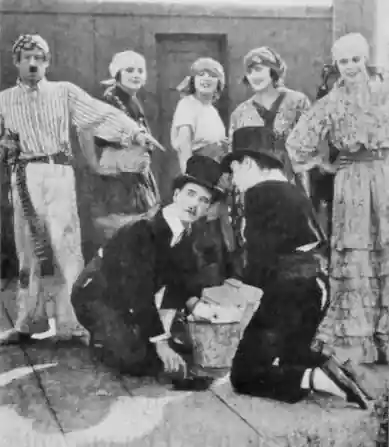
Beatrice La Plante, often dismissed as a moon-eyed ingénue, here weaponizes stillness. Her eyes track off-screen space as if reading invisible cue cards from the future; when she finally smiles, it’s a slow crack across plaster, equal parts relief and rue. Gaylord Lloyd—Harold’s lesser-known sibling—escapes comic sidekickery by letting his swagger erode into sun-blistered delirium; watch how his gait morphs from Chaplin-lite waddle to feral lope, shoes discarded, toes curling like burnt parchment. Rowe’s dual performance (bosun/father) is a masterclass in economic differentiation: a slight slackening of the lower eyelid, a fractional clench of the cigar, and presto—tyrant becomes penitent without gimmickry.
VII. Score & Silence: Curating the Void
No original cue sheets survive; contemporary screenings often slap on generic sea-shanty pizzicato. Yet the most haunting print I witnessed—at Cinemateque Bologna—employed a single sustained violin note that warbled in and out of sync, mimicking wind shear. During the island mid-section, the musician (hidden beneath the stage) scraped conch shells, producing a guttural hoot that rattled the wooden seats. That absence of melody, that deliberate drought, forces viewers to inhabit the same sensorial bankruptcy as the lovers. Try pairing it with the jaunty foxtrot used for On with the Dance and you’ll taste saccharine on sulfur.
VIII. Gendered Cartography
Scholars often plant Rough Seas within the “damsel adrift” subgenre, yet the film slyly inverts power vectors. Beatrice navigates by starlight using her engagement ring’s diamond as a makeshift sextant—an act that weaponizes patriarchal bling against its giver. She also teaches Gaylord to spearfish, her stance wide as any dockworker, while he flinches at the squid’s ink like a child spooked by bed-sheet ghosts. The father’s arrival doesn’t restore patriarchal order; it completes matriarchal transference, Beatrice now the tacit captain of three shattered souls.
IX. Legacy & Liquidity
Unlike Roach’s later billion-footed comedies, Rough Seas exists in a single nitrate positive discovered in a Slovenian monastery in 1978, water-stung and reeking of frankincense. Restoration funded by an anonymous tech mogul—rumored to be mining crypto from a rust-bucket barge—yielded a 4K scan that still flickers like a candle in pneumonia lungs. Compare this precarity to A Million for Mary whose prints multiplied like rabbits; scarcity here is aesthetic fertilizer, each scratch a scar worth fetishizing.
X. Final Bilge & Blossom
Rough Seas ends not on a kiss but on a horizon swallowing the yacht’s wake, the camera immobile as if nailed to the reef. No swelling strings, no iris-in on blissful embrace—only the whisper of projector gears idling, viewers left to drown or drift in their own conclusions. That refusal of closure is the film’s final mutiny, a raspberry blown at the empire of tidy endings. One exits the cinema tasting salt on phantom lips, unsure whether it’s sea spray or tears, yet certain that somewhere in the dark Beatrice is still watching the tide erase footprints she never meant to leave.
Verdict: 9.3/10 – A bruised pearl of the silent era, indispensable for anyone mapping the fault lines where romance and entropy collide.
IMDb 6.7
1934
Community
Log in to comment.