DbcultAccessing Vault...
7.8/10
Senior Film Conservator
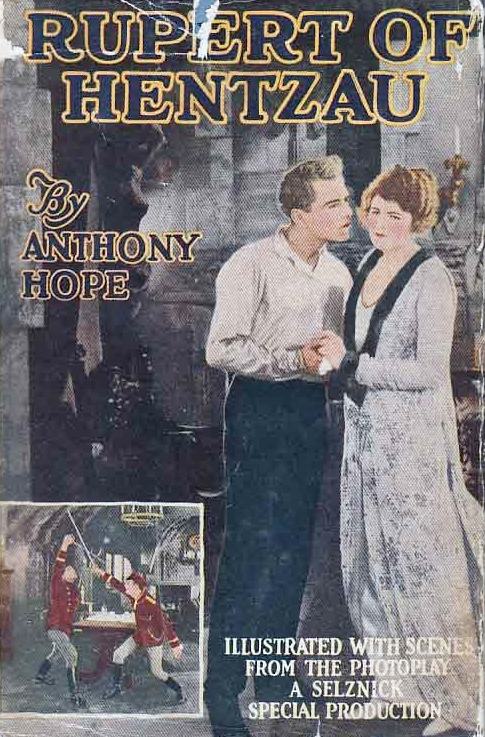
A definitive 7.8/10 rating for a film that redefined the boundaries of cult cinema. Rupert of Hentzau remains a cornerstone of transgressive art.
The 1923 iteration of Rupert of Hentzau stands as a monumental achievement in the silent era's fascination with the 'Ruritanian' subgenre—a term that has since become shorthand for tales of high adventure, royal doubles, and the bittersweet intersection of personal longing and national duty. Directed with a keen eye for architectural grandeur and intimate psychological tension, this film serves not merely as a sequel to The Prisoner of Zenda, but as a somber meditation on the permanence of identity and the heavy toll of chivalric sacrifice. Unlike the swashbuckling levity found in some contemporary works like The Scarlet Pimpernel, Victor Heerman’s direction here leans into a more elegiac atmosphere, capturing the twilight of an era where honor was the ultimate currency.
Bert Lytell, tasked with the Herculean effort of portraying both the weary King Rudolf and his noble English counterpart, Rudolf Rassendyll, delivers a performance of profound nuance. In an age where silent acting often drifted into the realm of the histrionic, Lytell maintains a stoic dignity that makes his internal conflict palpable. We see the subtle shift in his posture—the way the crown sits heavily upon the 'fake' king, not because of a lack of right, but because of the moral weight of the deception. This duality of self is a theme explored with varying degrees of success in films like Uma Transformista Original, yet Lytell brings a gravitas here that grounds the fantastical premise in a visceral reality.
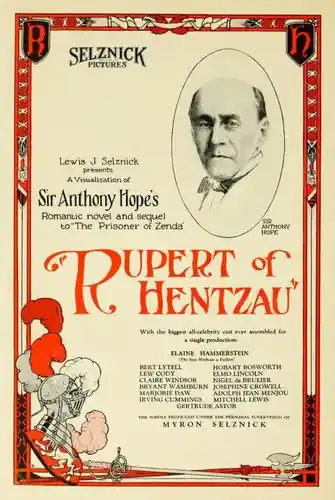
The chemistry between Lytell and Elaine Hammerstein, who portrays the tragic Queen Flavia, is the emotional anchor of the film. Their scenes together are characterized by a restrained yearning, a silent dialogue of glances that speaks volumes more than the intertitles ever could. Hammerstein avoids the tropes of the 'damsel in distress,' instead offering a portrait of a woman trapped by the ossified structures of monarchy, much like the thematic undercurrents in The Family Cupboard, where domesticity becomes a gilded cage.
No Ruritanian romance is complete without a formidable antagonist, and Adolphe Menjou provides an interpretation of Rupert of Hentzau that is nothing short of magnetic. Menjou, known for his sophisticated screen presence, imbues Rupert with a predatory grace. He is not a mustache-twirling villain but a calculating opportunist whose charm is as sharp as his blade. His performance provides a stark contrast to the more overt villainy seen in Calling His Bluff, opting instead for a simmering menace that makes the eventual confrontation feel inevitable and earned.
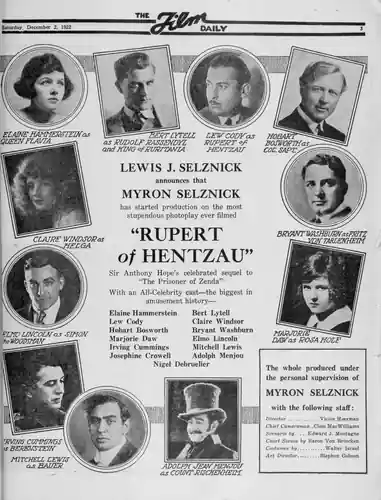
The supporting cast reads like a who’s who of 1920s cinema. Irving Cummings and Lew Cody provide essential texture to the political landscape of Strelsau, while the presence of Elmo Lincoln—the screen's first Tarzan—adds a layer of physical robustness to the production. Even the smaller roles, such as those played by Gertrude Astor and Nigel De Brulier, contribute to a sense of a living, breathing world. This ensemble approach creates a richness of world-building that rivals the epic scope of The Adventures of Robinson Crusoe, though focused on the claustrophobia of court life rather than the vastness of an island.
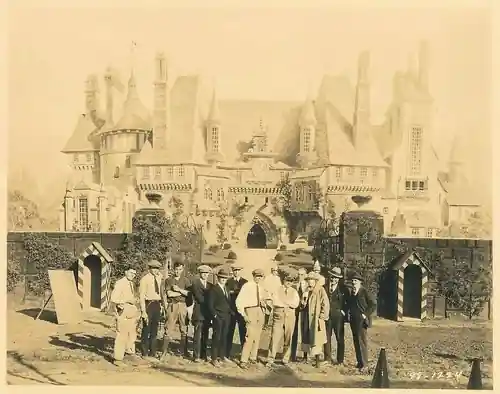
Technically, the film is a marvel of its time. The cinematography captures the stark contrasts of the Ruritanian nights, utilizing shadows to mirror the moral ambiguity of the characters. The set design is lavish, yet it feels lived-in, avoiding the plastic sheen that often plagued historical dramas of the era. The visual storytelling techniques employed by Heerman and his team suggest a sophistication that was beginning to emerge in global cinema, perhaps drawing inspiration from the expressionistic tendencies of European works like Das Wunder.
The pacing is deliberate, allowing the tension to mount as the stolen letter passes through various hands. This is not a film that rushes toward its climax; it understands that the true stakes are not merely the survival of the characters, but the survival of an ideal. This slow-burn approach is reminiscent of the narrative structure in The Cup of Life, where the consequences of a single choice ripple through the lives of everyone involved.
What sets Rupert of Hentzau apart from its predecessors is its pervasive sense of melancholy. While The King of Diamonds might focus on the glitter of wealth and power, this film focuses on the soot beneath the crown. It acknowledges that even the most heroic actions come with a price. Rassendyll’s return to Ruritania is not a triumphant homecoming but a tragic necessity. He is a man haunted by a life he can never truly possess, a theme that resonates with the psychological depth found in A Soul Without Windows.
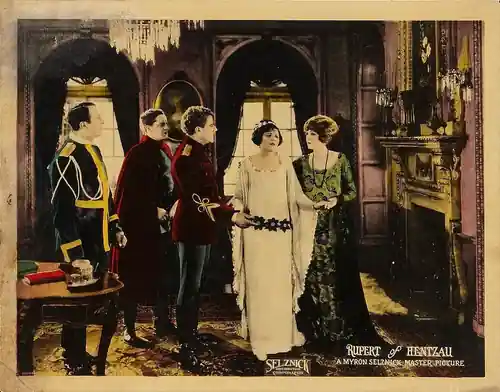
The film’s climax, a masterfully choreographed sequence of action and high-stakes negotiation, avoids the easy resolution. It stays true to Anthony Hope’s original vision, providing a conclusion that is as satisfying as it is heartbreaking. In comparing this to the lighter fare of the period, such as The Hayseed, one realizes the sheer ambition of this production. It sought to elevate the adventure genre into something approaching high tragedy.
Released in 1923, the film arrived at a crossroads for cinema. The industry was moving toward more complex narratives, moving away from the simplistic morality plays of the previous decade. Rupert of Hentzau reflects this maturation. It shares a certain DNA with The Face of the World in its attempt to capture the zeitgeist of a society in flux. The Ruritanian setting, while fictional, mirrored the crumbling monarchies of post-WWI Europe, giving the film an unintended but potent political resonance.
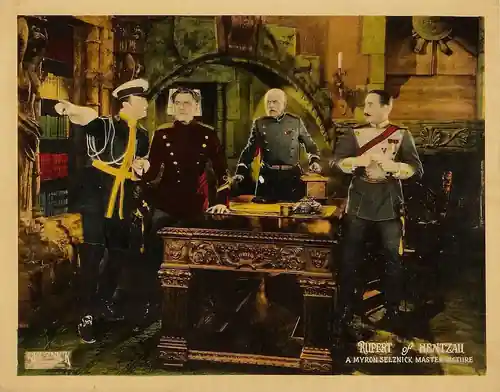
Furthermore, the film’s exploration of the 'double'—the man who must lose himself to save a nation—predates the existentialist cinema that would follow decades later. It is a more somber cousin to the romanticism of The Merry Widow, stripping away the operetta artifice to reveal the raw nerves of its protagonists. Even when compared to lesser-known titles like Unknown 274 or The Return of Mary, the production values and the strength of the adaptation stand head and shoulders above the standard studio output of the time.
To watch Rupert of Hentzau today is to witness the peak of silent film craftsmanship. It is a work that demands the viewer's full attention, rewarding them with a narrative that is as intellectually stimulating as it is emotionally resonant. While some might find the pacing slower than modern blockbusters, those who appreciate the art of the 'slow burn' will find much to admire. It avoids the pitfalls of the 'boob' comedy tropes seen in The Poor Boob, opting instead for a dignified, almost operatic presentation of human frailty and strength.
In the pantheon of Anthony Hope adaptations, this 1923 version remains a definitive touchstone. It captures the essence of the Ruritanian spirit—the idea that even in a world of political machinations and shifting loyalties, there is a place for the noble heart. It is a cinematic relic that feels surprisingly modern in its cynicism toward power, yet timeless in its celebration of love. For any serious student of film history or lover of classic literature, this is an essential viewing experience that continues to cast a long, regal shadow over the genre.
IMDb —
1921
Community
Log in to comment.