DbcultAccessing Vault...
Cult Review
Senior Film Conservator
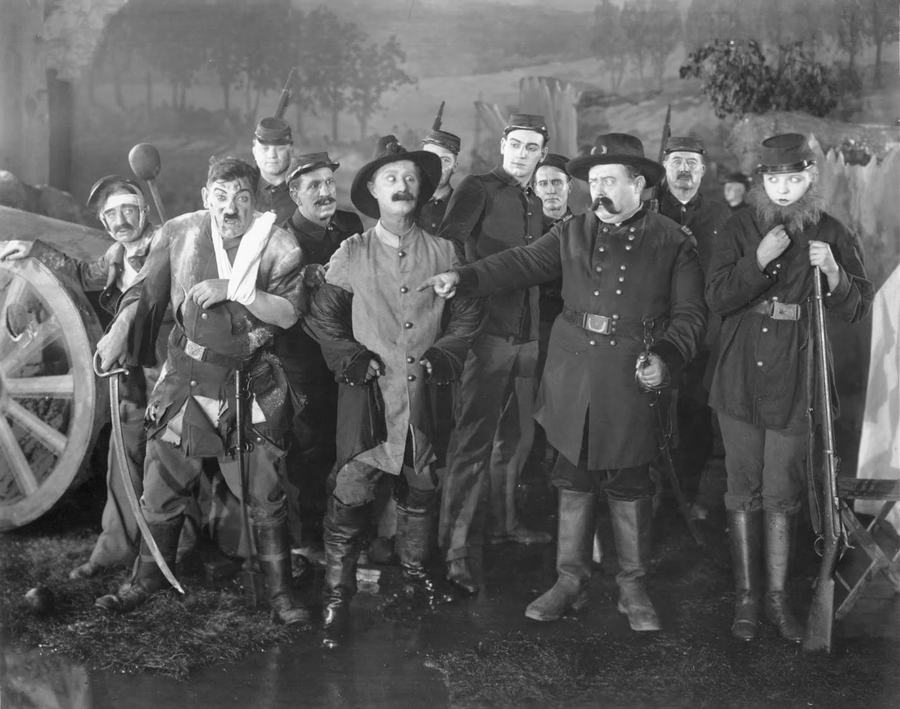
There’s a certain audacious brilliance to a film that dares to mash up Oscar Wilde’s Symbolist tragedy, *Salome*, with Bronson Howard’s stalwart Civil War drama, *Shenandoah*. But to then entrust this theatrical Frankenstein’s monster to an unequivocally inept troupe of traveling players, performing for an unsuspecting rural audience? That, my friends, is not merely ambition; it’s a stroke of comedic genius, a pre-postmodern deconstruction of dramatic conventions before the term even existed. ‘Salome vs. Shenandoah’ isn't just a movie; it's a glorious, cacophonous collision of high art and lowbrow execution, a testament to the enduring power of human folly.
The very premise of this silent-era marvel is a comedic goldmine. Imagine the delicate, decadent sensuality of *Salome*, with its moon-drenched poetry and the infamous Dance of the Seven Veils, slammed headlong into the earnest, flag-waving melodrama of *Shenandoah*, a play steeped in battlefield heroics, family division, and patriotic fervor. The sheer stylistic dissonance alone is enough to elicit a chuckle, but the film takes it a crucial step further: it places this impossible fusion in the hands of a theatrical company whose members possess more enthusiasm than talent, and whose grasp of either play’s nuances is, shall we say, tenuous at best. The resulting spectacle is less a performance and more a glorious train wreck, a beautiful disaster unfolding before our very eyes.
The film’s brilliance lies in its commitment to the bit. We're not just watching a parody; we’re observing the *process* of a parody gone hilariously awry. The actors, a motley crew of exaggerated archetypes, embody the spirit of well-meaning incompetence. There’s the puffed-up leading man, utterly convinced of his own gravitas despite a perpetual inability to remember his lines or hit his marks. Then there’s the ingenue, whose attempts at dramatic emoting usually devolve into wide-eyed confusion or accidental slapstick. The supporting players, often relegated to doubling roles, flit between Roman soldiers and Confederate generals with admirable, if baffling, conviction. It’s a delightful send-up of the theatrical world itself, echoing the charming chaos found in other early films that depicted the struggles of performers, perhaps with a touch of the earnest, if misguided, ambition seen in the protagonists of Johnny-on-the-Spot, though here the stakes are purely comedic.
Central to this comedic maelstrom are the performances of its stellar cast. Ben Turpin, with his iconic crossed eyes, is a master of visual absurdity. His very presence suggests a world slightly off-kilter, and here he’s given ample opportunity to unleash his unique brand of physical comedy. Whether he’s attempting a dramatic flourish only to trip over his own feet, or delivering a supposedly profound line with a gaze that suggests he’s looking at two different audiences simultaneously, Turpin is a perpetual fount of laughter. His character often serves as the unwitting catalyst for many of the film's most uproarious gags, a silent testament to his enduring comedic power. One might even draw a parallel to the meticulous, if chaotic, construction of gags in films like The High Sign, where every visual element contributes to a larger comedic tapestry, albeit with a more polished execution in Keaton's case.
Then there’s Marie Prevost, whose vivaciousness and comedic timing are a joy to behold. She brings a sparkling energy to her roles, often playing the bewildered ingénue or the frustrated leading lady. Her reactions to the unfolding theatrical disaster are priceless, oscillating between genuine distress and a resigned acceptance of the absurdity around her. Prevost, along with other talented performers like Louise Fazenda and Billy Bevan, forms the bedrock of the troupe’s dysfunction. Fazenda, known for her expressive face and energetic persona, likely contributes to the general pandemonium with her distinctive brand of character comedy. Billy Bevan, a stalwart of Mack Sennett comedies, would undoubtedly add his expert timing to the physical gags, ensuring that every pratfall and exaggerated gesture lands with maximum impact. Their collective efforts create a dynamic ensemble, each actor contributing a unique flavor to the overall comedic stew.
Ford Sterling, a foundational figure in early screen comedy, would have brought his signature bluster and pomposity to the proceedings, likely as the troupe's self-important director or lead actor. His ability to convey inflated ego through exaggerated gestures and facial expressions would have been perfectly suited to the film's satirical tone. The interplay between Sterling's bombast and Turpin's bewildered cross-eyed antics would have been a comedic goldmine, a clash of theatrical titans, albeit in miniature and entirely farcical. The supporting cast, including Annette DeGandis, Raymond Russell, Eddie Gribbon, Harry Gribbon, Fanny Kelly, Patrick Kelly, Charles Murray, Gladys Whitfield, Phyllis Haver, Elva Diltz, Al Cooke, Harriet Hammond, George Jeske, Eva Thatcher, Bert Roach, Heinie Conklin, Alice Maison, Sybil Seely, and Kathryn McGuire, all contribute to the rich tapestry of character-driven comedy, each playing their part in the grand theatrical unraveling.
The film doesn’t just lampoon the plays themselves; it playfully skewers the very concept of dramatic interpretation. We see Herod’s lust for Salome reduced to a leering buffoonery, and Salome’s dance of the seven veils becoming a clumsy, garment-snagging routine. The gravitas of a Civil War battle is replaced by a chaotic melee of actors mistaking props for real weapons, or forgetting which side they’re supposed to be on. The irony is palpable: the more earnestly the troupe attempts to perform the dramas, the funnier the outcome becomes. It’s a brilliant exploration of how context and competence utterly transform content. One might even argue that the film, in its own way, offers a critique of the rigid expectations of dramatic theater, much like how a film such as Who Cares? might subtly question societal norms through its narrative lens.
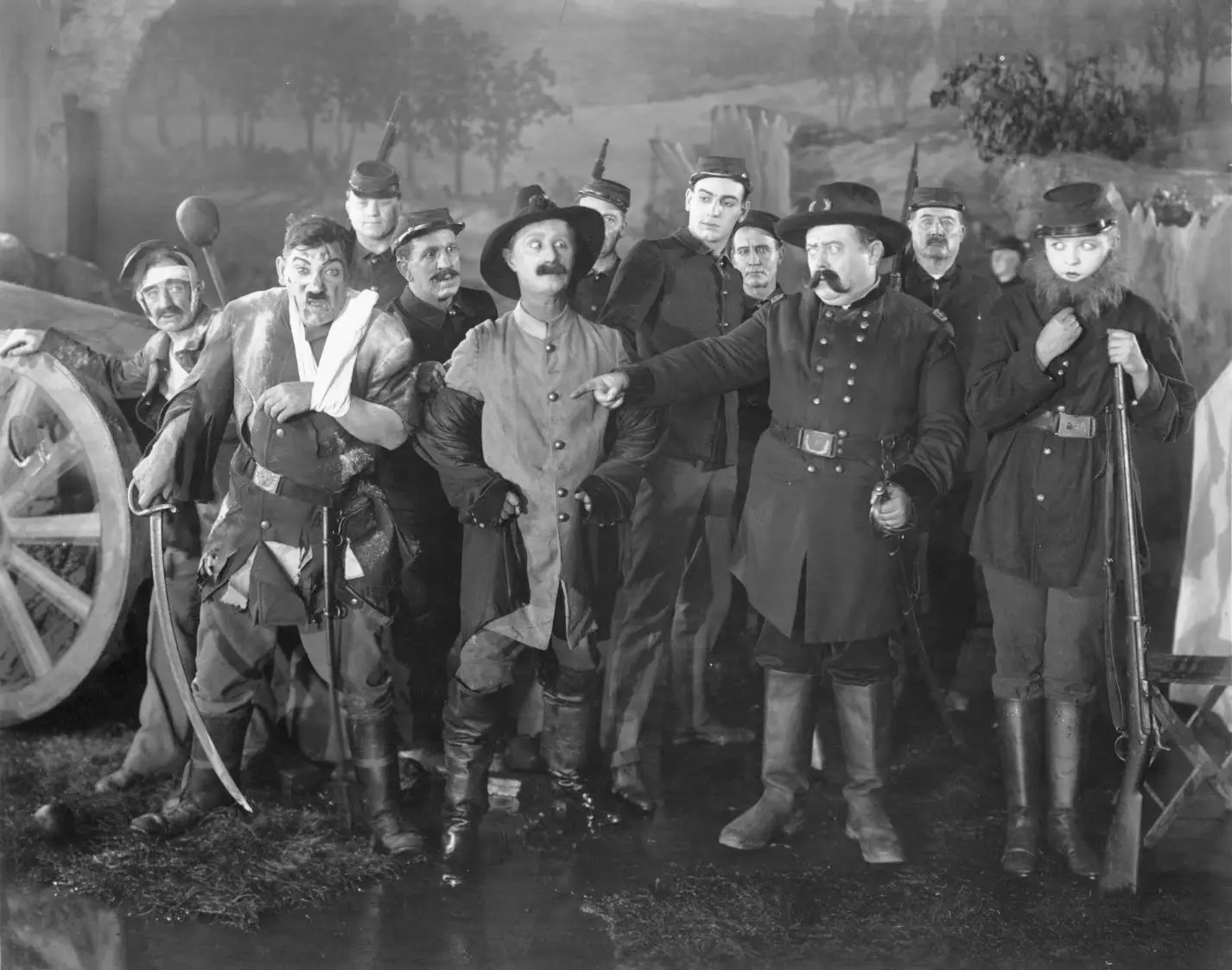
Moreover, the presence of the "bucolic audience" adds another delightful layer to the comedic cake. These are not sophisticated urbanites accustomed to the subtleties of Wilde or the historical weight of Howard. Their reactions range from utter bewilderment to open laughter, from polite applause to outright heckling. They are the ultimate arbiters of the troupe’s failure, their unvarnished responses serving as a mirror to the absurdity on stage. Their initial confusion slowly gives way to an appreciative amusement, as they realize they are witnessing not a dramatic performance, but a truly spectacular comedy of errors. This dynamic, where the audience becomes an active participant in the humor, is a recurring trope in comedy, and ‘Salome vs. Shenandoah’ executes it with charming efficacy. It’s a reminder of the democratizing power of laughter, transcending the intended artistic merit of the original works.
From a technical perspective, the film, like many silent comedies of its era, relies heavily on physical gags, exaggerated expressions, and the strategic use of intertitles to convey dialogue and plot points. The editing would have been crucial in maintaining the rapid-fire comedic timing, cutting between the unfolding stage chaos and the reactions of the increasingly entertained audience. The cinematography, while perhaps not groundbreaking, would have focused on capturing the full scope of the on-stage mayhem, ensuring that every tripped foot, every misplaced prop, and every bewildered glance was perfectly framed for maximum comedic effect. The visual storytelling had to be crystal clear, allowing the audience to understand the dual narratives being clumsily presented, and the escalating humor of their collision.
This film exists as a fascinating artifact of early cinematic comedy, demonstrating how filmmakers were already pushing boundaries and experimenting with meta-narratives. It’s not just a simple parody; it’s a commentary on performance, expectation, and the delightful imperfections of human endeavor. In an era where many films were still finding their footing, often adapting stage plays with earnest fidelity, ‘Salome vs. Shenandoah’ chose a path of playful subversion. It’s a comedic cousin to films that dared to challenge conventions, albeit in different genres, such as the dramatic tension found in The Darkening Trail or the moral dilemmas explored in The Bondage of Fear, where narrative expectations are often toyed with for emotional or dramatic impact.
The film also provides a window into the popular entertainment of the time. Burlesque, in its broader sense of humorous and often risqué theatrical entertainment, was a vibrant part of the cultural landscape. This cinematic burlesque, however, seems to lean more into the intellectual humor of juxtaposition and the physical comedy of incompetence rather than mere titillation. It’s a sophisticated comedic concept wrapped in a delightfully unsophisticated package, showcasing the ingenuity of early comedic writers and directors. It playfully dissects the very notion of 'high culture' and 'low culture,' proving that laughter can be found in the most unexpected of collisions.
Comparing it to other films of the era, one can see shared threads of comedic ambition. While not a direct comparison in plot, the desire to create distinctive, memorable characters through physical traits, much like the exaggerated features of the actors here, can be observed in films like Herr und Diener, where social roles and their absurdities are often highlighted through character portrayal. The chaotic energy and ensemble work might also evoke the lively atmosphere of other early comedies, though few dared to tackle such an overtly intellectual, yet utterly farcical, premise. The sheer audacity of its concept sets it apart, a unique comedic experiment that feels surprisingly modern in its self-awareness.
The film's enduring appeal, even today, lies in its timeless humor. The struggle of an amateur troupe to pull off a grand performance is a universally relatable scenario, filled with inherent comedic potential. We've all seen, or been a part of, performances that didn't quite go as planned, and ‘Salome vs. Shenandoah’ amplifies that experience to its most riotous extreme. It's a celebration of imperfection, a joyous embrace of the glorious messiness of human endeavor. It reminds us that sometimes, the greatest art isn't found in flawless execution, but in the sheer, unadulterated spectacle of trying, failing, and trying again, all while making an audience roar with laughter.
In essence, ‘Salome vs. Shenandoah’ is more than just a forgotten gem of silent cinema; it’s a masterclass in comedic deconstruction. It takes two vastly different dramatic works, throws them into a blender with an incompetent theatrical troupe, and serves up a concoction that is both intellectually stimulating and side-splittingly funny. It’s a bold, inventive piece of filmmaking that showcases the inventive spirit of early Hollywood, proving that even in its nascent stages, cinema was capable of sophisticated humor and meta-commentary. For anyone interested in the history of comedy, the evolution of satire, or simply a good, hearty laugh, this film is an absolute must-see, a rare treat that continues to resonate with its timeless wit and boundless energy. It stands as a testament to the fact that sometimes, the most original ideas spring from the most unlikely of pairings.
IMDb 5.8
1934
Community
Log in to comment.