DbcultAccessing Vault...
Cult Review
Senior Film Conservator
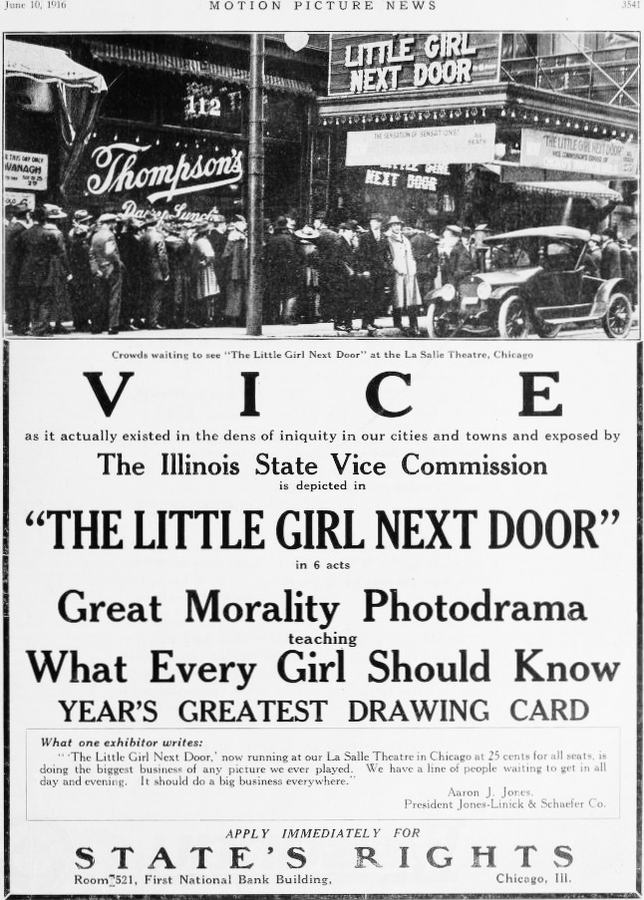
The year 1917 stands as a threshold in cinematic history, a period where the medium began to shed its nickelodeon skin and embrace the weight of social commentary. The Little Girl Next Door, written by the prolific W.S. Van Dyke, is a quintessential artifact of this era. It is not merely a film; it is a cultural lightning rod that captured the burgeoning anxieties of an America grappling with urbanization and the perceived moral decay of the city. While modern audiences might view the 'white slavery' subgenre with a certain degree of skepticism regarding its historical accuracy, the visceral impact of this film remains undeniable. It operates on a frequency of pure, unadulterated melodrama, yet its undercurrents are dark, murky, and surprisingly sophisticated in their execution.
The narrative architecture of The Little Girl Next Door is built upon the classic dichotomy between the safety of the domestic sphere and the predatory nature of the outside world. Our protagonist is the personification of rural virtue, a figure whose very existence is defined by her proximity to the hearth. However, economic necessity—the perennial engine of tragedy—forces her hand. When she accepts a position as a 'female companion,' the film masterfully utilizes dramatic irony. We, the audience, recognize the euphemism long before she does. This sense of impending doom mirrors the tension found in The Lure of New York, where the city is portrayed as a sentient beast waiting to swallow the unsuspecting.
Van Dyke’s script avoids the easy path of cartoonish villainy. Instead, the antagonists operate with a chilling bureaucratic efficiency. The process of her 'sale' into slavery is depicted not as a sudden abduction, but as a gradual erosion of agency. It is a slow-motion car crash of the soul. This methodical approach to victimization is reminiscent of the predatory dynamics explored in The Spider and the Fly, where the power imbalance is both the weapon and the cage. The film forces us to witness the commodification of a human being in a way that feels uncomfortably modern, highlighting the intersection of gender and class that still resonates today.
Darwin Karr and Charles L. Greenleaf provide performances that anchor the film’s heightened emotional reality. In an era often criticized for over-the-atricality, Karr manages to convey a sense of gravitas that grounds the more sensationalist aspects of the plot. The chemistry—or lack thereof, by design—between the captors and the captive creates a friction that drives the second act. We see echoes of this performative intensity in Pierrot the Prodigal, though here the stakes are far more lethal than the whims of a pantomime. The actors must communicate a complex spectrum of fear, betrayal, and resignation without the aid of spoken dialogue, relying instead on the language of the eyes and the geometry of the body.
To fully appreciate the gravity of The Little Girl Next Door, one must look at its contemporaries. While Kindling tackled social issues through the lens of poverty and maternal instinct, Van Dyke’s work is more concerned with the external threats to the female body. It shares a certain DNA with The Great Problem, yet it feels more urgent, perhaps because the threat it depicts was so central to the moral panics of the 1910s. Unlike the more romanticized struggles in The Sultana, there is no exoticism here to soften the blow; it is a domestic horror story.
Visually, the film utilizes the limited technology of 1917 to create a claustrophobic atmosphere. The interior shots of the 'employer’s' house are framed with a heavy, oppressive stillness. The use of shadows—while perhaps not as stylized as the later German Expressionism seen in works like Der Hund von Baskerville—nonetheless creates a sense of entrapment. Each doorway is a threshold to a deeper level of hell. The cinematography emphasizes the girl’s isolation; even when she is in a crowded room, the camera isolates her, making her the focal point of a predatory gaze. This visual strategy is also evident in The Eternal Sappho, where the female lead is constantly framed by the expectations and desires of those around her.
The pacing of the film is deliberate, almost agonizingly so. It refuses to rush to the 'white slavery' reveal, instead spending ample time establishing the girl’s life before the fall. This makes her eventual fate feel like a personal loss for the viewer. It’s a technique that builds a bridge of empathy, much like the narrative structure of Her Great Price, where the economic stakes are meticulously laid out before the trap is sprung. By the time the girl realizes she has been sold, the audience is already deeply invested in her survival, making the climax a harrowing experience.
We must address the didactic nature of the film. The Little Girl Next Door was produced during the height of the Mann Act era, a time when cinema was frequently used as a tool for moral instruction. However, Van Dyke’s writing elevates it above mere propaganda. He explores the nuances of betrayal, particularly the betrayal of trust. The girl isn't snatched off the street by a stranger; she is lured by the promise of a better life. This exploration of the 'false promise' is a recurring theme in silent cinema, seen in different forms in The Morals of Hilda and What Happened at 22. It suggests a systemic failure rather than a singular act of evil.
The film also touches upon the concept of masculine protection—or the lack thereof. The male figures in the girl’s life are either absent, ineffective, or the very source of her peril. This subversion of the 'hero' trope is fascinating for 1917. While films like My Partner celebrate masculine bonds and protection, The Little Girl Next Door highlights the vulnerability of women when those bonds are severed. It is a world where even the most virtuous can be broken by the cold machinery of greed. The film’s refusal to provide a simple, happy resolution—or at least one that doesn't feel scarred—sets it apart from more conventional melodramas like Get the Boy.
From a technical standpoint, the film showcases the evolving grammar of the cut. The transitions between the girl’s memories of home and her current reality are handled with a surprising amount of grace. These juxtapositions serve to heighten the tragedy, contrasting the sun-drenched fields of her youth with the cramped, dimly lit rooms of her captivity. This use of memory as a narrative device would become a staple of cinema, but here it feels raw and experimental. It’s a far cry from the epic scale of Don Juan, yet it achieves a similar level of emotional resonance through its intimacy.
Furthermore, the film’s exploration of the 'fallen woman' narrative is handled with more empathy than many of its peers. While it certainly functions as a warning, it doesn't place the blame on the victim. Instead, it points a trembling finger at the society that allows such markets to exist. In this regard, it shares a kinship with Più forte del destino, where the characters are often at the mercy of forces far beyond their control. The girl is a casualty of a war she didn't even know was being fought.
In the final analysis, The Little Girl Next Door is a haunting reminder of the power of silent film to confront the darkest aspects of the human condition. It is a work of significant historical value, not just as a piece of 'white slavery' exploitation, but as a genuine attempt to grapple with the complexities of exploitation and the loss of innocence. W.S. Van Dyke’s script is a masterclass in tension and thematic depth, proving that even in the infancy of the medium, storytellers were finding ways to challenge and provoke their audience.
To watch this film today is to step back into a world of stark moral contrasts and burgeoning social awareness. It is a difficult watch, as it should be. It refuses to look away from the ugly reality of its subject matter, demanding that the viewer confront the same darkness that its protagonist must endure. It remains a essential chapter in the history of social-issue cinema, a film that used the flickering light of the projector to illuminate the shadows of a nation’s conscience. Whether viewed as a historical curiosity or a timeless tragedy, it stands as a testament to the enduring power of narrative to expose the fractures in our collective humanity.
IMDb 6.7
1918
Community
Log in to comment.