DbcultAccessing Vault...
7.1/10
Senior Film Conservator
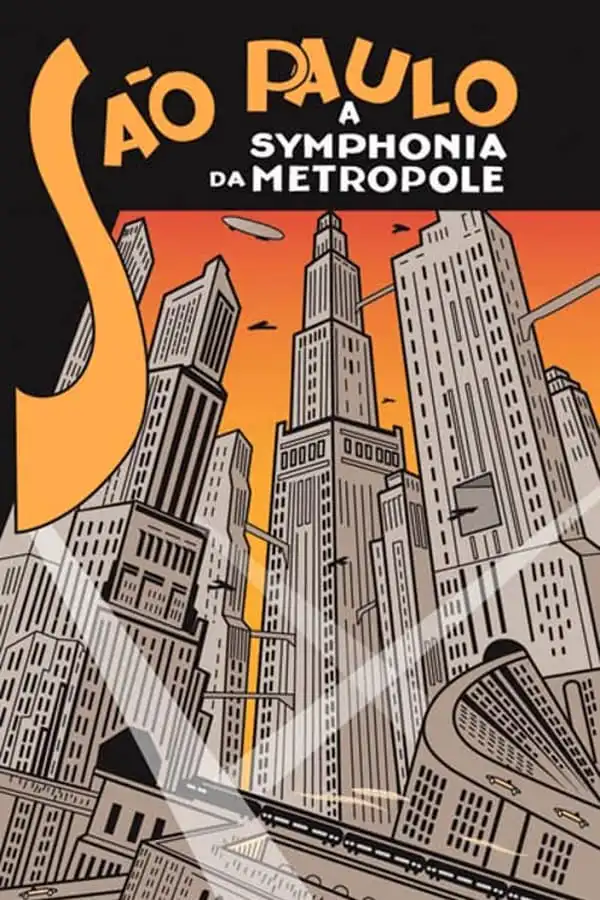
A definitive 7.1/10 rating for a film that redefined the boundaries of cult cinema. São Paulo, Sinfonia da Metrópole remains a cornerstone of transgressive art.
You should watch this if you are the type of person who likes to sit at a cafe and just watch people walk by. It is perfect for history nerds or anyone who likes looking at how cities used to be before everything became glass and plastic. If you need a story or a hero to root for, you will probably hate this and turn it off after five minutes.
There is no dialogue. No characters. Just the city itself.
It starts out really slow with the morning mist. You see the empty streets and it feels a bit spooky, honestly. Then the city starts to breathe. You see a guy sweeping the sidewalk, and then suddenly there are a thousand people in suits rushing to work.
The filmmakers, Adalberto Kemeny and Rudolf Rex Lustig, clearly loved the German movie Berlin: Symphony of a Great City. They basically used that as a map to make this one. It’s not very original in its ideas, but the rhythm is what matters.
One thing that stuck out to me was the coffee. São Paulo was basically built on coffee beans back then. There is a whole section showing the bags being moved and the trading happening. It feels like the movie is caffeinated itself.
The camera stays on things for a long time. Sometimes too long. There is a shot of a fountain that just goes on and on. I started counting the water droplets because I got a bit distracted. But then it cuts to something fast like a train or a car, and you’re back in it.
The traffic is hilarious to look at now. There are no lanes. People just drive these boxy little cars wherever they want. It looks like a slow-motion disaster waiting to happen. And the hats! Everyone has a hat. If you weren't wearing a fedora or a little cap, you basically didn't exist in 1929.
I noticed a small detail where a shoeshine boy is working on a guy's boots while the guy reads a newspaper. The boy is working so fast his hands are a blur. It’s a tiny moment, but it felt more real than any of the big shots of the skyscrapers.
Speaking of skyscrapers, the movie is obsessed with them. It keeps tilting the camera up to show how tall the buildings are. It’s like the city is bragging. 'Look at me, I’m a real metropolis now!'
It’s a lot different from the big dramatic movies of that time like The Last Days of Pompeii. In those movies, everything is about big emotions and sets. Here, the set is just the dirty street. The emotion is just the feeling of being busy.
There is a sequence in a slaughterhouse that is a bit much. It’s very real. You see where the food comes from, and it’s a sharp contrast to the fancy people eating in restaurants later in the film. It’s a bit gross but it fits the 'symphony' idea. Life and death and all that.
The editing gets really choppy and fast near the end. It’s trying to mimic the heartbeat of the city. Sometimes it works, sometimes it just makes your head hurt a little bit. It reminded me of those modern 'aesthetic' videos on TikTok, but done with 100-pound cameras.
I wonder if the people in the crowds knew they were being filmed. Some of them look directly at the camera with this confused face. It breaks the 'movie' feel and makes it feel like a home video from a ghost. It’s way more interesting than a polished epic like Cleopatra because these are real people, not actors in wigs.
The music (depending on which version you find) really changes the mood. I watched a version with a modern piano score and it made everything feel a bit sad. If you watch it with a jazz score, it feels like a party. It’s weird how much the sound changes your view of the 1920s.
There is a shot of a woman looking out a window that feels like it belongs in a different movie. It’s very quiet and lonely. Then it immediately cuts back to a loud factory. The movie doesn't let you stay in one mood for too long.
The industrial parts are the most boring for me. Just machines turning and smoke rising. We get it, the city has factories. I preferred the shots of the people sitting in the park or the kids playing.
One reaction shot of a dog looking at a car lingered so long it became funny. I don't think they meant for it to be funny, but it was. The dog looked just as overwhelmed by the city as I was by the end of the film.
By the time the night scenes come on, the film gets really pretty. The neon lights and the shadows make everything look like a noir film before noir was even a thing. The black and white film stock they used has this deep, grainy texture that looks like charcoal.
It just kind of ends. No big finale. The city goes to sleep, and the screen goes black. It’s not a 'masterpiece' that will change your life, but it’s a great way to spend an hour if you want to feel like you traveled in time without leaving your couch.
It’s definitely better once it stops trying to be 'art' and just shows you the weird little details of life. Like the way a guy holds his cigar or how the trolley wires criss-cross the sky. Those are the things that stick with you.
If you have some laundry to fold or some work to do, put this on in the background. It’s the original 'lo-fi beats to study to' but for 1920s Brazil. Highly recommended for people who like to space out and look at old bricks.
IMDb 5.8
1930
Community
Log in to comment.