DbcultAccessing Vault...
6.9/10
Senior Film Conservator
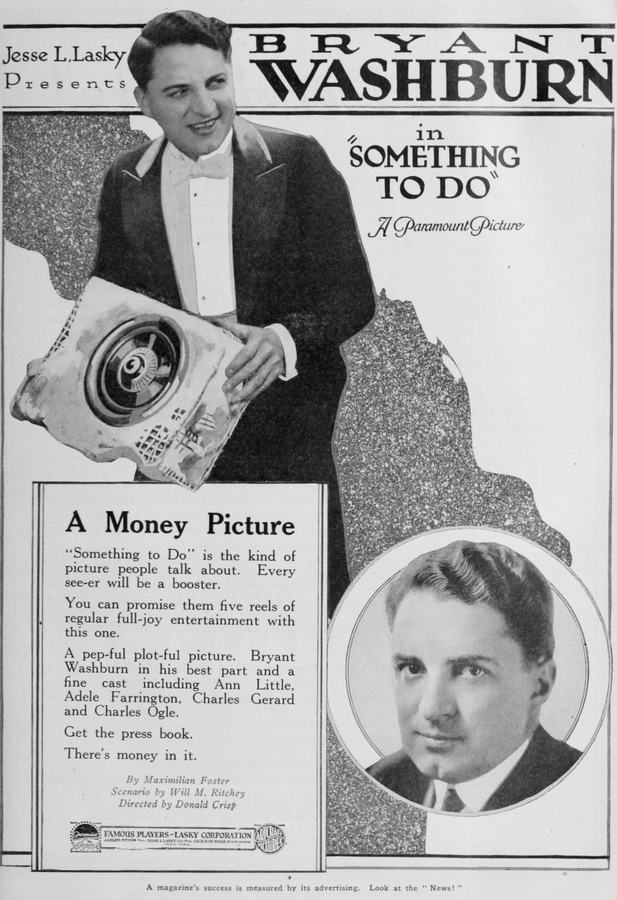
A definitive 6.9/10 rating for a film that redefined the boundaries of cult cinema. Something to Do remains a cornerstone of transgressive art.
In the annals of early cinema, where narratives often grappled with the burgeoning complexities of a rapidly changing world, emerges Something to Do (1919), a film that, despite its seemingly unassuming title, delves with surprising depth into the existential plight of the privileged and the intricate web of societal deception. Directed with a keen eye for both melodrama and subtle satire, this silent-era production, penned by the collaborative minds of Maximilian Foster and Will M. Ritchey, transcends a simple plot summary to offer a fascinating glimpse into the moral ambiguities of the Gilded Age's twilight. It's a journey from languid idleness to accidental heroism, set against a backdrop of genteel fraud and familial treachery, proving that even in the most opulent circles, the most compelling drama often unfolds when one finds, quite literally, something to do.
Our protagonist, Jack Merrill, portrayed with a languid charm by Charles K. Gerrard, embodies the quintessential dilettante of his era. Wealthy beyond measure, he is afflicted not by want, but by a profound, pervasive ennui – a spiritual lassitude that saps the joy from his days. It’s a condition not uncommon in the literature and art of the period, reflecting a critique of inherited wealth that often left its beneficiaries adrift. His physician, recognizing this malaise, prescribes not medicine, but purpose, urging Merrill to engage with the world, to find an activity that might stir his dormant spirit. This initial premise, while straightforward, sets the stage for a narrative that cleverly subverts expectations, transforming a personal quest for meaning into a public unraveling of deceit. The film subtly critiques the very foundations of a society where idleness is not only permissible but, for some, the defining characteristic of their existence. It's a theme explored in various forms, from the comedic antics of The Star Boarder to the more dramatic ponderings of Inherited Passions, but Something to Do frames it as a catalyst for genuine transformation.
Merrill’s journey from passive observer to active participant begins with a rather startling discovery: his own valet, Thompson (played by Jim Mason), has been brazenly masquerading as the aristocratic Lord Sidney within the exclusive social circles of Mrs. Parkin. This revelation acts as a potent antidote to Jack's boredom, a jolt of intrigue that pulls him out of his self-imposed detachment. The sheer audacity of the deception, particularly from someone in his employ, sparks a nascent curiosity that rapidly blossoms into a desire for deeper investigation. It’s a moment of delightful dramatic irony, where the master, seeking diversion, finds it in the unexpected subterfuge of his servant. This initial foray into the world of imposters immediately establishes the film's tone, blending elements of drawing-room comedy with a simmering undercurrent of social commentary.
Intrigued by Thompson's audacious charade, Jack Merrill, with a newfound zest for life, decides to plunge headfirst into this clandestine world. Adopting his own guise as a British earl, he infiltrates a reception at Mrs. Parkin's home. What he uncovers is not merely an isolated instance of deception, but a veritable carnival of imposters. The revelation that "most of the guests are also fakes" is a masterstroke of satirical writing, brilliantly conceived by Foster and Ritchey. It paints a vivid, albeit cynical, portrait of high society as a theatrical stage where appearance trumps reality, and identity is a fluid costume donned for social advantage. This theme of pervasive artifice resonates with other films of the era, such as The Wolf, which similarly explored layers of deception, or Masked Ball, where identities are intentionally obscured for various ends. However, Something to Do takes it a step further, suggesting that the entire social fabric of this particular stratum is woven from threads of fabrication.
Beneath this humorous veneer of social pretense, a far more sinister plot unfurls. Mrs. Parkin, a character whose superficial charm masks a ruthless ambition, has orchestrated the unjust confinement of her own brother, Mr. Remwick, to an insane asylum. Her motive is chillingly pragmatic: to seize control of his estate. This dramatic turn elevates the film beyond mere social satire, injecting a potent dose of melodramatic suspense and genuine peril. The complicity of Professor Frank Blight, an asylum professor, in this nefarious scheme underscores the corruption that can permeate even institutions ostensibly dedicated to care and justice. Adele Farrington, as Mrs. Parkin, must have delivered a performance that conveyed both her outward elegance and her inward depravity, a common trope for villainesses of the silent era, yet one that remains effective when executed with precision. The film, through this plot point, touches upon the vulnerability of individuals against powerful, unscrupulous figures, a concern often echoed in films like The Clutch of Circumstance or Tangled Lives, where personal liberty and inheritance are constantly under threat.
The narrative gains considerable momentum with Mr. Remwick's (Robert Brower) desperate escape from the asylum. His reunion with his daughter, Jane (Ann Little), who, in a cruel twist of fate, serves as Mrs. Parkin's unwitting secretary, injects a powerful emotional core into the unfolding drama. Jane's innocence and her father's plight provide Jack Merrill with a genuine cause, transforming his initial, self-serving curiosity into a burgeoning sense of responsibility and empathy. This is where the film's title truly finds its profound resonance: Jack finally has something truly meaningful to do, something that transcends superficial amusement. His offer to help them open the crucial safe, which contains the receipt implicating Professor Blight and, by extension, Mrs. Parkin, marks his definitive pivot from idle observer to active hero. It's a classic narrative arc, but executed with a certain charm that feels fresh even a century later. Ann Little, likely portraying Jane with a blend of vulnerability and quiet determination, would have been pivotal in anchoring the audience's emotional investment in their struggle.
The film then escalates into a thrilling chase sequence, a staple of early cinema used to great effect to build tension and excitement. Remwick and Jane, now fugitives, speed off to his apartment, pursued relentlessly by Mrs. Parkin and her contingent of asylum guards. The stakes are clear: the receipt represents not just Remwick's freedom, but his very sanity and the restoration of his rightful inheritance. Jack, in a display of newfound resourcefulness and resolve, follows in another car, a silent guardian navigating the chaotic night. His quick thinking to notify the police adds a crucial layer of official intervention, ensuring that justice, however belated, will ultimately prevail. The subsequent rescue of Remwick by the authorities is the dramatic crescendo, a moment of triumph against overwhelming odds. This sequence, with its rapid cuts and high-octane action (for its time), would have captivated audiences, much like the climactic scenes in other adventure-driven films of the period, such as His Majesty, the American, which often relied on daring rescues and thrilling pursuits.
The discovery and presentation of the incriminating receipt serve as the irrefutable evidence needed to dismantle Mrs. Parkin's meticulously crafted scheme. It not only proves Remwick's sanity, thereby invalidating his unjust confinement, but also firmly establishes his sister's guilt in a conspiracy to defraud him of his estate. The legal and moral clarity brought by this piece of paper neatly resolves the central conflict, restoring order and justice to a world temporarily upended by greed and deception. The film’s resolution, while satisfying, also carries a subtle message about the power of tangible proof and the dangers of unchecked ambition, echoing sentiments found in films like Queen X or The Midnight Trail, where justice often hangs by a thread of evidence.
For Jack Merrill, the resolution of Remwick's plight is more than just a successful adventure; it marks the culmination of his transformation. His journey, initiated by a vague sense of dissatisfaction, ends with a profound personal fulfillment. He has found his "something to do" not in idle pursuits or feigned identities, but in genuine engagement, in righting a wrong, and in connecting with others on a deeper level. The blossoming of affection between Jack and Jane is the natural, heartwarming conclusion, symbolizing his complete redemption from ennui. It’s a classic romantic payoff, but one that feels earned, as it stems directly from his newfound purpose and courage. This romantic subplot, while perhaps predictable, provides a satisfying emotional closure, cementing Jack's journey from a life of aimless luxury to one imbued with meaning and love.
To fully appreciate Something to Do, one must view it through the lens of early 20th-century filmmaking. The performances, characteristic of the silent era, would have relied heavily on exaggerated facial expressions and grandiose gestures to convey emotion without spoken dialogue. Charles K. Gerrard, as Jack Merrill, would have needed to articulate his initial boredom, his growing curiosity, and his eventual heroic resolve primarily through physical performance and subtle shifts in demeanor. The transition from indolence to dynamism is crucial, and Gerrard's ability to make this believable without words would have been a testament to his craft. Ann Little, as Jane, would have conveyed vulnerability, fear, and hope, drawing the audience into her character's desperate situation. Robert Brower's portrayal of Remwick, initially confined and later frantic, would have required a delicate balance of pathos and determination.
The direction, while not attributed in the provided details, would have been instrumental in maintaining the film's pacing and clarity. Silent films often employed intertitles not just for dialogue, but for exposition and to guide the audience through complex plot points. The effectiveness of the chase sequence, for instance, would have depended on skillful editing and dynamic camera work (within the limitations of the period) to build suspense. The use of close-ups to emphasize emotional reactions or crucial objects (like the receipt) would have been key. The overall aesthetic of the film, likely shot on location or in studios with painted backdrops, would have contributed to the atmosphere of both opulent deception and frantic pursuit. The film, like many from its time such as Idols or The Carpet from Bagdad, would have relied on visual storytelling and character archetypes to deliver its message, a testament to the ingenuity of early filmmakers.
Something to Do, in its intricate plot and character dynamics, offers a compelling reflection of the social anxieties and moral debates prevalent in the early 20th century. The critique of inherited wealth and the vapidity of a life without purpose resonates strongly, suggesting a societal unease with the extremes of class distinction. The film's portrayal of a high society riddled with imposters and driven by avarice speaks to a broader cynicism about the authenticity of elite circles. It's a world where appearances are everything, and beneath the polished veneer, corruption and cruelty can fester. This thematic undercurrent positions the film not just as entertainment, but as a piece of social commentary, akin to the more serious dramatic explorations of societal ills seen in The Measure of a Man or even the politically charged narratives like Ireland, a Nation, though through a lens of melodrama and light satire.
The collaborative writing efforts of Maximilian Foster and Will M. Ritchey are evident in the film's tightly woven plot and well-defined character arcs. They manage to balance the comedic elements of social masquerade with the genuine drama of Remwick's plight, creating a narrative that is both entertaining and thought-provoking. While perhaps not as widely remembered as some blockbusters of the era, Something to Do likely contributed to the evolving language of cinematic storytelling, demonstrating how complex themes could be conveyed effectively through visual means. Its legacy lies in its ability to blend genres – social satire, melodrama, and even a touch of romantic comedy – into a cohesive and engaging whole. For modern audiences, it serves as a valuable artifact, offering insights into the concerns and narrative conventions of a bygone cinematic age. It reminds us that the quest for purpose, the dangers of deception, and the yearning for justice are timeless themes that continue to resonate, regardless of the technological advancements in filmmaking.
The casting, featuring actors like Charles K. Gerrard, Jim Mason, Robert Brower, Ann Little, Adele Farrington, Charles Ogle, and Bryant Washburn, would have brought these characters to life with the distinct acting styles of the silent era. Each would have contributed to the rich tapestry of deception and sincerity that defines the film. Gerrard’s transformation, Ann Little’s earnestness, and Adele Farrington’s villainy would have been central to the film’s emotional impact. Even minor roles, such as Charles Ogle’s or Bryant Washburn’s, would have filled out the world of Mrs. Parkin’s deceptive salon, adding to the sense of a fully realized, if morally compromised, social sphere.
In conclusion, Something to Do is far more than a quaint relic of early cinema. It is a vibrant, engaging narrative that expertly weaves together themes of existential boredom, social satire, and high-stakes melodrama. Jack Merrill’s journey from a life of aimless luxury to one defined by genuine purpose and heroic action provides a compelling central arc. The film’s critique of a superficial society, where identity is fluid and deception is commonplace, remains remarkably pertinent, offering a mirror to certain aspects of contemporary life. The thrill of the chase, the triumph of justice, and the eventual blossoming of romance all contribute to a satisfying cinematic experience. While its silent film conventions may require a slight adjustment for modern viewers, the universal themes of finding meaning, fighting injustice, and discovering authentic connection ensure that Something to Do retains its charm and relevance. It serves as a reminder that even a century ago, filmmakers were adept at crafting stories that entertained, provoked thought, and ultimately, offered a glimpse into the enduring complexities of the human condition. It’s a film that genuinely gives us something to consider, long after the final frame.
IMDb 6.1
1926
Community
Log in to comment.