DbcultAccessing Vault...
5.2/10
Senior Film Conservator
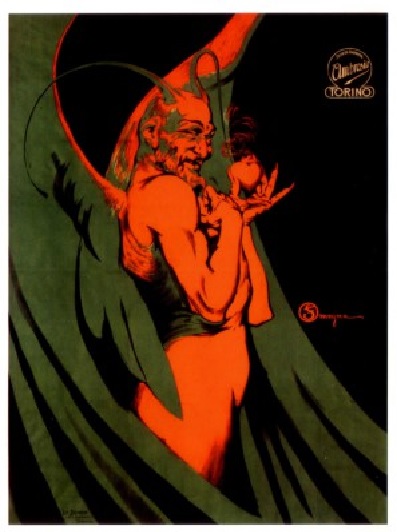
A definitive 5.2/10 rating for a film that redefined the boundaries of cult cinema. Satana remains a cornerstone of transgressive art.
In the hallowed archives of nascent cinema, few works dared to tackle the grand, sweeping narratives of cosmic struggle and profound moral philosophy with the unbridled ambition and sustained vision of Satana. Unveiled in 1912, this four-chapter epic transcends the conventional confines of early filmmaking; it is, in essence, a profound theological treatise meticulously rendered in the nascent medium of flickering celluloid. Far from a simplistic morality play, Satana presents a sophisticated, multifaceted examination of diabolical influence and its ceaseless war against the divine, resonating across epochs. It demands intellectual engagement, rewarding the discerning viewer with a rich tapestry of allegorical depth and pioneering visual storytelling that casts a long shadow, reverberating far beyond its immediate historical context.
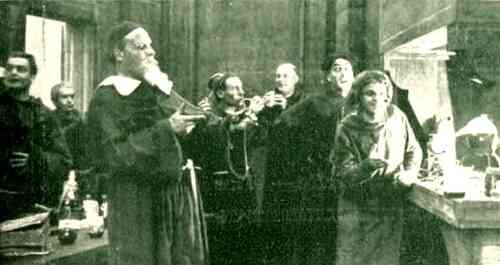
The film commences with an audacious plunge into the pre-creation void, depicting the incandescent, cataclysmic fall of Lucifer, portrayed with a mesmerizing blend of defiance and sorrow by Mario Bonnard. This inaugural chapter, "Satan vs. The Creator," is nothing short of a breathtaking spectacle for its era, envisioning the very genesis of evil as an act of profound, cosmic insubordination. The visual language employed here is remarkably ambitious, striving with impressive success to capture the grandeur of celestial realms and the apocalyptic rupture that irrevocably casts the proud, rebellious archangel into abyssal damnation. It’s a bold, almost Miltonic interpretation of paradise lost, an earnest attempt to give tangible, visual form to the ineffable and the sublime. Viewers familiar with other early biblical epics, such as Life and Passion of Christ or even the more documentary-style From the Manger to the Cross, might well appreciate Satana's singular willingness to delve into the metaphysical origins of evil, rather than merely documenting sacred events. The film, through its innovative use of special effects and carefully composed tableaus, doesn't shy away from depicting the sheer, staggering scale of the cosmic conflict, laying the foundational groundwork for a pervasive, omnipresent antagonist whose insidious influence will ripple and mutate through all subsequent chapters. The visual effects, rudimentary by today's hyper-realistic standards, are nevertheless employed with an imaginative zeal that speaks volumes about the pioneering spirit of early Italian cinema, conjuring a sense of awe and existential dread that few contemporaries could hope to match. The sheer scope of this opening gambit establishes Satana as a work of profound philosophical inquiry, cloaked in cinematic grandeur.
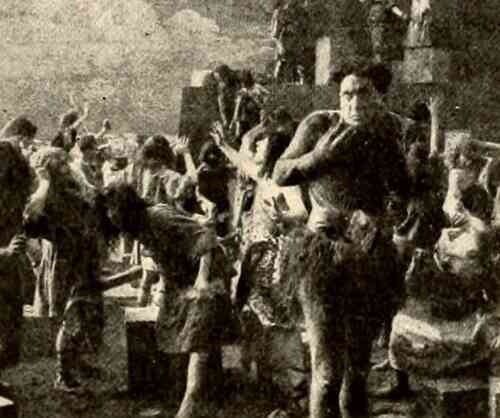
Following the cosmic genesis of evil, Satana deftly pivots to a more terrestrial, yet equally profound, struggle in its second chapter: "Satan vs. The Saviour." Here, the narrative focus shifts dramatically from celestial warfare to a far more intimate, psychological battle for the collective soul of humanity. Satan, now firmly entrenched within the earthly plane, endeavors with cunning malevolence to corrupt the nascent messiah, employing subtle temptations and insidious whispers. This segment is notably less about grand, sweeping spectacle and more about the internal fortitude and unwavering spiritual resilience required to resist the seductive allure of sin. The portrayal of the Saviour, though perhaps intentionally less overtly characterized than the titular antagonist, embodies a quiet, steadfast resilience that serves as a powerful, luminous counterpoint to Satan's captivating, albeit destructive, charisma. The narrative meticulously delineates the various forms of temptation, ranging from the irresistible promise of worldly power to the gnawing seeds of personal doubt, thereby showcasing the devil's preternatural, almost intuitive understanding of human weakness. In an era where films like The Life and Passion of Jesus Christ and Life of Christ focused predominantly on the benevolent aspects of Christ's ministry, Satana boldly dares to highlight the relentless, multifaceted opposition he faced, injecting a layer of dramatic tension and existential gravitas often overlooked in more devotional cinematic offerings. The dramatic climax, culminating in the Saviour's ultimate, redemptive sacrifice, is imbued with a poignant solemnity, serving not as a definitive defeat for Satan, but rather as a profound, enduring challenge to his dominion, thus setting the stage for his continued, shape-shifting machinations throughout the annals of human history.
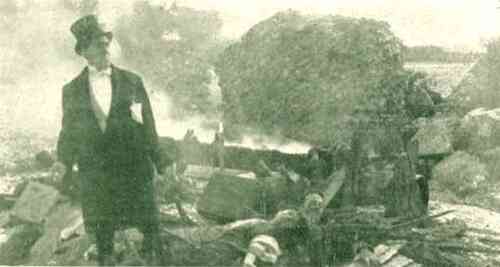
The film's third chapter, "The Green Demon/Satan during the Dark Ages," marks a truly significant and artistically adventurous shift in its nuanced portrayal of evil. Eschewing the more anthropomorphic, distinct representations of the preceding segments, Satan here undergoes a profound metamorphosis, transforming into a more diffuse, pervasive, almost atmospheric force. This "Green Demon" embodies the primal fears, rampant superstition, and burgeoning social anxieties that so profoundly characterized this tumultuous, often misunderstood period of human history. The "Green Demon" is less a singular, identifiable figure and more a miasma, a subtle yet potently corrupting influence that insidiously permeates the very fabric of society. This chapter masterfully evokes the historical ambiance of the Dark Ages, a time when the precarious boundaries between the sacred and the profane, the natural and the supernatural, were terrifyingly fluid and dangerously indistinct. The performances by Fernanda Negri Pouget and Mario Voller-Buzzi, alongside Bonnard's more subtle presence, contribute to a palpable sense of a world teetering precariously on the precipice of chaos, where human frailties are tragically amplified by widespread ignorance, endemic fear, and nascent spiritual struggles. The film subtly suggests that evil in this particular era thrives not through overt acts of defiance or grand pronouncements, but through the insidious erosion of nascent faith, the cynical manipulation of collective anxieties, and the exploitation of humanity's baser, more primal instincts. Unlike the clear-cut, almost theatrical battles of previous chapters, this segment delves deep into the profound subtlety of evil, its chilling ability to masquerade as natural phenomena or even divine judgment, rendering it a particularly chilling and intellectually stimulating exploration. It speaks to a different kind of human struggle, one waged against internal demons as much as against external, tangible threats, a theme perhaps echoed in the allegorical journeys of films like Pilgrim's Progress, albeit observed through a darker, more profoundly cynical lens. The visual grammar here often relies on chiaroscuro and suggestive imagery, painting a world shrouded in both literal and metaphorical darkness.
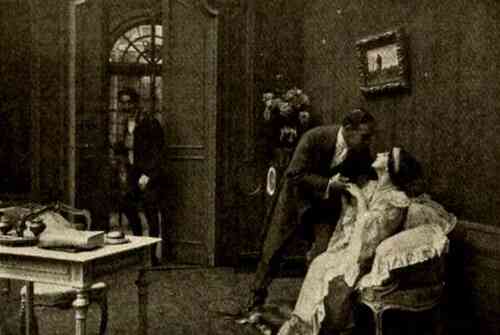
As Satana hurtles into its concluding chapter, "The Red Demon/Satan in modern times," the cinematic landscape undergoes yet another radical and compelling transformation. The "modern times" depicted are, of course, the early 20th century, a period of unprecedented industrialization, burgeoning urban centers, rapidly shifting social mores, and the dawning of a new technological age. Here, Satan definitively sheds his archaic guises, donning the vivid, potent mantle of the "Red Demon" – a chilling manifestation of insatiable desire, rampant materialism, pervasive social unrest, and the growing anomie of an increasingly secular and industrialized world. The film, with a surprising degree of prescience that speaks to its visionary nature, astutely identifies the new battlegrounds for the human soul: the irresistible allure of burgeoning wealth, the corrupting, intoxicating influence of unchecked power, and the profound moral ambiguities inherent in a society grappling with dizzying technological advancement and widespread social upheaval. The nuanced performances by the cast, including Mary Cleo Tarlarini, skillfully convey the profound vulnerability of individuals caught in this bewildering maelstrom of modern temptations and ethical quandaries. This chapter functions as a potent, incisive social commentary, subtly suggesting that evil adapts, not through grand, overt pronouncements or dramatic cosmic clashes, but by subtly exploiting the inherent, often unacknowledged flaws in human progress and societal evolution. It’s a disquieting vision, demonstrating with alarming clarity how the devil's insidious work becomes inextricably interwoven with the very fabric of everyday life, manifesting in the insidious forms of greed, envy, ambition, and the casual, often unthinking cruelty of an indifferent, rapidly globalizing world. One might draw fascinating parallels to the nascent social realism found in later, more celebrated works like Les misérables or Oliver Twist, though Satana uniquely frames its critique through the lens of a cosmic, persistent evil rather than purely human-made woes. The "Red Demon" is arguably the most insidious iteration of the antagonist, for it is rendered virtually indistinguishable from the very desires and aspirations that drive modern humanity, making its detection and resistance all the more challenging.
What truly elevates Satana beyond a mere historical curiosity or a rudimentary cinematic experiment is its profound thematic ambition and the sheer audacity of its narrative and structural integrity. The palpable influence of literary giants such as Friedrich G. Klopstock and John Milton is unmistakable, lending the film an epic scope and a poetic sensibility that profoundly belies the nascent stage of cinematic art in which it was conceived. The film functions as a sweeping, multi-layered allegory, meticulously delineating the eternal, unwavering struggle between light and shadow, not as a series of disparate, isolated incidents, but as a continuous, evolving, and ultimately inexorable confrontation. The consistent, compelling throughline is the remarkable adaptability of evil, its chameleon-like ability to shift forms, tactics, and psychological approaches across millennia. This is precisely where the film achieves its most brilliant insights, presenting a nuanced, sophisticated understanding of sin and temptation that commendably eschews simplistic, Manichean portrayals.
The performances, particularly Mario Bonnard's multi-faceted and deeply compelling portrayal of Satan, are absolutely central to the film's profound success and lasting impact. Bonnard imbues his character with a captivating complexity, seamlessly transitioning from the defiant, incandescent archangel to the cunning, manipulative tempter, and finally to the insidious, pervasive force lurking behind societal decay. His commanding physical presence and highly expressive mime, absolutely crucial in the silent era, convey a breathtaking spectrum of malevolence, ranging from overt, thunderous rebellion to subtle, psychological manipulation. Mary Cleo Tarlarini, Fernanda Negri Pouget, and Mario Voller-Buzzi also deliver compelling, often poignant performances, embodying humanity's varied and often tragically flawed responses to the devil's relentless machinations – from devout, unwavering faith to tragic, inevitable succumbence. The film’s profound reliance on strong visual compositions, innovative camera work for its time, and highly expressive, theatrical acting, while characteristic of the period, is executed with a particular flair and artistic conviction that consistently captivates the audience, drawing them into its grand narrative.
The production design and direction, while undeniably constrained by early 20th-century technology and budgetary limitations, are consistently imaginative and remarkably effective. From the sweeping, almost ethereal celestial panoramas of the first chapter to the gritty, often stark realism of the Dark Ages, and the bustling, frenetic energy of early modern cities, each setting feels distinct, meticulously crafted, and serves brilliantly to underscore the evolving, protean nature of the central conflict. The judicious use of lighting, though basic in its technological execution, is often employed to tremendous dramatic effect, creating stark, symbolic contrasts between good and evil, hope and despair. One might even compare its ambitious scope and sweeping historical panorama to other monumental productions of the era, such as Cleopatra or Les amours de la reine Élisabeth, which similarly sought to bring grand historical or mythical narratives to the silver screen. However, Satana profoundly distinguishes itself by courageously tackling an abstract, deeply philosophical concept with such sustained narrative focus and thematic consistency.
Despite its considerable age and the inevitable evolution of cinematic techniques, Satana unequivocally remains a fascinating and critically important artifact, not just for dedicated film historians but for anyone genuinely interested in the profound cinematic exploration of philosophical and theological questions of enduring consequence. It stands as a powerful testament to the early filmmakers' daring vision, their unshakeable willingness to push the nascent boundaries of what the developing medium could possibly achieve. The film significantly predates and, in many subtle ways, perhaps even influences later epic portrayals of biblical narratives, offering a truly unique and compelling perspective on the antagonist that is often regrettably sidelined or simplified in more conventional, devotional tellings. Its meticulously segmented approach allows for a panoramic, almost encyclopedic view of evil's ubiquitous influence, demonstrating its persistent, evolving, and often unsettlingly pervasive nature across human civilization.
The film’s insightful exploration of the "Green Demon" and "Red Demon" chapters is particularly prescient and remarkably sophisticated for its time. It admirably avoids the facile trap of depicting evil as a static, easily identifiable, or overtly monstrous entity. Instead, it portrays a chameleon-like, insidious force, adapting with unsettling fluidity to the profound cultural, social, and technological shifts of each successive era. The "Green Demon" speaks eloquently to the primordial, often pagan fears and the arduous human struggle against the untamed forces of nature and the pervasive shadows of ignorance, while the "Red Demon" offers a trenchant critique of the emerging consumerism, industrial alienation, and moral relativism that would come to profoundly define the tumultuous 20th century. This remarkably nuanced and intellectually rigorous approach lends Satana a timeless quality, as its astute observations on human susceptibility to temptation and corruption remain remarkably pertinent and deeply unsettling even in our hyper-modern, complex world.
In a cinematic landscape often dominated by transient spectacle and fleeting trends, Satana offers a rare and compelling synthesis of breathtaking visual ambition and profound intellectual depth. It challenges viewers to thoughtfully consider the deeper, often unseen forces at play in both human history and individual lives. It is a film that unequivocally provokes thought, encourages profound introspection, and dares to unflinchingly confront the very essence of good and evil on an epic, almost overwhelming scale. Its rightful place in film history is assured not merely as an early example of grand narrative filmmaking, but as a sophisticated, multi-layered allegorical work that bravely grapples with the eternal questions of faith, free will, and the enduring, seductive power of temptation. While it may not possess the immediate, effortless accessibility of contemporary blockbusters, its undeniable artistic merit and profound philosophical weight make it an absolutely crucial viewing experience for those seeking to understand the foundational currents of cinematic storytelling and the enduring human fascination with the infernal. This forgotten gem of early Italian cinema is a stark, powerful reminder of the medium's boundless capacity for profound thematic exploration, a truly visionary piece that resonates with a disquieting, universal truth about the human condition and the shadow that perpetually, inexorably dogs its heels.
IMDb —
1934
Community
Log in to comment.