DbcultAccessing Vault...
Cult Review
Senior Film Conservator
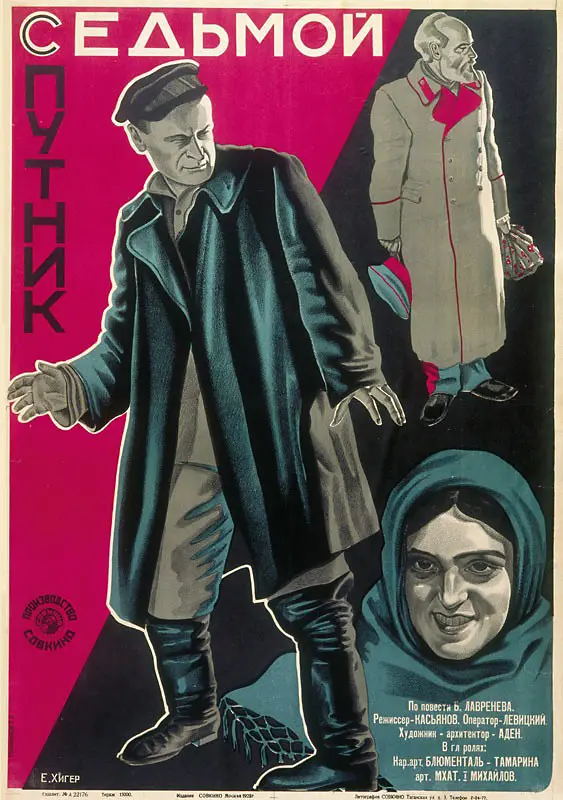
Is Sedmoy sputnik a film worth unearthing in today’s vast cinematic landscape? Short answer: yes, absolutely, but with significant caveats. This is a profound, character-driven drama that rewards patience and a contemplative mind, making it an essential watch for cinephiles who appreciate historical allegories and nuanced performances, yet it will undoubtedly alienate those seeking fast-paced narratives or overt emotional payoffs.
This film works because it masterfully crafts a compelling narrative around the timeless struggle between individual vision and institutional inertia, grounded by truly captivating lead performances. It fails because its deliberate pacing and esoteric scientific themes can feel inaccessible, occasionally bordering on the ponderous for modern audiences accustomed to more immediate gratification. You should watch it if you cherish films that provoke thought long after the credits roll, exploring themes of intellectual courage, societal skepticism, and the often-lonely path of the innovator, particularly if you have an affinity for classic Russian cinema.
Sedmoy sputnik, or 'The Seventh Satellite,' is not merely a film; it is a meticulously crafted historical drama that delves into the often-unseen battles fought within the scientific community and the human heart. Set against a backdrop of intellectual ferment and societal conservatism in early 20th-century Russia, the film centers on Professor Viktor Andreyevich Volkov, portrayed with quiet intensity by Mark Prudkin. Volkov is an astrophysicist whose groundbreaking, albeit controversial, theories about an unobserved celestial body — the titular 'seventh satellite' — place him at odds with the established scientific orthodoxy.
The plot, while seemingly esoteric, quickly grounds itself in human experience. Volkov’s expulsion from the Imperial Academy for his 'unsubstantiated' claims isn't just a professional setback; it's a profound personal exile. We witness his descent into a life of solitude, meticulously charting celestial movements from his humble study, unwavering in his conviction despite the derision of his peers. This isolation isn't just physical; it's intellectual, a testament to the film's ability to explore the weight of being an outlier.
Mariya Blyumental-Tamarina delivers a nuanced performance as Dr. Elena Petrova, Volkov's former colleague and a figure who embodies the conflict between pragmatic science and intuitive leaps. Her initial skepticism, tinged with a subtle undercurrent of professional jealousy, slowly erodes as global events – unexplained atmospheric anomalies and agricultural failures – begin to eerily echo Volkov’s predictions. The subtle shifts in her expressions, from dismissive disdain to dawning realization, are a masterclass in understated acting.
The film’s strength lies in its refusal to paint its characters in broad strokes. There are no clear villains, only individuals operating within the confines of their understanding and the pressures of their time. The conflict is less about good versus evil and more about the friction between different modes of thought: the empirical versus the intuitive, the collective versus the individual. It's a challenging watch, but one that rewards sustained attention.
The direction of Sedmoy sputnik is, in a word, deliberate. The film eschews rapid cuts and flashy sequences, opting instead for long takes and carefully composed frames that allow the audience to truly inhabit the scenes. This directorial choice reinforces the film's thematic core of methodical observation and the slow unfolding of truth. Each shot feels purposeful, contributing to the overall sense of quiet gravitas.
Consider, for instance, the recurring shots of Volkov at his telescope, his face illuminated by the faint glow of starlight. These moments are not just visually striking; they are psychological portraits, revealing his unwavering dedication and the profound loneliness of his pursuit. The cinematography, while not overtly 'beautiful' in a modern sense, is deeply atmospheric. It uses muted tones and natural light to create a sense of realism, almost documentary-like, that immerses the viewer in the period.
There's a particular scene where Dr. Petrova confronts Volkov in his study, surrounded by stacks of his meticulously hand-written calculations. The camera holds a medium shot, allowing the tension to build through their dialogue and subtle body language, rather than relying on quick cuts or dramatic close-ups. This choice highlights the intellectual sparring and the quiet desperation in Volkov's defense of his life's work. It’s a powerful example of how the film uses visual restraint to amplify dramatic impact.
The pacing, while slow, is not stagnant. It’s a rhythm that reflects the scientific process itself – patient observation, hypothesis, and the slow, often arduous path to validation. This can be a hurdle for some viewers, but for those willing to attune themselves to its tempo, it offers a deeply immersive experience. The film trusts its audience to engage with its ideas, rather than spoon-feeding them.
Mark Prudkin's portrayal of Professor Volkov is nothing short of captivating. He doesn't play Volkov as a flamboyant genius, but as a man burdened by an inconvenient truth. His performance is a masterclass in internal struggle, conveyed through subtle gestures, weary eyes, and a quiet, unyielding conviction. When he delivers his impassioned defense of his theories, his voice trembles not with fear, but with the immense weight of his certainty, a certainty that stands alone against a tide of skepticism. It’s a truly human performance, full of quiet dignity.
Mariya Blyumental-Tamarina, as Dr. Petrova, provides an equally compelling counterpoint. Her character is the voice of reason, the embodiment of the scientific establishment. Yet, Blyumental-Tamarina imbues Petrova with a subtle humanity, hinting at a curiosity that battles her professional skepticism. Her arc, from a dismissive colleague to a reluctant believer, is handled with incredible delicacy. The scene where she first witnesses the unexpected atmospheric phenomena, and a flicker of doubt crosses her face, is a pivotal moment, exquisitely performed. Her performance helps to bridge the gap between Volkov's radical ideas and the audience's understanding.
The supporting cast, though given less screen time, contributes significantly to the film's authentic atmosphere. They represent the collective voice of the scientific community – some genuinely dismissive, others merely cautious, and a few quietly intrigued. Their reactions serve as a mirror to Volkov's isolation, amplifying the sense of his singular journey.
Sedmoy sputnik is rich with thematic depth. At its core, it’s a powerful exploration of the nature of genius and the resistance it often faces. Volkov's 'seventh satellite' is more than a celestial body; it's a metaphor for any radical idea that challenges established paradigms. The film asks us to consider the courage it takes to stand by an unconventional truth, even when it means sacrificing reputation, comfort, and companionship.
The theme of isolation is particularly potent. Volkov’s journey is a lonely one, echoing the historical struggles of countless innovators whose ideas were ahead of their time. The film subtly critiques the rigidity of institutions and the human tendency to cling to the familiar, even in the face of mounting evidence. This critique is not heavy-handed; it’s woven into the fabric of the narrative, emerging through character interactions and the unfolding plot.
Furthermore, the film touches upon the ethical responsibilities of scientists and the societal implications of their discoveries. As the world faces the consequences of ignoring Volkov’s warnings, the film subtly suggests a cautionary tale about the dangers of intellectual arrogance and the importance of open-mindedness. It’s a brutal reminder that progress often comes at a steep cost, borne by those brave enough to challenge the status quo.
"The film's quiet conviction that truth will ultimately prevail, regardless of initial resistance, is its most enduring and resonant message."
Absolutely. Sedmoy sputnik possesses a timeless quality that transcends its historical setting. Its central themes of intellectual courage, the struggle against dogma, and the eventual triumph (or at least vindication) of truth are as relevant now as they were in the early 20th century. While its deliberate pace and lack of modern cinematic flourishes might deter some, its profound character studies and thought-provoking narrative make it an incredibly rewarding experience for the discerning viewer.
It's a film that demands your attention, but in return, it offers a deeply satisfying and intellectually stimulating journey. It works. But it’s flawed. Its brilliance lies in its ability to tell a grand story through intimate, human moments. This isn't just a historical piece; it's a mirror reflecting contemporary debates about scientific consensus, 'fake news,' and the value of dissenting voices.
Here's a breakdown of Sedmoy sputnik's strengths and weaknesses:
Sedmoy sputnik is a challenging yet profoundly rewarding film, a testament to the power of a compelling story told with conviction and artistic integrity. It is not a film for everyone, nor does it try to be. Its deliberate pace and intellectual leanings demand a particular kind of engagement from its audience, but for those willing to invest, it offers a rich tapestry of human resilience, scientific struggle, and the often-unseen battles that shape progress. It’s a film that lingers, prompting reflection on the nature of truth and the courage required to pursue it, regardless of the cost. While it may never achieve widespread acclaim in an era of instant gratification, its quiet brilliance ensures its place as a significant, if often overlooked, cinematic achievement. Seek it out if you dare to look beyond the obvious and embrace a story that orbits just outside the mainstream, much like its eponymous 'seventh satellite.' It’s an experience that will enrich your cinematic palate.
IMDb 6.7
1928
Community
Log in to comment.