DbcultAccessing Vault...
Cult Review
Senior Film Conservator
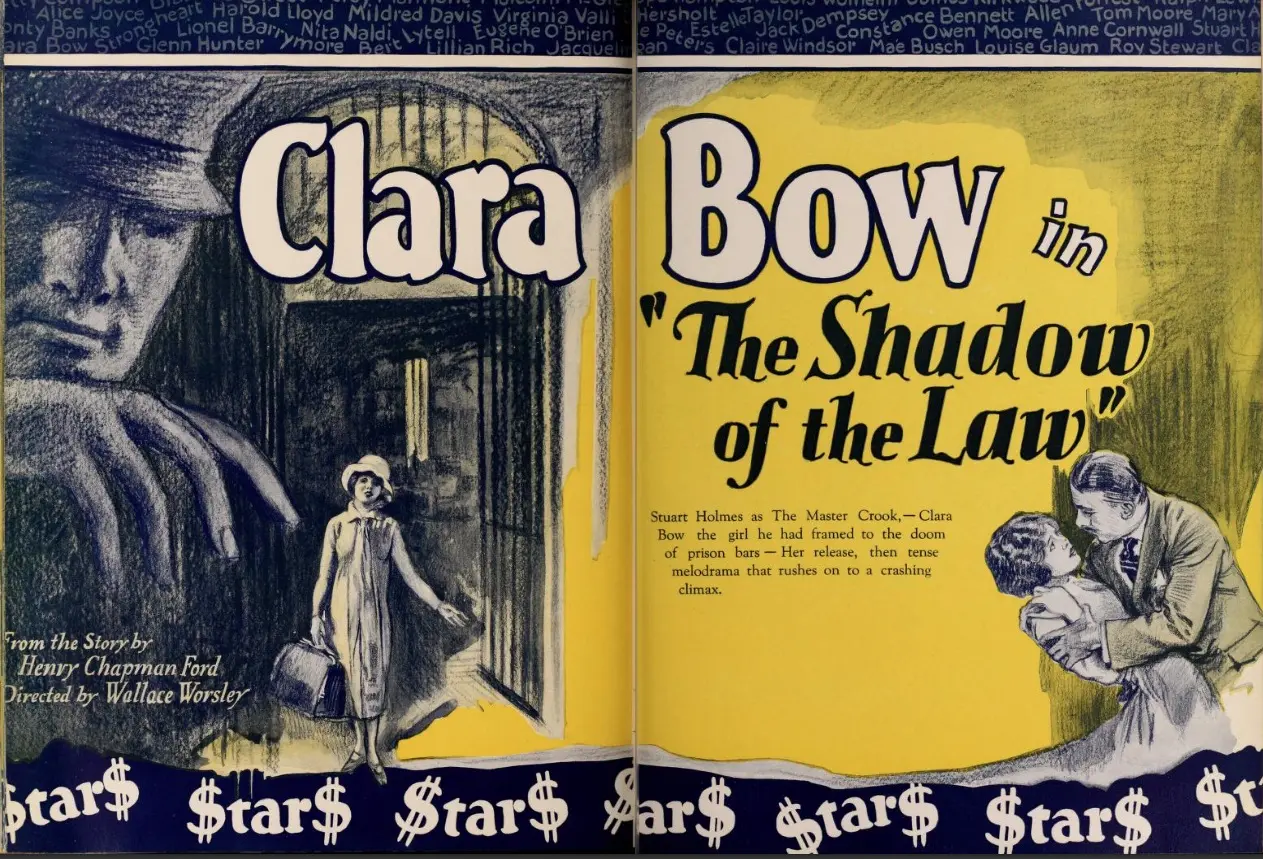
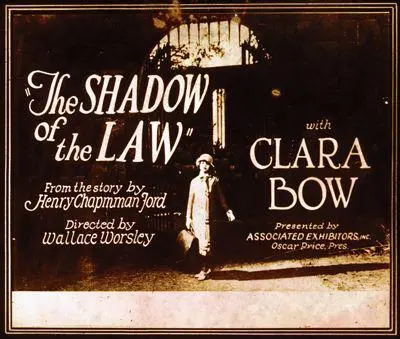
Is Shadow of the Law a silent classic that demands your attention today? Short answer: yes, but primarily as a showcase for a raw, pre-superstardom Clara Bow rather than for its somewhat predictable revenge plot.
This film is for enthusiasts of silent-era social dramas and those who want to see the 'It Girl' before she was a caricature of flapper culture; it is not for viewers who require the fast-paced, high-octane narrative beats of modern vigilante cinema.
1) This film works because it avoids the sugary sentimentality common in 1926, opting instead for a cold, clinical look at social disgrace and the weight of a criminal record.
2) This film fails because the pacing in the second act drags significantly as it tries to balance a burgeoning romance with a hard-boiled crime story, leading to a tonal clash.
3) You should watch it if you want to see how silent cinema handled the 'wrongfully accused' trope with more visual flair and atmospheric dread than many early talkies.
Before Clara Bow became the definitive face of the Roaring Twenties, she was a dramatic actress of surprising depth. In Shadow of the Law, she discards the playful wink and the energetic bounce seen in Sally of the Sawdust for something far more somber. Her Mary Brookes is a woman who ages a decade in the span of a single prison intake scene. The way she handles the transformation from a hopeful innocent to a hardened ex-convict is a masterclass in silent expression. It works. But it’s flawed. The script occasionally asks her to lean back into traditional melodrama, but when she is allowed to simply exist in the silence of her character's grief, she is magnetic.
Consider the scene where she first returns to her old neighborhood. There is no grand orchestral swell or frantic gesturing. Instead, Bow uses a still, haunted gaze that tells the audience exactly how much the world has moved on without her. It is a moment of quiet devastation that rivals the social commentary found in Lille Dorrit. She isn't just a victim; she is a ghost haunting her own life. This nuance is what saves the film from being a mere footnote in her filmography.
The cinematography in Shadow of the Law uses light and shadow not just as aesthetic choices, but as thematic anchors. The 'shadow' of the title is literal. Director of photography choices emphasize the bars of the prison, the vertical lines of the city, and the oppressive weight of the courtroom. This isn't the bright, frontier optimism of The Northern Code; this is a claustrophobic urban nightmare. The use of low-key lighting during the initial theft sequence creates a sense of ambiguity that keeps the audience questioning the logistics of the frame-up, even if they know Mary is innocent.
The film’s visual strength lies in its ability to portray the law as a blind, unfeeling machine. When Mary is sentenced, the camera stays at a distance, making her look small and insignificant against the high benches and stone walls. This visual isolation is a recurring motif. Even when she is seeking revenge, she is often placed at the edge of the frame, suggesting that she can never truly return to the center of society. It is a cynical visual style that feels surprisingly modern, echoing the grim realism of Cassidy.
The screenplay, penned by Grover Jones and Leah Baird, is a fascinating artifact of 1920s morality. While many films of the era, such as Parentage or Where Are My Children?, were preoccupied with heavy-handed moralizing, Shadow of the Law feels more interested in the mechanics of survival. The dialogue (via intertitles) is punchy and often devoid of the flowery prose that plagued silent cinema. There is a hardness to the exchanges between Mary and the villainous Stuart Holmes that suggests a world where words are weapons.
However, the writing stumbles in the final act. The resolution relies on a series of coincidences that feel like a betrayal of the film's earlier realism. It’s as if the writers were afraid to follow the story to its naturally tragic conclusion and instead opted for a 'safe' ending that would satisfy the censors of the time. This softening of the narrative prevents the film from reaching the heights of a true masterpiece. It lacks the daring commitment to its own darkness that you might find in The End of the Game.
Yes, Shadow of the Law is absolutely worth watching if you are a fan of classic cinema or Clara Bow. While the plot is a standard revenge-and-redemption arc, the execution is elevated by high production values and a central performance that is both gritty and vulnerable. It offers a rare glimpse into the dramatic potential of a star often remembered only for her charm. If you can forgive the somewhat dated coincidences of the plot, the atmosphere alone is worth the price of admission.
William V. Mong and Stuart Holmes provide excellent support, representing the two sides of the legal and moral spectrum. Holmes, in particular, is a delight to watch. He plays the villain with a slick, oily charm that makes his eventual confrontation with Mary all the more satisfying. He doesn't twirl a mustache; he simply exudes a sense of entitlement that makes him genuinely loathsome. This is a far cry from the more slapstick or broad performances found in films like Hands Up! or Don't Weaken.
The interaction between Mary and her father is another highlight. It grounds the revenge plot in a family dynamic that feels lived-in. Their shared history of being on the wrong side of the law adds a layer of fatalism to the story. You get the sense that Mary was always destined for this path, no matter how hard she tried to stay straight. This theme of inherited guilt is handled with more subtlety here than in Darwin Was Right, focusing on social consequence rather than biological determinism.
Released in 1926, this film arrived at a crossroads for American cinema. The industry was beginning to experiment with more adult themes and sophisticated visual storytelling. Shadow of the Law is a prime example of this transition. It moves away from the Victorian morality of earlier decades and starts to explore the gray areas of the law. While it’s not as experimental as The Flames of Johannis or as fantastical as Rip Van Winkle, it possesses a street-level grit that was becoming increasingly popular with urban audiences.
It also serves as a reminder of how versatile the silent film medium could be. Without the benefit of sound, the filmmakers had to rely on composition and performance to convey the internal state of a woman who has lost everything. In many ways, the silence enhances the feeling of Mary’s isolation. When she is in a crowded room but cannot speak her truth, the audience feels her entrapment more acutely. It’s a technique that would be lost in the transition to talkies, where dialogue often over-explained the emotions that Bow could convey with a single tilt of her head.
Shadow of the Law is a compelling, if occasionally uneven, revenge drama that survives on the strength of its lead actress and its atmospheric direction. It is a cynical look at the American justice system that feels remarkably ahead of its time in its portrayal of police corruption and social prejudice. While it may not have the legendary status of other 1926 releases, it is a vital piece of the puzzle for anyone studying the evolution of the crime thriller.
"A haunting exploration of justice delayed, anchored by a performance that proves Clara Bow was more than just a flapper—she was a force of nature."
Ultimately, the film is a testament to the power of visual storytelling. It tells a familiar story, but it tells it with a conviction that makes it feel fresh. Whether you are watching for the historical significance or the sheer drama of the frame-up, you will find something to admire in the shadows. It works. But it’s flawed. And that imperfection is exactly what makes it human.
IMDb 4.9
1915
Community
Log in to comment.