DbcultAccessing Vault...
6.2/10
Senior Film Conservator
A definitive 6.2/10 rating for a film that redefined the boundaries of cult cinema. Shekhvedra remains a cornerstone of transgressive art.
If you are looking for a fast-paced thriller to watch with your dinner, Shekhvedra is absolutely not it. You will probably hate it if you can't stand long pauses and grainy footage that looks like it was rescued from the bottom of a lake. But if you’re the type of person who finds themselves staring at old, dusty photographs and wondering what those people were thinking, this might actually be your thing.
It is worth watching just to see how different movies used to feel. It’s a quiet experience, obviously, being silent and all, but the atmosphere is loud in its own weird way.
The story is basically what the title says—a meeting. In Georgian, 'Shekhvedra' means 'The Encounter' or 'The Meeting.' It’s about people coming together at a time when the world was shifting under their feet. Samson Sulakauri wrote this, and you can tell he was interested in the friction between people more than the actual events.
There is this one scene with Olga Mikhajlova where she is just standing by a window. The light is so harsh it almost washes out her face, but her eyes stay so dark. She has this haunting way of looking off-camera that makes you think something terrible is happening just out of frame. But nothing is happening. She’s just thinking.
I found myself comparing it to other shorts or features from that time, like My Wife's Relations, which is obviously a comedy, but it has that same raw, physical energy. Shekhvedra isn't funny, though. It’s very, very serious. Almost too serious for its own good sometimes.
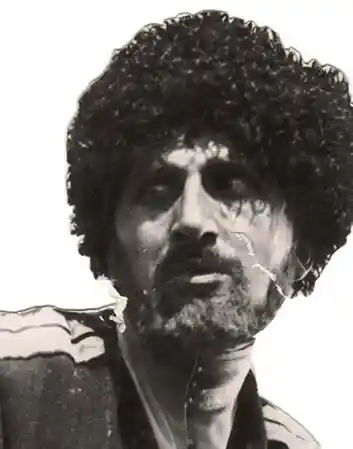
Dimitri Kipiani shows up and he has this incredible mustache. Honestly, the facial hair in this movie deserves its own credits. He moves with this stiffness that feels like he’s wearing a suit made of cardboard. It’s a bit distracting, but it fits the rigid social vibe they were going for.
The pacing is... well, it’s a struggle. There are moments where the camera just stays on a landscape for what feels like five minutes. You start counting the scratches on the film reel. It reminds me of the slow-burn feel of The Crow's Nest, where you’re just waiting for a character to finally make a move. When they finally do move, it’s usually just to sit down in a different chair.
The film is pretty beat up. There are parts where the screen goes almost completely white with static. Some people find that annoying, but I kind of liked it. It makes the whole thing feel like a ghost story. You’re watching people who have been gone for nearly a hundred years.
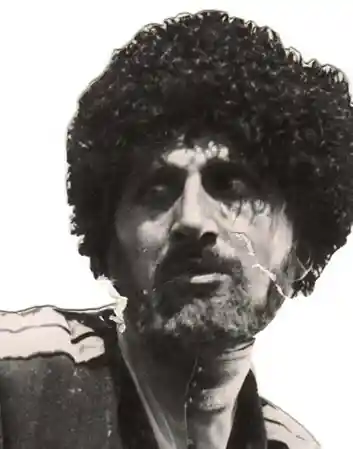
There’s a scene in a village square that feels strangely empty. There are maybe six extras, and they all look like they were told to stand perfectly still. It gives the movie this dream-like, or maybe nightmare-like, quality. It isn't like Cheap Skates where everything is moving and frantic. Everything here is heavy.
I think the movie gets better if you stop trying to follow the 'plot' and just look at the faces. Aga-Rza Kuliyev and Elisabed Cherqezishvili have these expressions that you just don't see in modern acting. Everything is in the forehead and the set of the jaw. It’s very theatrical, but in a small, contained way.
I kept thinking about Peggy, the Will O' the Wisp while watching this, mostly because both movies feel like they are trying to capture a specific folk-feeling that doesn't exist anymore. Shekhvedra is definitely more grounded in reality, or at least the Soviet version of reality back then, but it still has that misty, unreachable quality.
One reaction shot of A. Alugishvili lingers so long that I actually checked to see if my player had frozen. It hadn't. He was just really committed to that stare. It becomes almost funny after the ten-second mark, but then it circles back to being uncomfortable.
Is it a masterpiece? Probably not. It feels a bit disjointed, like some scenes were lost or edited together by someone who was in a massive hurry. The transitions are abrupt. One minute they are in a house, the next they are on a hill, and you aren't quite sure how they got there.
But there is something about the way Tatyana Makhmuryan moves across the screen that is just magnetic. Even in a blurry, 1930s silent film, some people just have that 'thing.' She pulls your eye whenever she’s in the shot, even if she’s just pouring water.
If you’re into the history of Georgian cinema, this is a must-see because it shows the transition into that more dramatic, social-realist style. If you aren't into that, you’ll probably find it as exciting as watching paint dry in a cold room. I liked it, but I’m weird like that. I like the scratches and the silence.
It’s a mood piece. Don't go in expecting a coherent narrative arc. Just let the grainy images wash over you and appreciate the fact that someone managed to save this bit of history at all. It’s not as polished as Blondes, but it has a lot more soul hidden in the shadows.
The ending is... well, it just kind of stops. No big resolution. Just a final look and then blackness. It felt right, honestly. Some meetings don't really have an ending, they just stop happening.
IMDb —
1925
Community
Log in to comment.