DbcultAccessing Vault...
Cult Review
Senior Film Conservator
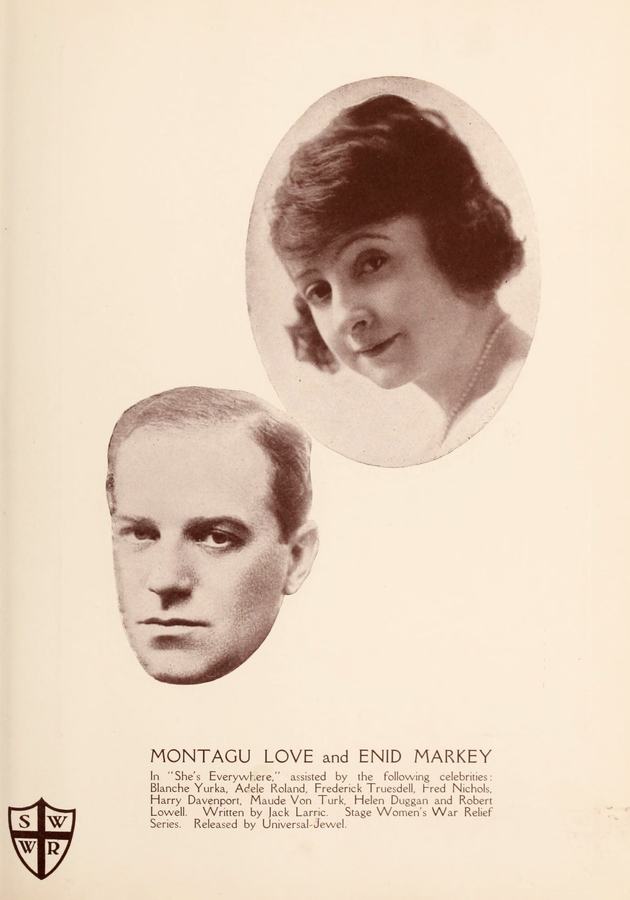
In the pantheon of early 20th-century cinema, few works capture the frantic pulse of industrial modernity quite like She's Everywhere. It is a film that functions as both a psychological labyrinth and a satirical mirror, reflecting the burgeoning anxieties of the urban male. We are introduced to our protagonist, a businessman whose nerves are frayed to the point of existential snapping. He is a man defined by his rigidity, a stark contrast to the fluid, almost liquid presence of the woman he perceives as a phantom. This isn't merely a tale of a man losing his mind; it is a sophisticated exploration of the 'other' in an increasingly crowded world. The film suggests that in the city, privacy is an illusion, and the faces we see are rarely the souls we encounter.
The brilliance of the narrative lies in its initial deception. As the businessman traverses the concrete canyons of the city, he is besieged by the image of a single woman appearing in the most disparate of locations. She is the flower girl on the corner, the stenographer in the adjacent office, the waitress serving his mid-day meal. This repetition creates a sense of dread that rivals the serialist tension found in The Trail of the Octopus. However, where that film leans into the pulp of mystery, She's Everywhere pivots into the cerebral. It asks: is he mad, or is the world conspiring to present him with a singular, inescapable truth?
Adele Rowland delivers a performance that is nothing short of revolutionary for the period. Tasked with playing multiple 'versions' of the same character, she manages to imbue each persona with a distinct physicality while maintaining a core of enigmatic intelligence. She is the ultimate observer, a woman who has realized that the best way to understand the world is to disappear into it. This level of female agency is a refreshing departure from the passive roles often seen in contemporary dramas like The Girl Who Won Out. Rowland’s character is not a victim of circumstance but a master of her environment, using her invisibility as a working-class woman to gain access to the raw material of her craft.
The cast is further bolstered by the likes of Montagu Love and Harry Davenport, who provide a grounded reality to the businessman's spiraling paranoia. Love, in particular, carries a gravitas that anchors the film, preventing it from floating away into pure surrealism. The interaction between the various strata of society—from the high-powered executive to the humble service worker—creates a rich tapestry of 1919 life. It reminds one of the intricate social dynamics explored in Lombardi, Ltd., yet here the focus is on the art of the lie rather than the business of fashion.
Visually, the film utilizes a series of clever dissolves and double exposures to manifest the protagonist’s internal state. When the 'girl' appears in his peripheral vision, the camera lingers just long enough to confirm his fear but not long enough to offer comfort. This technique creates a rhythmic pacing that mirrors a heartbeat under duress. The writers, Jack Larric and Calder Johnstone, have constructed a screenplay that functions like a watch—every gear and spring serves the eventual revelation. By the time we reach the climax, the shift from psychological horror to literary satire is handled with such grace that the audience feels the same catharsis as the protagonist.
The thematic resonance of the 'authoress' as a social spy is particularly poignant. It turns the camera back on the audience, suggesting that we are all subjects in someone else's story. This meta-narrative layer elevates She's Everywhere above the standard fare of its time. It shares a certain DNA with The Liar, but where that film focuses on the moral failings of deception, this film celebrates the creative necessity of it. The act of 'faking it' is presented as a legitimate tool for the pursuit of truth.
When examining the broader context of the era, She's Everywhere stands as a fascinating counterpoint to the era's more didactic offerings. While My Four Years in Germany was busy with geopolitical posturing, this film was looking inward at the fragility of the individual. It shares the domestic complexity of Dombey and Son, but replaces Victorian sentimentality with a sharp, modern wit. The businessman's fear is not of poverty or ruin, but of a loss of control—a theme that would eventually define the film noir movement decades later.
Even when compared to the spiritual inquiries of Dukhovnye ochi, there is a secular mysticism here. The 'vision' of the girl is a ghost that breathes, a specter that can be touched. It challenges the viewer to distinguish between the seen and the known. Is the girl everywhere, or is the businessman finally seeing the world for what it is? The film refuses to provide a simple answer, choosing instead to revel in the ambiguity of the human condition.
One cannot ignore the class commentary embedded in the authoress’s various jobs. By moving through the labor force, she exposes the invisible barriers that define the urban experience. She is a chameleon in a world of static objects. This fluidity is her power. While the businessman is trapped in his suit and his office, she is free to be anyone. This subversion of power dynamics is reminiscent of the themes in The Web of Life, where the interconnectedness of human existence is laid bare. In She's Everywhere, the web is spun by the writer herself, and the businessman is merely the fly she has chosen to study.
The production design deserves a mention for its stark realism. The office spaces are cold and cavernous, emphasizing the isolation of the protagonist. In contrast, the environments where the authoress 'works'—the bustling streets, the crowded diners—are filled with warmth and chaotic energy. This visual dichotomy reinforces the film's central thesis: that life is found in the movement, not the destination. The businessman is stationary, and thus he is dying; the authoress is everywhere, and thus she is truly alive.
As the film draws to its inevitable conclusion, the 'nervous businessman' finds a strange peace in the truth. The realization that his 'vision' was a woman of flesh and blood, driven by a creative hunger, dissolves his fear. It is a moment of profound anagnorisis. He is no longer the center of the universe, but a character in a larger story. This humility is the film's final gift to its audience. It suggests that our anxieties often stem from our own self-importance, and that the cure for paranoia is a healthy dose of perspective.
She's Everywhere remains a vital piece of cinema for anyone interested in the evolution of storytelling. It predates the meta-fictional flourishes of modern cinema by a century, yet it feels entirely contemporary in its execution. Whether viewed as a character study, a social satire, or a psychological thriller, it succeeds on every level. It is a film that demands to be seen, analyzed, and celebrated. In a world where we are increasingly tracked and observed, the story of a woman who watches back is more relevant than ever. It is a testament to the power of the gaze, the resilience of the artist, and the enduring mystery of the human face.
For those who enjoyed the identity-bending narratives of The Pretenders or the emotional depth of Her Atonement, this film is an essential addition to your watchlist. It stands alongside The Battle of Love as a definitive statement on the complexities of human interaction. Do not let this one slip through the cracks of history; after all, she might just be watching you next.
IMDb 4.9
1928
Community
Log in to comment.