DbcultAccessing Vault...
5.6/10
Senior Film Conservator
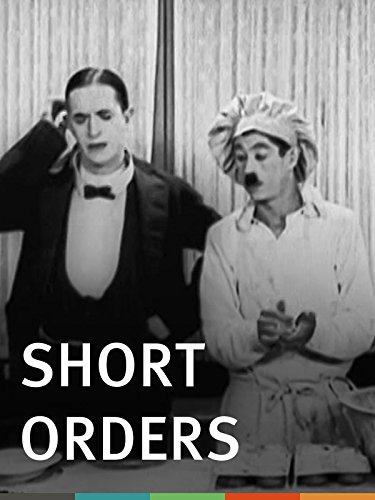
A definitive 5.6/10 rating for a film that redefined the boundaries of cult cinema. Short Orders remains a cornerstone of transgressive art.
To witness Stan Laurel in his pre-Hardy incarnation is to observe a comedian in a state of pure, unadulterated experimentation. In the 1923 Hal Roach production Short Orders, Laurel is not yet the whimpering foil we recognize from his later partnership; instead, he is a frantic, elastic force of nature, a man whose very presence in a kitchen suggests a cosmic misalignment. Unlike the more structured narratives found in The Code of Marcia Gray, this short film is a relentless assault on the senses, focusing entirely on the breakdown of social and physical order within the confines of a budget eatery.
The setting of Short Orders is a masterclass in low-budget set design that breathes with a palpable sense of grime. The kitchen is a claustrophobic pressure cooker where the boundaries between food and non-food items are dangerously porous. Laurel moves through this space with a jittery grace, his movements reminiscent of the high-stakes tension seen in Trailed by Three, though the stakes here are measured in burnt pastries rather than life and death. The film captures an era of filmmaking where the physical gag was king, and the logic of the world was dictated by the elasticity of the performer's body.
The supporting cast, including the stalwart Eddie Baker and the expressive Marie Mosquini, provide the necessary friction for Laurel’s character to spark against. While Eve's Daughter might focus on the complexities of feminine identity, Short Orders reduces its human participants to mere components of a larger, failing machine. Every customer is a ticking time bomb of frustration, and every dish served is a fuse. The stinky cheese gag, a staple of the era, is handled here with a rhythmic precision that elevates it from mere bathroom humor to a commentary on the sensory overload of urban life.
The centerpiece of the film’s comedic logic is the subversion of the edible. The doughnuts are not merely sweet; they are crystalline hazards. The meringues do not melt; they detonate. This transformation of the mundane into the menacing is a hallmark of the Roach studio's output. It mirrors the thematic reversals found in La belle Russe, where expectations of character are constantly upended, though here the subversion is purely physical. When Laurel attempts to serve a steak that possesses the tensile strength of industrial rubber, we see a critique of the industrialization of the American diet—a theme perhaps too sophisticated for its time, but visible to the modern eye.
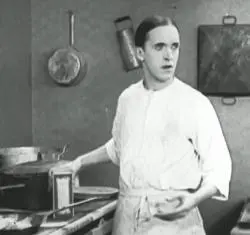
The pacing of these gags is breathless. There is no room for the quiet introspection seen in The Man from Home. Instead, the film relies on a cumulative effect. One mistake leads to another in a cascading failure that feels almost mathematical. Laurel’s performance is a highlights reel of double-takes and frantic improvisation. He treats the props not as static objects but as dance partners, engaging in a violent waltz with a malfunctioning stove and a series of increasingly heavy plates.
In Short Orders, we see a version of Stan that is more aggressive and self-reliant than the one who would eventually find fame with Oliver Hardy. There is a streak of desperation in his eyes that resonates with the isolation found in Miss Crusoe. He is a lone man against a hostile world of inanimate objects. This solo work is essential for understanding the development of his craft. He isn't reacting to a partner's slow burn; he is creating the heat himself. The film’s energy is more akin to the wild animals in Stuffed Lions than the domestic comedies of the 1930s.
While many silent shorts of the early twenties suffer from static camerawork, Short Orders utilizes the frame to maximize the impact of its physical comedy. The use of depth is particularly effective; we often see the chaos of the kitchen in the background while a customer in the foreground remains blissfully unaware of the impending disaster. This layering of action is far more advanced than the straightforward presentation in The Salvation Army on the Job. The lighting, though harsh, serves to emphasize the sweat and grease of the environment, making the restaurant feel like a living, breathing entity of filth.
The editing by the Roach team is sharp, cutting on the action to hide the seams of the more complex gags. When a meringue explodes, the timing is so precise that it feels like a natural extension of the pastry's chemistry. This technical proficiency allows the film to transcend its simple premise. It is not just about a bad waiter; it is about the fragility of human systems. In much the same way that Beauty in Chains explores the literal and metaphorical shackles of its characters, Short Orders explores the entrapment of the working class within a cycle of service and failure.
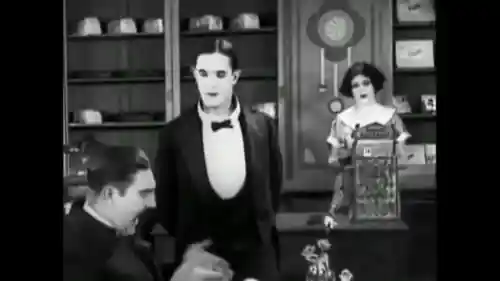
The final act of the film, where the establishment is literally overrun by dogs, serves as a surreal and fitting conclusion to the preceding madness. It is a moment of pure nihilism that would not be out of place in a more somber work like Samhällets dom. The dogs represent the ultimate breakdown of the social order that the restaurant attempted to uphold. When the humans fail to maintain the facade of civilization—represented here by the service of food—the animal kingdom steps in to finish the job. It is a chaotic, barking end that leaves the audience both exhausted and exhilarated.
Looking back at Short Orders from a century’s distance, its influence on the trajectory of screen comedy is undeniable. It lacks the sentimental veneer of Little Miss Fortune or the romantic entanglements of The Red-Haired Cupid, opting instead for a visceral, almost aggressive approach to humor. It is a film that delights in the uncomfortable, the smelly, and the broken. Laurel’s performance is a testament to the power of the individual performer to carry a film through sheer physical exertion.
Even the minor plot points, such as the white lies told by the staff to appease the customers, echo the narrative complexities of The White Lie, albeit in a much more farcical context. The film is a hurricane of activity, much like the titular event in The Tempest, blowing through the restaurant and leaving nothing but debris in its wake. For those interested in the evolution of comedy, or for those who simply enjoy watching a master of the craft struggle with a stubborn piece of meat, Short Orders remains an essential, if somewhat pungent, piece of cinematic history. It is a reminder that before he was a legend, Stan Laurel was a man in a dirty apron, fighting a losing battle against a doughnut, and winning our hearts in the process.
The film also serves as an interesting point of comparison for Love's Protegé, as it showcases the early mentorship of Hal Roach in shaping Laurel's comedic timing. While the latter film deals with more traditional themes of guidance, Short Orders is about the lack of guidance—the sheer, unbridled panic of a man left to his own devices in a world that makes no sense. It is this core of absurdity that keeps the film relevant today. We have all been that waiter; we have all been that customer. We are all just one exploding meringue away from total disaster.
IMDb —
1920
Community
Log in to comment.