DbcultAccessing Vault...
Cult Review
Senior Film Conservator
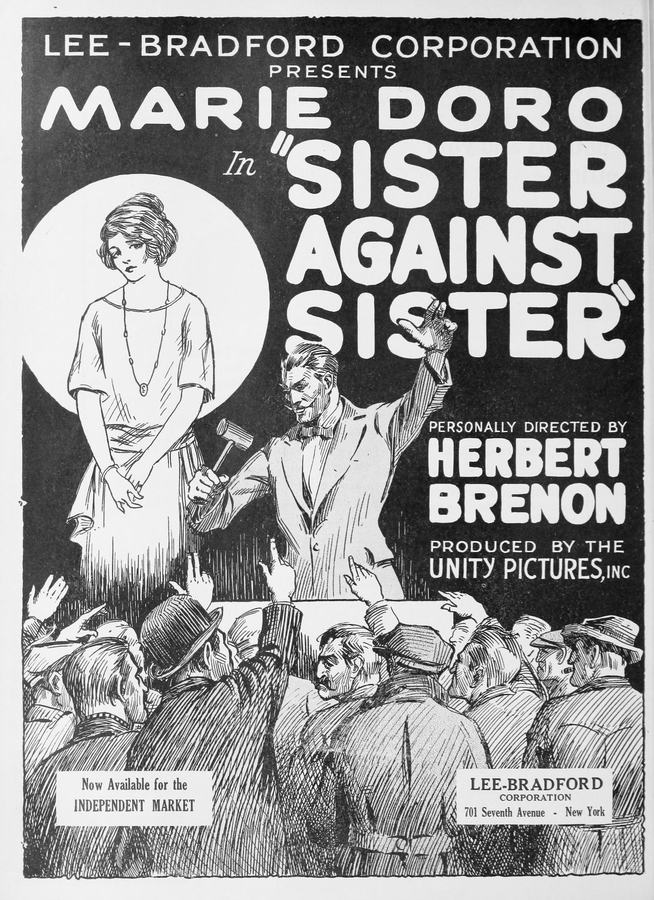
The year 1923 was a watershed moment for cinematic melodrama, a time when the visual grammar of the silent screen was reaching a zenith of expressive power. Sister Against Sister stands as a testament to this era, a film that navigates the treacherous waters of social stratification with a nuance that many modern procedurals fail to replicate. It is not merely a story of separated siblings; it is a visceral interrogation of how environment carves the human psyche into disparate shapes.
Directorially, the film utilizes a stark chiaroscuro to differentiate the two worlds inhabited by the sisters. The opening sequences, set in the cramped, claustrophobic quarters of the gang leader, feel remarkably similar to the gritty realism found in The Primal Law. Here, the camera lingers on the grime, the flickering candlelight, and the predatory gaze of the antagonist. When one sister is whisked away into the manor of the widower, the frame expands. The lighting becomes high-key, the sets are cavernous and adorned with the trappings of the Gilded Age, yet there is an underlying coldness to this luxury that rivals the literal chill of the slums.
Marie Doro delivers a performance of remarkable restraint. In an era often criticized for its histrionics, Doro understands the power of the micro-expression. Her portrayal of the adopted daughter is one of perpetual, quiet anxiety—a girl who knows she is living a borrowed life. This internal conflict is what elevates the film above the standard fare of the time, such as the more lighthearted Just Out of College. Doro carries the weight of her character's secret history in the slight slump of her shoulders and the darting of her eyes whenever the past threatens to intrude.
The film’s antagonist, the gang leader, is a fascinating study in manipulative charisma. He is not a cartoonish villain but a man who views the world through the lens of utility. His desire to use the sisters' "innocence and beauty" is a meta-commentary on the film industry itself, which was already beginning to commodify the very traits Doro embodied. This predatory dynamic is far more sinister than the overt threats seen in The Silent Rider, as it involves the slow erosion of the soul rather than mere physical danger.
The sister who remains in the underworld provides the film’s most tragic arc. Her love for the gang leader is presented not as a failure of character, but as a survival mechanism. She has been conditioned to find warmth in the only source available to her. This thematic depth reminds me of the complex female agency explored in The Honey Bee, where the protagonist must navigate a world designed to exploit her. In Sister Against Sister, the tragedy is doubled; we see the life that could have been through the eyes of the sister who stayed behind.
When the blackmail plot is initiated, the film shifts gears into a high-stakes thriller. The tension is palpable as the foster daughter attempts to protect her benefactor, the man who saved her from a life of squalor. This sequence is masterfully edited, building a sense of dread that is rarely achieved in early silent cinema. It lacks the polish of modern noir but possesses a raw, unvarnished intensity that makes the eventual confrontation between the sisters feel earned rather than manufactured.
The meeting between the two women is the film's emotional centerpiece. It is a moment of profound recognition and devastating realization. They are two halves of a whole, separated by a thin line of luck and timing. The visual composition of this scene, with the two women framed against a backdrop of crumbling brickwork, highlights the fragility of their respective positions. It’s a thematic echo of the domestic tensions found in The Grip of Jealousy, but here the jealousy is replaced by a profound, wordless grief for the time they lost.
While many films of the era, like Whitewashed Walls or The Recruit, focused on more singular narrative arcs or patriotic fervor, Sister Against Sister dares to be messy. It doesn't offer easy answers to the questions it poses about the permanence of one's origins. Can a person truly shed their past, or is it always waiting in the wings, ready to blackmail its way back into the light? The film suggests that while the environment can be escaped, the psychological tether to one's kin is unbreakable.
In comparison to the adventurous spirit of Sinbad, the Sailor or the surrealist leanings of Il sogno di Don Chisciotte, this film is grounded in a harsh, recognizable reality. Even the more exotic locales seen in Som flyttfågel i Afrika cannot match the emotional intensity of a single room where two sisters realize they are on opposite sides of a moral divide. The film shares a certain DNA with Tangled Fates, particularly in its exploration of how past choices ripple through the years to disrupt the present.
The cinematography by an uncredited but clearly talented crew utilizes a variety of camera angles that were quite progressive for 1923. There are low-angle shots that make the gang leader appear monolithic and terrifying, contrasted with high-angle shots of the sisters that emphasize their vulnerability. This visual storytelling is as potent as the dialogue in Stingaree or the sweeping vistas of The Border Wireless. It’s a masterclass in using the frame to dictate the audience's emotional response.
Furthermore, the pacing of the film is remarkably modern. It avoids the long, languid stretches that can sometimes plague silent cinema, such as in A Hickory Hick. Every scene serves a purpose, whether it is to establish the growing love between the foster daughter and the widower's son or to deepen the sense of impending doom surrounding the blackmail plot. The tension is a coiled spring, and the release is both satisfying and heartbreaking.
Ultimately, Sister Against Sister is a film about the cost of survival. It asks what we are willing to sacrifice for a better life and what we owe to those we leave behind. It’s a much more somber and reflective piece than something like Indiscretion, which handles similar themes of social standing with a lighter touch. Here, the consequences are permanent, and the scars are visible.
Marie Doro’s performance remains the anchor of the film. Her ability to play both the victim and the protector within the same character arc is a feat of acting that deserves more recognition in the annals of film history. As the credits roll, one is left with a profound sense of the arbitrary nature of fate. Had the widower chosen the other sister, their roles would have been perfectly reversed, a haunting thought that lingers long after the screen goes dark. This is essential viewing for anyone interested in the evolution of the social thriller and the enduring power of silent storytelling.
In an age of digital spectacle, there is something deeply moving about the simplicity of this 1923 production. It reminds us that the most compelling stories are not found in explosions or grand effects, but in the quiet, desperate struggle of the human heart to find its way home—even when home is a place that no longer exists.
IMDb 7.6
1929
Community
Log in to comment.