DbcultAccessing Vault...
Cult Review
Senior Film Conservator
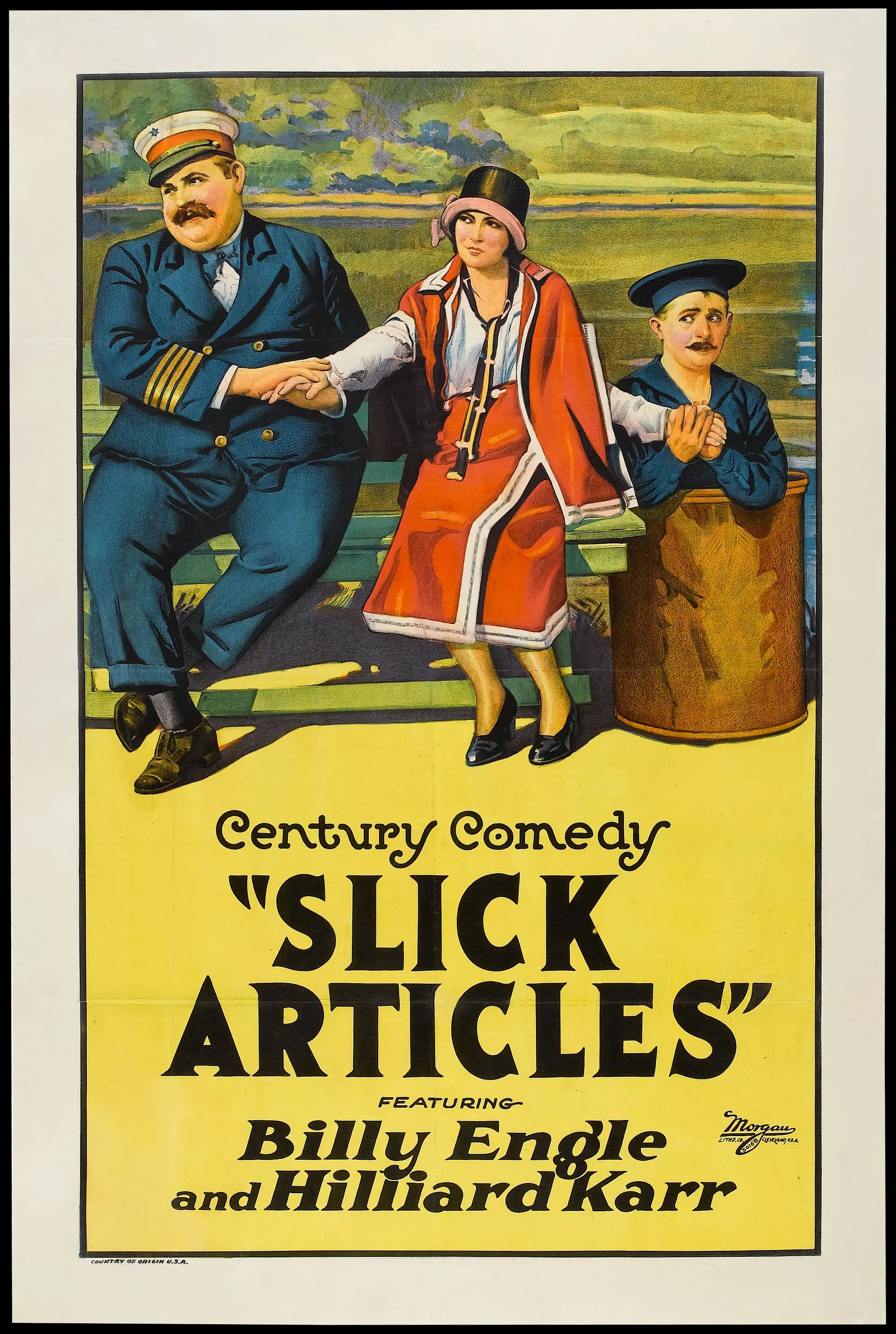
Is Slick Articles a forgotten gem of the silent era or just another relic of the 1920s chase-comedy factory? Short answer: It is a frantic, entertaining distraction for those who appreciate the physical mechanics of early slapstick, but it lacks the emotional weight of the decade’s true masterpieces.
This film is for the silent cinema completionist and fans of high-energy physical comedy. It is absolutely not for those who require a logical plot or nuanced character development to stay engaged.
1) This film works because: The comedic chemistry between Hilliard Karr and Billy Engle creates a believable sense of desperate camaraderie that drives the narrative forward.
2) This film fails because: The final chase sequence feels recycled from dozens of other shorts of the era, lacking a unique visual hook to make it truly memorable.
3) You should watch it if: You want to see a specific example of how 1920s cinema used the 'artistic fraud' trope to satirize the upper class.
If you are looking for a quick burst of energy and a look at the social anxieties of the 1920s, Slick Articles delivers. It captures the 'starving artist' archetype with a cynical edge that feels surprisingly modern.
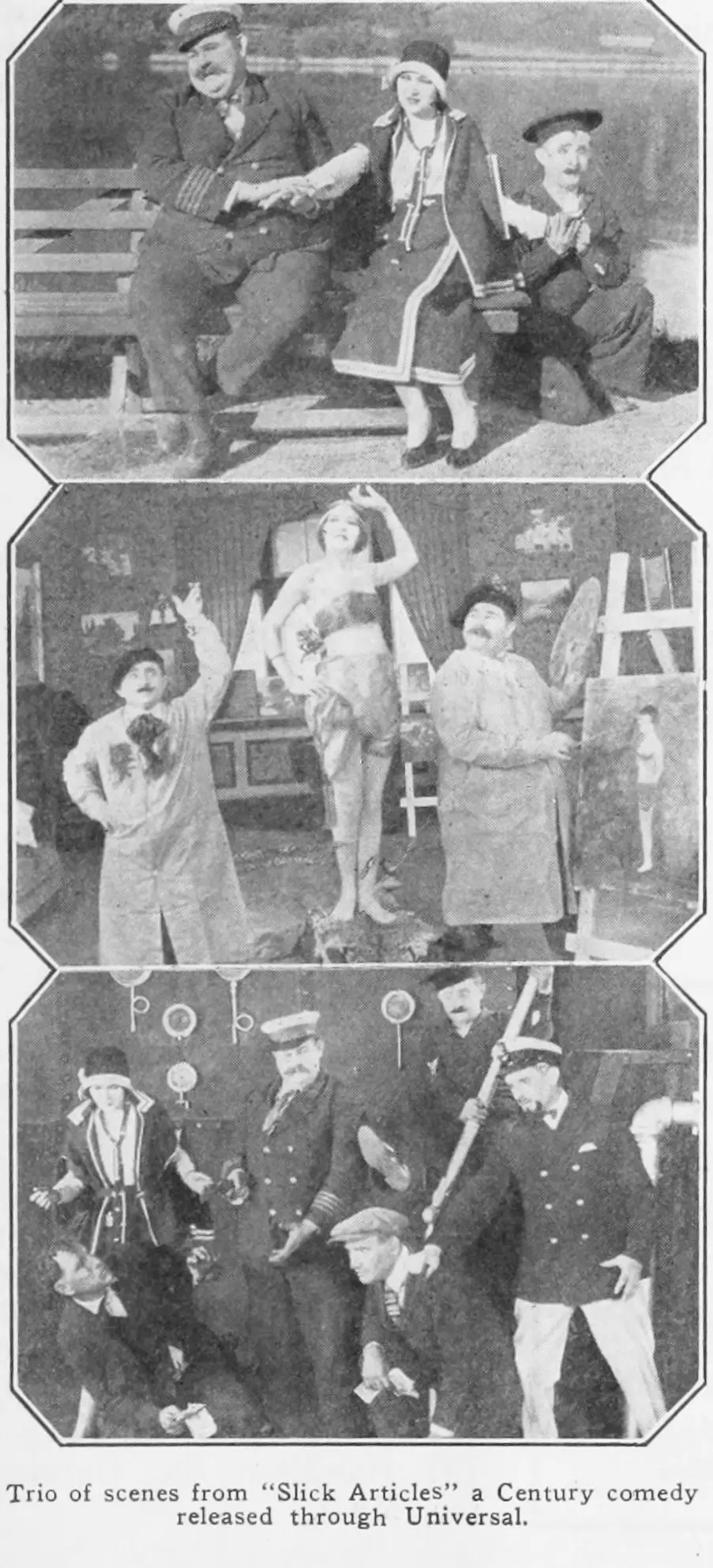
The film uses its short runtime effectively. It doesn't overstay its welcome, which is a common pitfall for comedies of this period. However, it doesn't offer much beyond the surface-level laughs of the 'characteristic chase.'
The premise of Slick Articles is built on the classic 'fake it until you make it' mentality. Hilliard Karr and Billy Engle play their roles with a frantic, nervous energy that perfectly encapsulates the terror of being broke. Unlike the more refined protagonists in A Bit of Jade, these men are survivalists first and artists second.
The 'borrowed' art plot point is the film's strongest narrative engine. It creates an immediate sense of dramatic irony; the audience knows the paintings aren't theirs, and every moment the father spends admiring the work is a ticking time bomb. This tension is handled with more grace than one might expect from a standard comedy short.
The yacht setting provides a confined space for the comedy to escalate. While films like The Rough Lover explore romantic entanglements in more open environments, Slick Articles uses the deck of the ship to trap its characters, forcing the confrontation between the grifters and the rightful owner.
Director Albert Herman was a veteran of the short-form comedy, and his experience shows in the pacing. The transition from the destitute studio to the luxurious yacht is handled with a swiftness that keeps the audience from questioning the logic of the situation. Herman understands that in a short like this, momentum is everything.
The cinematography is functional but lacks the experimental flair found in larger productions like Tess of the D'Urbervilles. The camera remains largely static, acting as a window into the chaos rather than a participant in it. This was standard for the time, but it does make the film feel a bit dated compared to the more dynamic camerawork beginning to emerge in the mid-20s.
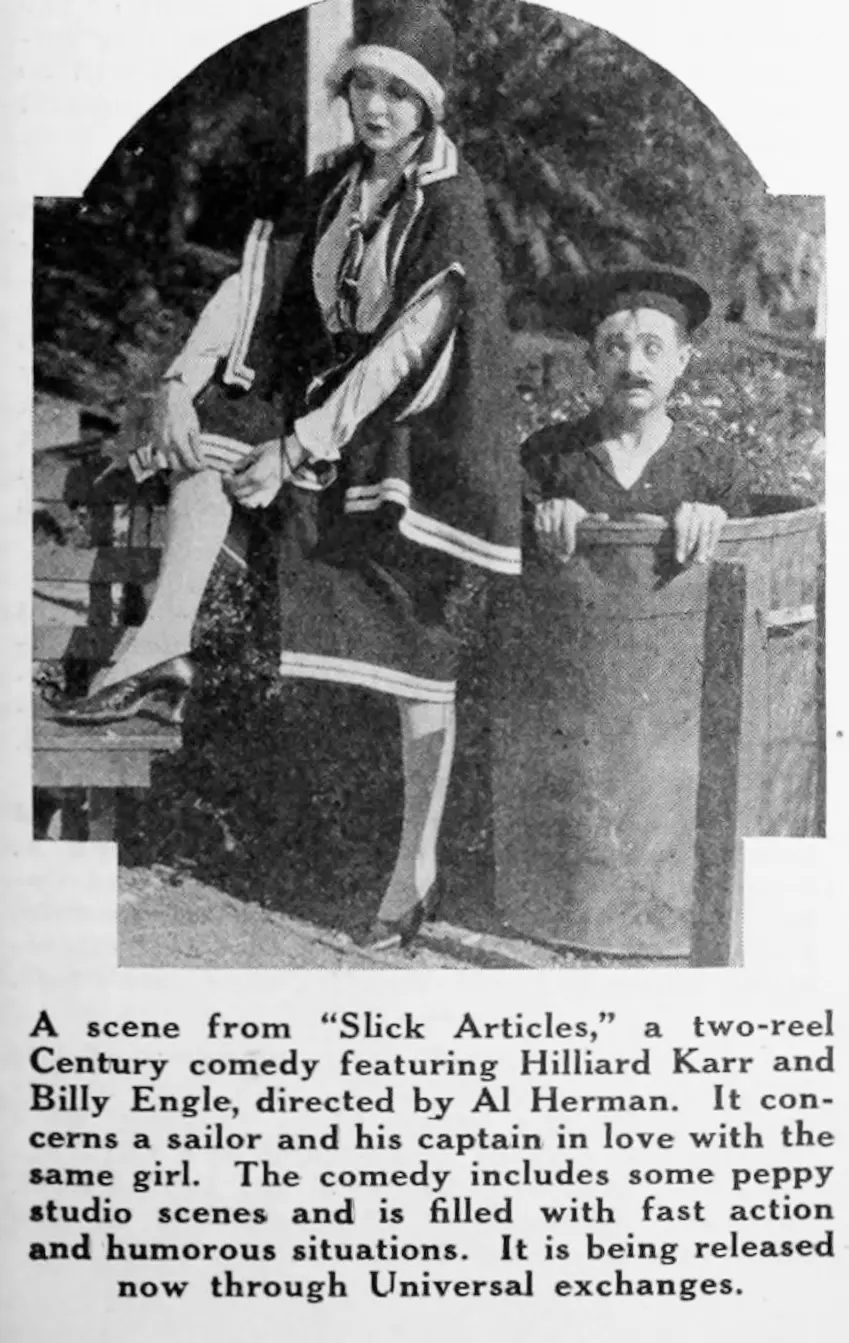
"The humor in Slick Articles doesn't come from the art, but from the sheer audacity of the lie. It's a comedy of errors where the errors are intentional and the comedy is desperate."
Trilby Clark provides a necessary grounded presence amidst the madness. While her role as the 'maiden' is somewhat formulaic, she plays the part with a sincerity that makes the artists' desire to impress her feel genuine. She is the prize at the end of the grift, and Clark plays that role with a quiet dignity.
Hilliard Karr and Billy Engle are the true stars, however. Their physical timing is impeccable. In one specific scene, where they attempt to describe the 'inspiration' behind a painting they didn't paint, their stammering and frantic gestures are genuinely funny. It is a masterclass in silent comedic timing.
Comparatively, the dynamic is similar to the themes of social masquerading found in Hearts and Arts, though Slick Articles leans much harder into the physical 'chase' elements than the thematic ones.
The final third of the film is dedicated to the 'characteristic chase.' This is where the film's energy is at its highest. Herman uses the various levels of the yacht—the cabins, the deck, the ladders—to create a verticality to the pursuit. It is chaotic, loud (metaphorically), and exhausting.
But here is a debatable opinion: the chase goes on too long. By the time the rightful owner catches up, the joke has been told three times over. It works. But it’s flawed. The repetition of the slapstick beats starts to wear thin, and you find yourself wishing for a more clever resolution than just 'they got caught.'
Slick Articles is a competent, high-energy comedy that serves as a perfect time capsule for the era's obsession with social mobility and physical humor. While it doesn't reach the heights of the greats, it provides enough laughs and tension to justify its existence. It is a solid piece of entertainment that understands exactly what it is: a slick, fast-paced article of cinematic history.
If you've already seen Hearts and Arts or The Blue Moon and are looking for more from this specific period of short-form comedy, Slick Articles should be next on your list. It isn't a masterpiece, but it is a fun ride.
IMDb 6.4
1932
Community
Log in to comment.