DbcultAccessing Vault...
Cult Review
Senior Film Conservator
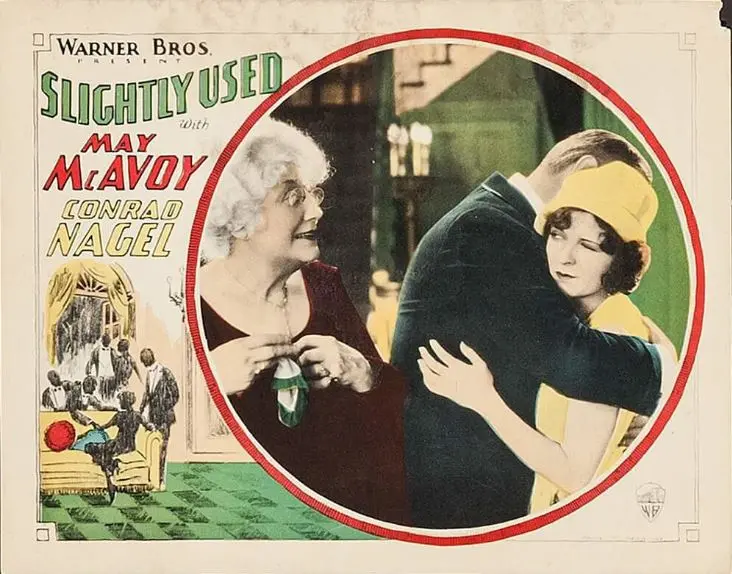
Is 1927's Slightly Used worth dusting off today? Short answer: absolutely, if you appreciate the delightful intricacies of early romantic comedies and don't mind a slower, more theatrical pacing. This film is a treat for silent film enthusiasts, cinephiles interested in the evolution of comedic storytelling, and those who enjoy lighthearted farces that hinge on mistaken identity. However, if you're seeking fast-paced modern humor, complex character studies, or special effects, this isn't the journey for you.
At its heart, Slightly Used is a charming, if somewhat predictable, exploration of societal pressures and the lengths to which individuals will go to circumvent them. It’s a window into the comedic sensibilities of the late silent era, offering a glimpse at the foundational tropes that would inform decades of romantic storytelling. While it doesn't reinvent the wheel, it spins it with a certain grace and a surprising amount of genuine humor that transcends its age.
The narrative engine of Slightly Used is a classic setup for comedic chaos. Cynthia Martin, portrayed with a wonderful blend of exasperation and ingenuity by May McAvoy, finds herself trapped by her father’s archaic rule. Her younger sisters, Helen and Grace, are forbidden to marry until their elder sister ties the knot. It’s a premise that immediately establishes the era's social constraints and Cynthia's agency in challenging them.
Her solution? A purely fictional husband, Major Smith, conjured from thin air to appease her father and free her sisters. This initial deception is where the film truly begins to shine, setting the stage for a delightful unraveling. The genius of the plot, penned by Darryl F. Zanuck, Jack Jarmuth, C. Graham Baker, and A.E.W. Mason, lies in its simplicity. It’s a single, escalating lie that drives every subsequent interaction.
The moment the fictitious Major John Smith, played by the effortlessly charming Conrad Nagel, materializes, the film shifts gears from domestic drama to full-blown farce. Nagel’s character is thrust into a role he never sought, forced to embody a persona that exists only in Cynthia's imagination. This unexpected arrival is the pivotal moment, transforming a clever ruse into a chaotic, hilarious, and often tender exploration of identity and love. The confusion that follows is both inevitable and expertly orchestrated, a testament to the writers' understanding of comedic timing.
The strength of Slightly Used rests squarely on the shoulders of its leading players, particularly May McAvoy. McAvoy, often remembered for her dramatic roles, proves herself a skilled comedic actress here. Her expressions, ranging from wide-eyed panic to mischievous delight, are a masterclass in silent film acting. When she first sees Conrad Nagel’s character, the sudden shift in her demeanor – a blend of terror, bewilderment, and a dawning, frantic realization – is absolutely priceless. She carries the emotional weight of the deception, making Cynthia’s predicament feel genuinely pressing despite the farcical circumstances.
Conrad Nagel, as the unwitting Major John Smith, is the perfect foil. His suave, slightly bewildered portrayal grounds the absurdity. He doesn’t play the role as a caricature but as a man caught in an increasingly bizarre situation, trying to maintain his dignity while navigating a woman’s elaborate lie. His natural charm makes it believable that he could step into this fabricated identity and, perhaps, even enjoy it a little. The chemistry between McAvoy and Nagel is palpable, evolving from initial antagonism to a genuine, blossoming affection that feels earned by the film’s conclusion.
The supporting cast, while not given as much screen time, contributes effectively to the comedic tapestry. Anders Randolf as Cynthia’s stern father provides the initial impetus for the plot, his rigidness a perfect contrast to Cynthia's flexibility. Sally Eilers and Audrey Ferris, as the eager-to-marry sisters Helen and Grace, embody the youthful impatience that sets the entire chain of events in motion. Their reactions to the 'Major' are often over-the-top but entirely in keeping with the film's lighthearted tone. Arthur Rankin also delivers a memorable turn, adding another layer of confusion and romantic rivalry to the mix, though his character occasionally feels a touch underdeveloped compared to the central trio. I'd argue Slightly Used is a better showcase for McAvoy's range than many of her more dramatic roles, allowing her a freedom of expression that is utterly captivating.
While the film's director, Archie Mayo, remained uncredited, the execution of Slightly Used demonstrates a clear understanding of silent comedy's mechanics. The pacing, while slower by modern standards, is deliberate, allowing gags to land and character reactions to register fully. The camera work, though not overtly flashy, is functional and effective. Close-ups are used judiciously to emphasize key emotional beats or comedic reactions, particularly from McAvoy.
The blocking of scenes is particularly noteworthy in how it facilitates the comedic misunderstandings. For instance, the way characters are positioned to overhear snippets of conversation, or to just miss seeing the 'Major' in a compromising situation, is meticulously planned. There’s a particular sequence where Cynthia attempts to subtly communicate the truth to Nagel’s character without alerting her family, relying entirely on exaggerated facial expressions and gestures. This scene is a masterclass in visual comedy, demonstrating how much could be conveyed without a single spoken word. The writers, including the prolific Darryl F. Zanuck, clearly crafted a screenplay that allowed for this kind of visual ingenuity, translating the written farce into a dynamic on-screen experience.
Compared to more dramatic silent films like The Secret Orchard, Slightly Used embraces a brighter, more open aesthetic. The sets are well-lit, and the costumes are period-appropriate, contributing to a sense of lighthearted elegance. The film’s visual style never distracts from the performances or the plot, instead serving to enhance the overall comedic tone. It’s a testament to the filmmakers’ ability to tell a compelling story within the technical constraints and artistic conventions of the era.
The pacing of Slightly Used is, undeniably, a product of its time. Modern audiences accustomed to rapid-fire editing and constant narrative propulsion might find its rhythm takes some adjustment. However, for those willing to lean into the silent film experience, this deliberate pacing becomes a strength. It allows moments of comedic tension to build, giving the audience time to anticipate the next misunderstanding or to fully appreciate an actor's nuanced reaction. It's a different kind of immersion, one that rewards patience.
The tone is consistently light and frothy. Even when Cynthia is in the deepest throes of panic, the film never veers into genuine drama or despair. It maintains its commitment to being a romantic farce, ensuring that the stakes, while real for the characters, always feel manageable for the audience. This consistent lightness is a key factor in its enduring charm. It doesn't attempt to be more profound than it is; it simply aims to entertain, and in that, it largely succeeds.
The use of intertitles is, of course, integral to the silent film experience. In Slightly Used, they are generally well-written, providing necessary exposition and character dialogue without overwhelming the visual storytelling. Some of them even deliver a punchline or a witty aside, adding to the film's overall comedic texture. The film’s reliance on the 'man impersonating another' trope, while classic, feels a tad lazy even for its time, but the performances elevate it beyond mere cliché.
Yes, Slightly Used absolutely holds up for the right audience. It's a delightful example of early romantic comedy.
The film offers a charming escape, full of witty misunderstandings and genuine warmth.
May McAvoy and Conrad Nagel deliver standout performances that transcend the silent era.
It's a valuable watch for those interested in film history and the evolution of comedic storytelling.
However, be prepared for silent film pacing; it's not a fast-action movie.
It works. But it’s flawed. Yet, its charm is undeniable.
This film works because:
- The central premise is inherently engaging and provides fertile ground for comedic situations.
- May McAvoy delivers a genuinely charming and often hilarious performance, showcasing her versatility.
- The chemistry between McAvoy and Conrad Nagel is surprisingly strong, creating a believable romantic arc.
- The writing, particularly the setup by Darryl F. Zanuck and his collaborators, is clever and well-structured for a farce.
- It offers a delightful glimpse into the societal norms and comedic sensibilities of the late 1920s.
This film fails because:
- Its pacing can feel slow and deliberate for audiences not accustomed to silent film conventions.
- Some of the comedic tropes, such as mistaken identity and a contrived romance, are highly predictable.
- Supporting characters, while functional, occasionally lack depth beyond their immediate plot purpose.
- The resolution, while satisfying, feels a bit too neat, lacking any real narrative surprises.
You should watch it if:
- You enjoy exploring the history of cinema and the evolution of genre storytelling.
- You're a fan of silent film acting and appreciate the power of visual expression.
- You're looking for a lighthearted, charming escape that doesn't demand too much intellectual heavy lifting.
- You appreciate films that subtly critique societal expectations, even through a comedic lens.
What makes Slightly Used resonate, even nearly a century later, is its embrace of universal themes through a timeless comedic structure. The pressure to conform, the desire for personal freedom, and the unexpected ways love can blossom from chaos are all present here. It’s a film that reminds us that sometimes, the most elaborate lies can lead to the most authentic truths. The unconventional observation is how effectively it uses the silent medium to convey the inner turmoil of Cynthia, making her predicament not just funny, but genuinely empathetic.
In an era that often glorified melodrama (consider films like Umanità or Bristede Strenge), Slightly Used chose to lean into pure, unadulterated farce. This commitment to its genre is commendable. It doesn't try to infuse deep social commentary or existential dread; it simply wants to make you smile, and in that, it is overwhelmingly successful. It's a testament to the idea that sometimes, simplicity and strong performances are all you need.
The film also serves as a fascinating precursor to the screwball comedies that would dominate the sound era, laying some of the groundwork for rapid-fire dialogue and chaotic romantic entanglements. It’s a foundational piece, demonstrating that the ingredients for successful romantic comedy were already well-established even before the advent of spoken words on screen. The dynamic between McAvoy and Nagel, the push-and-pull, the reluctant attraction born of circumstance, feels entirely modern in its execution.
Slightly Used is a delightful, engaging, and often very funny silent romantic comedy that deserves more recognition. While its pace and tropes are distinctly of its era, its charm, led by May McAvoy’s wonderful performance and Conrad Nagel’s suave presence, transcends time. It’s a testament to clever writing and effective visual storytelling. If you have an appreciation for cinema history and a soft spot for well-executed farces, this film is definitely worth rediscovering. It’s not a masterpiece, but it’s a genuinely enjoyable and historically significant piece of cinematic entertainment that still holds its own. Highly recommended for those looking to explore the lighter side of the silent film era.
IMDb 5.5
1931
Community
Log in to comment.