DbcultAccessing Vault...
Cult Review
Senior Film Conservator
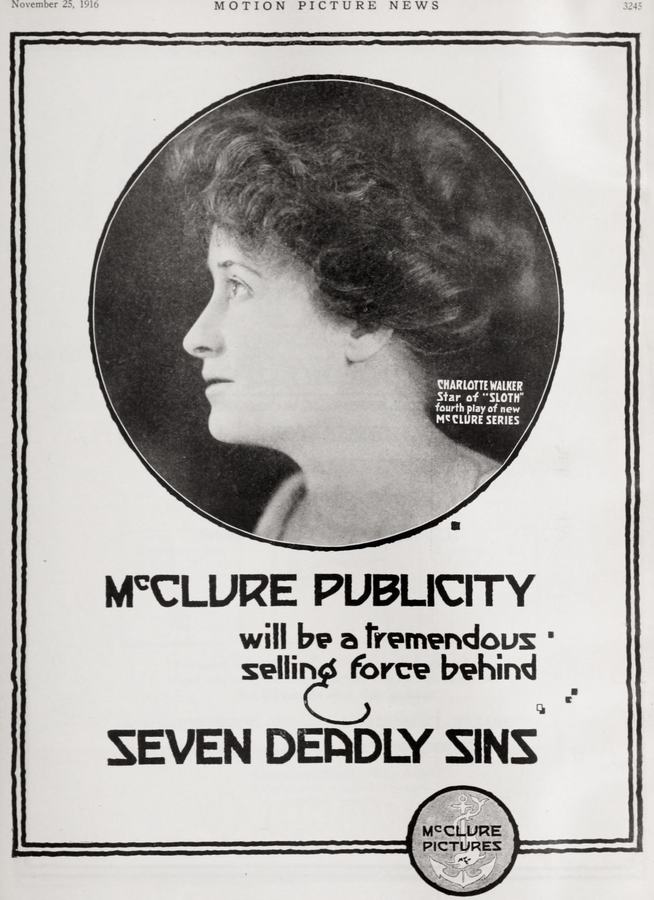
In the pantheon of early 20th-century cinema, the McClure series of 'The Seven Deadly Sins' stands as a peculiar intersection of moral didacticism and burgeoning cinematic spectacle. Sloth (1917), featuring the luminous Shirley Mason, is perhaps the most culturally symptomatic of the lot. Released as the United States stood on the precipice of a global conflagration, the film functions less as a private character study and more as a public recruitment poster. We find ourselves observing Eve Leslie, a woman whose spirit has been dulled by the corrosive influence of unearned affluence. Her inertia is not merely a personal failing but a national threat in the eyes of the 1917 audience. Unlike the more intimate struggles depicted in The Fairy and the Waif, Sloth operates on an allegorical plane where every yawn from the protagonist is a betrayal of the republic.
The first act of the film is a masterclass in establishing atmospheric ennui. Shirley Mason portrays Eve with a heavy-lidded grace that perfectly encapsulates the 'indolence' mentioned in the plot. Her wealth is presented not as a tool for empowerment, but as a sedative. When Adam Moore (played with a stiff-lipped military dignity by Albert L. Barrett) enters the frame with news of his call to the National Guard, the conflict is immediately visceral. Eve’s refusal to let him go isn't rooted in a profound fear for his life, but rather a petulant annoyance that his absence will disrupt her social calendar. This is where the film’s critique of the leisure class becomes biting. She views the war not as a cataclysmic shift in human history, but as an inconvenient interruption to a series of parties.
The tension between the domestic sphere and the call of duty was a common theme in films like The Iron Strain, but here it is magnified by Eve’s literal inability to move. She is the antithesis of the 'New Woman' emerging in the 1910s. Her character arc requires a radical intervention, one that the film provides through the medium of the written word—a classic silent film trope where reading acts as a gateway to transcendental change.
The Vignettes of Valor
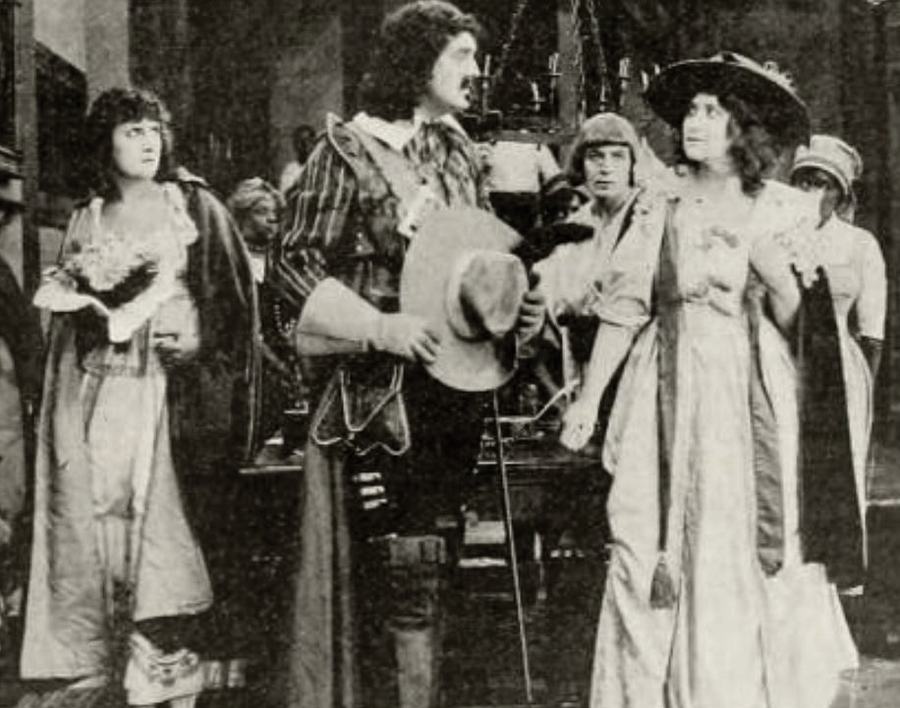
The core of Sloth is its anthology-style structure. As Eve retreats into her books, the film transports us into three distinct eras of American heroism. This structural choice is brilliant for its time, allowing the audience to experience a variety of genres—frontier drama, pirate adventure, and Revolutionary War epic—all within a single feature.
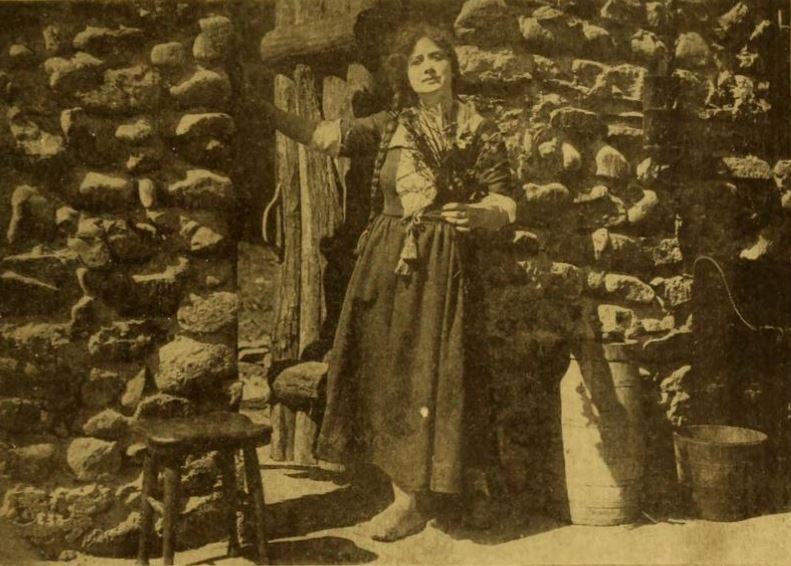
First, we encounter Sally Wells. This segment is a rugged, dusty depiction of the American frontier. Sally is the polar opposite of Eve; where Eve is surrounded by silk, Sally is surrounded by the threat of 'wild animals' and hostile forces. The cinematography here shifts from the soft, diffused lighting of Eve’s parlor to a harsher, high-contrast look that emphasizes the grit of survival. Sally’s defense of her family claim is a primal assertion of property and grit. It’s a sequence that likely resonated with audiences who remembered the thematic weight of Whispering Smith, though with a distinctly feminine focus.
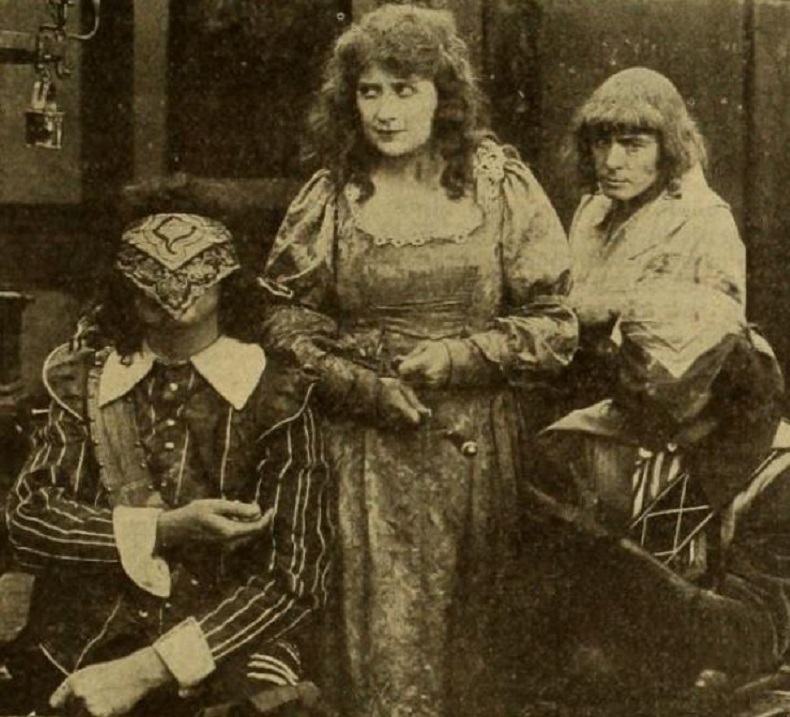
The second vignette, featuring Margaret Brent, takes a more theatrical, swashbuckling turn. The intrusion of pirates into her home allows the film to indulge in some of its most kinetic action sequences. Margaret’s ability to turn 'bold men' into her defenders through sheer force of will and moral authority is a direct rebuke to Eve’s passive-aggressive manipulation of Adam. The pirate sequence adds a layer of romanticism that prevents the film from becoming too dryly moralistic, providing a visual feast that rivals the more elaborate productions of the era like The Fool's Revenge.
The final and most potent vision is that of Molly Pitcher at the Battle of Monmouth. This is the emotional crescendo of the film’s historical journey. Seeing the iconic image of a woman manning a cannon—taking the place of her fallen husband—is the final hammer blow to Eve’s lethargy. The smoke and chaos of the battlefield are rendered with surprising clarity for 1917, and the sense of patriotic urgency is palpable. This segment isn't just history; it’s a call to arms directed at the women in the audience, suggesting that their place is wherever the country needs them most.
When Eve closes the book, the change is not subtle. The 'sin' of sloth is conquered with a speed that only silent cinema can justify. She doesn't just permit Adam to leave; she cheers him. The subsequent transformation into a Red Cross nurse is the film’s third act, and it is here that the modern and the historical collide. The film moves from the abstract moralizing of the vignettes to the visceral reality of the Great War.
The scenes of Eve as a nurse are handled with a surprising amount of gravitas. The production design shifts once more, this time toward the clinical and the chaotic. We see Eve 'tested' in ways that mirror the heroines of her reading. The film argues that the modern woman has the same capacity for greatness as the legends of old, provided she can shed the skin of Victorian passivity. In this sense, Sloth is a bridge between the 19th-century moral fable and the 20th-century propaganda film. It shares a certain DNA with The Victory of Conscience, but with a much more aggressive outward focus.
Shirley Mason’s performance is the anchor that prevents the film from drifting into pure camp. She manages the transition from the 'petulant' socialite to the 'true' nurse with a sincerity that was her trademark. Her face, often captured in expressive close-ups, conveys the internal struggle of a woman waking up from a lifelong slumber. While the supporting cast, including Albert L. Barrett and the various historical figures, perform their roles with the necessary theatricality, Mason provides the emotional verisimilitude required to make the audience care about Eve’s redemption.
The direction by Theodore Marston is efficient, managing the complex transitions between historical periods without losing the central narrative thread. The use of tinting—standard for the era but particularly effective here—helps differentiate between the 'cold' blue of Eve’s stagnation and the 'warm' sepia or 'fiery' red of the battle sequences. It’s a sophisticated use of the medium that highlights how far cinematic language had evolved by 1917, moving away from the static staginess of earlier works like Der Millionenonkel.
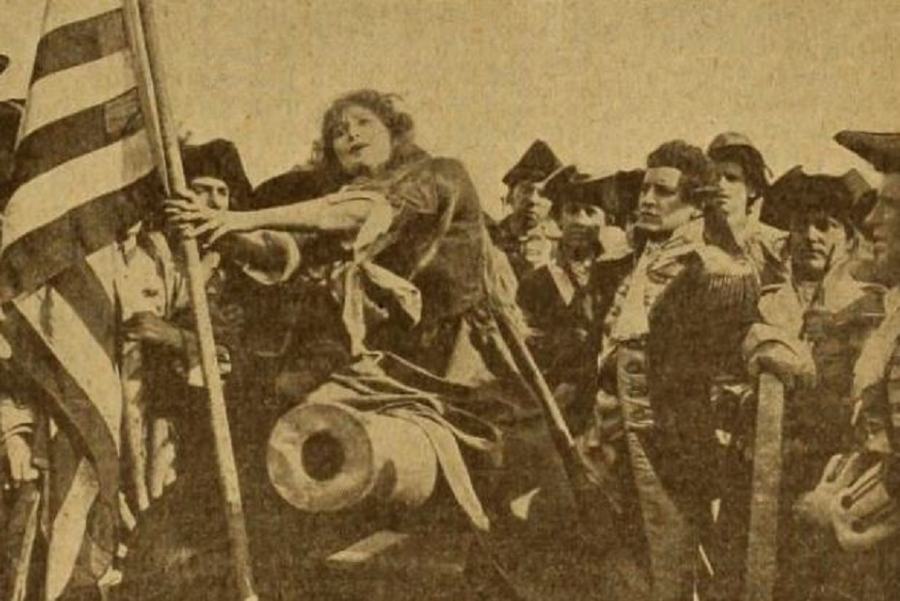
Viewing Sloth today requires an understanding of the 1917 psyche. It is a film of its moment, designed to galvanize a nation and redefine the role of women in a time of crisis. However, it transcends its propaganda roots through its imaginative structure and Mason’s captivating presence. It remains a fascinating study in how cinema can be used to navigate the transition between individual desire and collective responsibility.
The film’s conclusion, where Eve proves herself 'as true' as the women of the past, is a satisfying, if predictable, resolution. It reinforces the idea that character is not fixed, but forged in the fires of action. For those interested in the evolution of the 'strong female lead' in silent cinema, Sloth is an essential text. It may not have the surreal complexity of Hans hustrus förflutna or the stark isolation of Ene i verden, but it possesses a uniquely American spirit of reinvention.
Ultimately, Sloth is a reminder that the greatest enemy of progress is not always malice, but often the comfortable chair we refuse to leave. It’s a silent shout into the void of history, demanding that we wake up and find our own 'cannon' to man.
Cast: Shirley Mason, Albert L. Barrett, Grace Williams, Jack Crosby, Helen Strickland, Curtis Cooksey, Hattie Delaro, Jack Meredith, Peter Pann, D.J. Flanagan, Emil Hoch, Charlotte Walker, Harry McFayden, George LeGuere, Charles Mussett.
Written by Florence Morse Kingsley. Produced by McClure.
IMDb —
1935
Community
Log in to comment.