DbcultAccessing Vault...
Cult Review
Senior Film Conservator
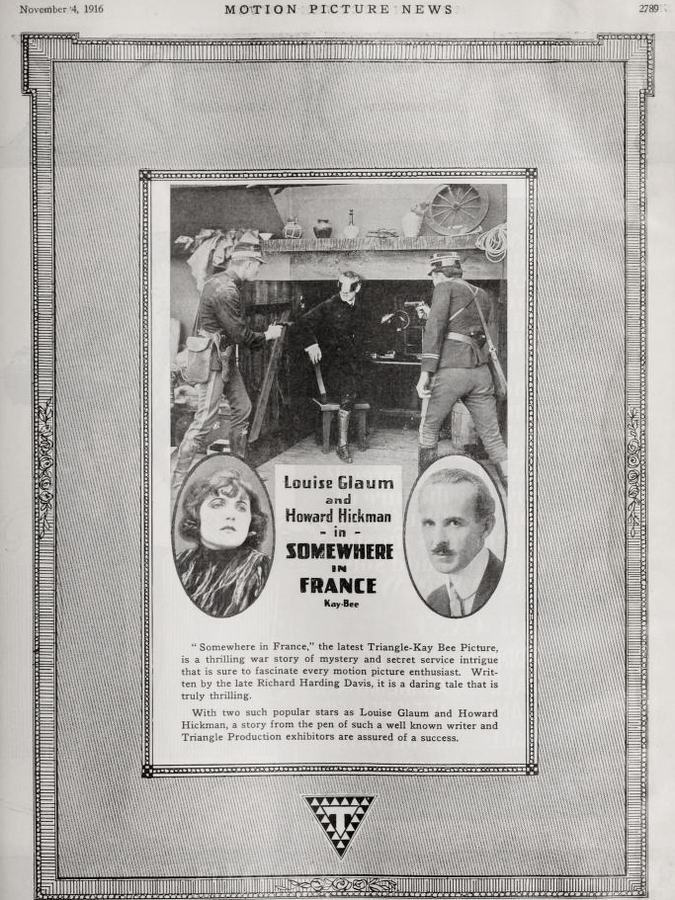
The flickering shadows and grand gestures of silent cinema often possess a profound, almost primal power, and few films from the era encapsulate the intoxicating blend of wartime paranoia, personal tragedy, and thrilling espionage quite like Jerome Storm's 1916 masterpiece, 'Somewhere in France'. More than a mere period piece, it serves as a fascinating window into the anxieties and narrative conventions of a world grappling with the cataclysm of the Great War, offering a potent cocktail of melodrama and cunning intrigue that remains compelling even over a century later. This is a film that doesn't just tell a story; it plunges you into a morally ambiguous world where loyalty is a commodity and betrayal a devastating art form.
At the vortex of this maelstrom stands Marie Chaumontel, portrayed with mesmerizing intensity by the inimitable Louise Glaum. Glaum, an actress often celebrated for her vampish roles, absolutely embodies the archetype of the femme fatale here, a character whose beauty is as much a weapon as any secret dossier. Marie isn't just a spy; she's a predator, moving through the gilded cages of the French high command with an almost balletic grace, each flirtation a calculated move, each whispered word a potential national security breach. Her performance is a masterclass in non-verbal communication, conveying layers of deceit, charm, and cold calculation through subtle glances, a knowing smile, or the elegant sweep of her gown. It's a portrayal that transcends the conventional villainy of the era, hinting at a complex inner world, even if the script by J.G. Hawks and Richard Harding Davis doesn't fully delve into her motivations beyond the dictates of her German handlers. One can't help but ponder the societal context of such a character – a powerful woman wielding influence in a world dominated by men, albeit for nefarious ends. She is a force, a stark contrast to the more passive female roles often seen in contemporary dramas, and Glaum plays her with an audacious confidence that is truly magnetic.
The tragic consequence of Marie's machinations manifests most acutely in Captain Henry Ravignac, a man whose professional integrity and personal affections are irrevocably shattered by her insidious charm. His descent into despair, culminating in a devastating act of suicide, is handled with a gravity that underscores the profound human cost of espionage. It’s a stark, uncompromising moment that sets the stage for the film's central conflict. This isn't just about stolen secrets; it's about shattered lives and the corrosive power of deceit. The emotional weight of this event provides the crucial impetus for Henry's brother, Lieutenant Charles Ravignac, brilliantly played by William Fairbanks, to embark on his perilous quest for vengeance. Fairbanks, in a role that demands both emotional vulnerability and steely resolve, navigates this transformation with commendable skill. His initial grief is palpable, a raw wound that quickly hardens into an unyielding determination. This personal vendetta elevates the narrative beyond a simple spy thriller, imbuing it with a Shakespearean sense of justice and retribution.
Charles's plan is audacious, bordering on reckless: to infiltrate the very network that destroyed his brother, to become a German spy himself, a double agent operating under the most extreme pressure. The tension built around his masquerade, his careful steps to gain Marie's trust, and his painstaking efforts to gather evidence against her form the backbone of the film's suspense. It's a delicate dance of deception, where one wrong move could mean not just exposure, but death. The writers, J.G. Hawks and Richard Harding Davis, craft a screenplay that, for its time, demonstrates remarkable intricacy in plotting. The narrative twists and turns, keeping the audience on edge, wondering how Charles will manage to maintain his façade and ultimately expose Marie without sacrificing himself. This kind of intricate spycraft, where psychological manipulation is as vital as physical action, stands out in early cinema. While not as labyrinthine as later, more sophisticated espionage thrillers, it certainly lays groundwork for the genre, perhaps even predating some of the more complex narratives seen in films like Zigomar contre Nick Carter, which often focused more on the thrilling chase than the psychological game.
Jerome Storm's direction is taut and effective, particularly in his use of visual storytelling. In an era without spoken dialogue, every gesture, every facial expression, every carefully composed shot had to convey meaning. Storm utilizes close-ups to emphasize the emotional turmoil of his characters, and the staging of key scenes, such as Marie's seductions or Charles's moments of peril, is executed with a keen understanding of dramatic impact. The film's pacing, while adhering to silent era conventions, manages to build suspense incrementally, culminating in a satisfying, if not entirely surprising, climax. The visual language of the film is crucial; the dark interiors and shadowed figures often reflect the moral murkiness of the espionage world, while moments of clarity and light underscore the triumph of justice, however hard-won.
The overarching themes explored in 'Somewhere in France' resonate deeply. The film delves into the corrosive nature of war, not just on the battlefield, but in the hidden corridors of power where information is currency and loyalty a dangerous luxury. It's a poignant exploration of revenge versus justice, as Charles's personal vendetta ultimately serves a greater national good. His transformation from a grieving brother to a national hero, celebrated for his courage and cunning in damaging German espionage operations, speaks to the patriotic fervor of the time. Yet, beneath the heroism, one can sense the toll such deception must take, a quiet acknowledgement of the sacrifices demanded by wartime. The film doesn't shy away from depicting the moral ambiguities inherent in spycraft, where the line between hero and villain can become dangerously blurred, and where one must often become what one despises to achieve victory.
Considering its contemporary context, 'Somewhere in France' would have been a profoundly impactful film for audiences in 1916. With the Great War raging, a narrative focusing on enemy spies and heroic counter-espionage would have tapped directly into public sentiment, fueling both fear and patriotism. The portrayal of a German spy as a seductive, destructive force would have amplified existing anxieties, while Charles's triumph would have offered a comforting vision of national strength and resilience. It's a propaganda piece in the best sense of the word, designed to entertain, thrill, and reinforce a sense of collective purpose. Unlike grand war epics like War and Peace, which chronicle the sweeping scale of conflict, this film zeroes in on the personal, intimate battles waged in the shadows, battles that are no less vital to the outcome of the war.
The ensemble cast, though often overshadowed by Glaum's magnetic performance, contributes significantly to the film's overall impact. Fanny Midgley, George Fisher, Joseph J. Dowling, and Howard Hickman fill out the supporting roles with the gravitas and expressive acting characteristic of the silent era. Each actor, through their nuanced pantomime, helps to build the world of intrigue and danger that surrounds Marie and Charles. The film's production values, while perhaps modest by today's standards, were effective for their time, creating believable settings for the clandestine meetings and dramatic confrontations. The use of intertitles, far from being a mere necessity, becomes an integral part of the storytelling, guiding the audience through the complex plot and providing crucial emotional context.
Revisiting 'Somewhere in France' today offers more than just a glimpse into cinematic history; it provides a potent reminder of enduring human themes. The allure of power, the devastation of betrayal, the burning desire for justice, and the sacrifices made in the name of loyalty or country are all woven into its fabric. While the acting styles and narrative conventions may feel dated to modern viewers accustomed to fast-paced, dialogue-driven cinema, there's an undeniable charm and power in its silent eloquence. It demands a different kind of engagement, inviting the viewer to interpret the subtle cues and fill in the emotional blanks, a collaborative experience that is uniquely rewarding. The film stands as a testament to the ingenuity of early filmmakers in crafting compelling narratives without the luxury of synchronized sound. It proves that a gripping story, well-told, transcends technological limitations.
In conclusion, 'Somewhere in France' is far from a forgotten relic; it is a vibrant, thrilling piece of early cinema that deserves renewed attention. It showcases Louise Glaum at the height of her powers, delivering a chillingly effective portrayal of a wartime temptress, and William Fairbanks as a compelling avenging hero. The film's exploration of espionage and its devastating human cost, set against the backdrop of a world at war, continues to resonate. It's a powerful reminder of how timeless themes of love, loss, betrayal, and revenge can be explored through the unique artistry of silent film, leaving an indelible mark on the viewer long after the final frame fades to black. This is a film that speaks volumes without uttering a single word, a true gem in the annals of early cinematic thrillers.
IMDb 6.3
1931
Community
Log in to comment.