DbcultAccessing Vault...
Cult Review
Senior Film Conservator
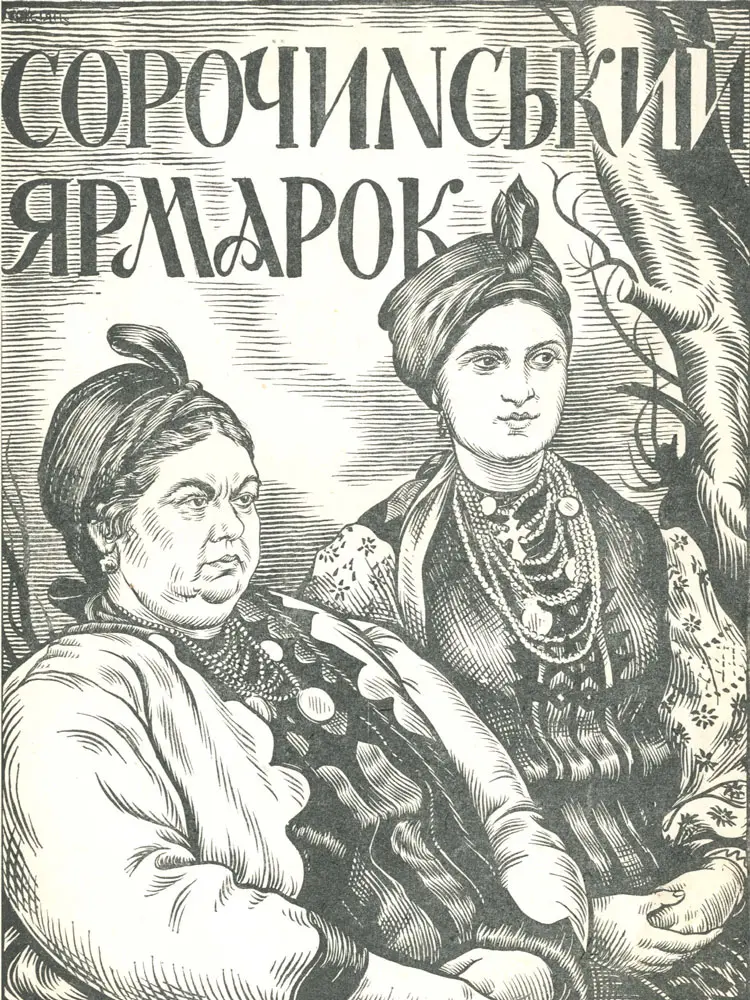
Is Sorochynskyi yarmarok a cinematic relic that deserves a modern audience? Short answer: yes, but only if you view it as a vibrant historical artifact rather than a tight narrative drama.
This film is for the historian of world cinema and the lover of folkloric surrealism; it is absolutely not for those who demand high-definition realism or fast-paced action beats.
1) This film works because it captures the frantic, almost hallucinatory energy of a communal gathering through pioneering color and sound design.
2) This film fails because the pacing is uneven, with the second act often getting lost in repetitive slapstick routines that stall the romantic momentum.
3) You should watch it if you want to see the exact moment Soviet cinema transitioned into a bold, chromatic exploration of national identity.
Nikolai Ekk was a man obsessed with the future. Having already directed the first Soviet sound film, he took on the monumental task of bringing color to the masses with Sorochynskyi yarmarok. The result is a film that feels like a painting that hasn't quite dried. The colors are saturated, sometimes bleeding into one another, creating a dreamlike atmosphere that suits Nikolai Gogol’s source material perfectly. It doesn't look like the sterile digital color of today. It looks alive. It looks tactile.
The opening shots of the fair are a masterclass in controlled chaos. We see wagons, livestock, and peasants moving in a synchronized dance. It’s loud. It’s bright. It’s exhausting. Ekk uses the camera to mimic the wandering eye of a visitor, catching glimpses of lace, the steam from a bowl of borscht, and the suspicious glint in a trader's eye. Unlike the structured spectacle of The Biggest Show on Earth, which treats the circus as an industrial machine, Ekk treats the fair as a living, breathing organism.
However, this visual ambition sometimes comes at a cost. There are moments where the technical limitations of 1939 filmmaking are glaring. Some scenes are overexposed, and the red of the infamous 'Red Jacket' occasionally looks more like a muddy brown. But in the context of its time, it was a revolution. It was a statement. Ekk wasn't just telling a story; he was building a world out of light and shadow.
Anna Goricheva as Paraska is the heart of the film. She brings a luminous, almost ethereal quality to the screen that contrasts sharply with the earthy, grounded performances of the supporting cast. Her chemistry with R. Korovnichenko’s Hrytsko is sweet, if a bit simplistic. They represent the idealized youth of the village, a stark contrast to the greed and superstition of the older generation. Their scenes together are often framed with a soft focus that feels like a breather from the frantic fairground energy.
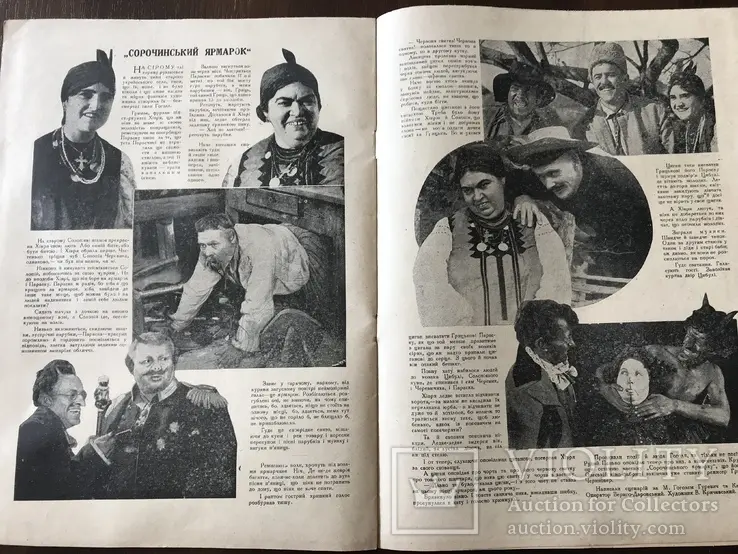
On the other end of the spectrum, we have Tatyana Tokarskaya as the stepmother, Khivrya. Her performance is pure pantomime, and while it fits the folk-tale aesthetic, it can be grating. She leans heavily into the 'shrew' archetype, often shouting her lines with a theatricality that doesn't always translate well to film. Yet, there is a specific scene in the kitchen where her physical comedy—juggling pots and dodging her husband’s clumsy advances—shows a level of timing that is genuinely impressive. It works. But it’s flawed.
The ensemble cast functions as a single unit, a Greek chorus of villagers who react in unison to every rumor and ghost story. This collective performance is what gives the film its weight. When the rumor of the 'Red Jacket' spreads, you don't just see one person afraid; you see the entire village shudder. It’s an effective use of crowd psychology that many modern directors struggle to replicate. It reminds me of the communal tension found in The Dwelling Place of Light, though the tone here is significantly more whimsical.
The answer depends entirely on your patience for historical pacing. If you are looking for a plot that moves with the precision of a Swiss watch, you will be disappointed. The narrative of Sorochynskyi yarmarok is more of a clothesline upon which Ekk hangs various vignettes of village life. However, if you are interested in the roots of cinematic language and the way folklore can be adapted into a visual medium, this is essential viewing.
The film’s handling of the supernatural is particularly fascinating. The 'Red Jacket' isn't treated as a jump-scare horror element. Instead, it’s a psychological haunting. It represents the guilt and the hidden sins of the villagers. When the jacket finally 'appears,' the use of sound—a low, rhythmic thumping—creates a sense of dread that is surprisingly modern. It’s a bold choice for a 1930s comedy, and it’s one of the reasons the film lingers in the mind long after the credits roll.
Pros:
The musical score is infectious and perfectly integrated into the action. The costume design is incredibly detailed, showcasing authentic regional patterns. The film manages to balance genuine dread with lighthearted romance in a way that feels uniquely Slavic.
Cons:
The sound recording is occasionally muffled, making some of the puns difficult to catch. The character of Cherevyk is often too buffoonish to be sympathetic. Certain transitions between scenes feel abrupt, likely due to the technical difficulties of the era's editing equipment.
Adapting Nikolai Gogol is a dangerous game. His writing relies so heavily on tone and the 'pishlost' (a specific kind of petty soul-crushing boredom or vulgarity) that it can be hard to capture on film. Ekk leans into the 'skaz'—the oral storytelling tradition—by making the film feel like a story being told by a drunk uncle at a wedding. It’s rambling, it’s exaggerated, and it’s full of digressions. This is a debatable choice, as some purists might find it misses the darker undercurrents of Gogol's work, but for a mainstream 1939 audience, it was likely the right call.
There is an unconventional observation to be made here: the film treats the fair not as a place of commerce, but as a place of purgatory. Everyone is trying to sell something—their pigs, their daughters, their souls—but no one seems to actually progress. They are stuck in a loop of dancing and drinking. It’s a subtle, perhaps unintentional, critique of the stagnant nature of rural life that gives the film a depth it wouldn't otherwise have. It’s much more than just a colorful comedy; it’s a study of a people trapped in their own mythology.
Sorochynskyi yarmarok is a messy, beautiful, and deeply human film. It isn't perfect. The jokes are old. The pacing is weird. But it has a soul. In an era where many films were being produced as sterile propaganda, Ekk managed to create something that felt authentically messy. It’s a celebration of culture that doesn't shy away from the weirdness of that culture. While it may not have the narrative polish of something like The Newlyweds' Neighbors, it possesses a visual bravery that is rare for its time. If you can handle the theatricality, you’ll find a film that is as warm and intoxicating as a fresh glass of horilka. It’s a flawed gem, but a gem nonetheless.
IMDb 5.7
1937
Community
Log in to comment.