DbcultAccessing Vault...
Cult Review
Senior Film Conservator
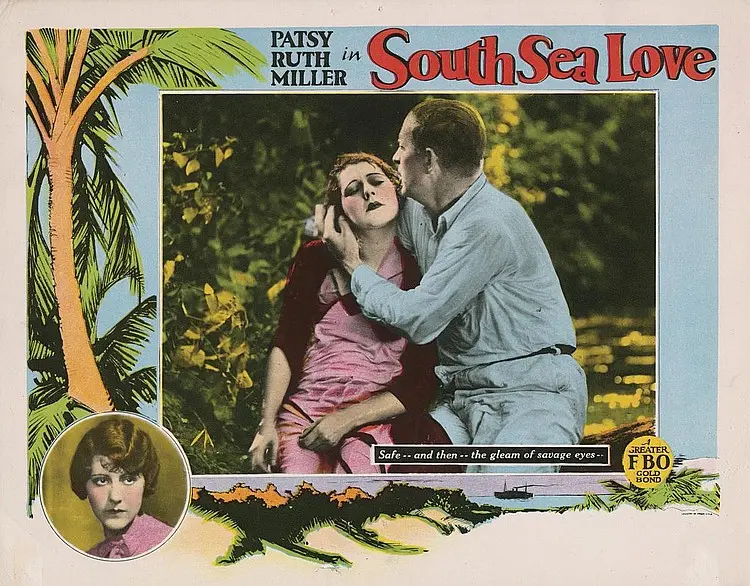
Is 'South Sea Love' (1927) a forgotten gem or a historical curiosity best left in the archives? For enthusiasts of silent cinema and cultural studies, it offers fascinating, if sometimes problematic, insights, but for casual viewers seeking modern narrative pacing, it will likely prove a challenging watch.
This film, a product of a nascent Hollywood grappling with the advent of sound, is undeniably a time capsule. It demands a particular kind of viewer – one willing to engage with its historical context, appreciate the nuances of silent acting, and forgive its often-dated thematic approaches. It is decidedly not for those who demand fast-paced plots, complex character arcs by today's standards, or a complete absence of colonial-era romanticism.
While specific plot details for 'South Sea Love' remain elusive in public records, its very title, coupled with the era of its production, paints a vivid picture of its likely narrative ambitions. One can reasonably infer a story steeped in the romanticized exoticism prevalent in 1920s cinema: a Western protagonist, perhaps a sailor or a disillusioned adventurer, finding solace, danger, and ultimately, love, on a remote Pacific island.
The film would have almost certainly pitted a passionate, 'untamed' local against the more 'civilized' sensibilities of the outsider, creating a dramatic tension fueled by cultural misunderstandings and forbidden desires. Think less about a nuanced exploration of indigenous life and more about a heightened, often melodramatic, portrayal designed to transport audiences to a world far removed from their own. The central conflict would likely revolve around the challenges of such a union: societal disapproval, rival suitors, or perhaps a natural disaster testing the lovers' resolve. This was the blueprint for many a silent era 'exotic romance,' and 'South Sea Love' no doubt followed it closely.
The appeal, then, isn't just in the story itself, but in how a 1927 audience would have consumed such a narrative. It was escapism, pure and simple, a chance to dream of sun-drenched beaches and passionate encounters far from the everyday grind. The film's writers, Georges Arthur Surdez, Enid Hibbard, and George M. Arthur, would have been tasked with crafting a screenplay that leaned heavily on visual storytelling and broad emotional strokes, given the limitations of the medium.
This film works because... it offers a rare window into the tropes and romantic ideals of silent era Hollywood's approach to 'exotic' locales and cross-cultural romance, complete with period-specific acting styles and visual storytelling techniques.
This film fails because... its likely reliance on outdated cultural stereotypes and a melodramatic narrative structure will feel simplistic and potentially problematic to a contemporary audience seeking depth and authenticity.
You should watch it if... you are a dedicated silent film enthusiast, a scholar of film history or cultural representation, or simply curious about how love stories were told on screen almost a century ago, particularly those featuring actors like Patsy Ruth Miller or Everett Brown.
The direction of 'South Sea Love' would have been inherently tied to the prevailing cinematic language of 1927. This was a period of transition, with filmmakers still perfecting the grammar of visual storytelling before sound irrevocably altered the landscape. Expect a reliance on clear, emphatic gestures from the actors, intertitles to convey dialogue and crucial plot points, and a directorial style that emphasized sweeping vistas and dramatic close-ups to build emotional resonance.
The director's primary challenge would have been to evoke the 'South Sea' atmosphere convincingly without the benefit of color film or immersive sound. This meant meticulous attention to set design, costume, and location scouting (or clever studio recreation). The goal was not realism, but exoticism – to transport the audience through visual spectacle. One might compare its likely approach to other films of the era exploring similar themes, such as Godless Men (1920) or even the more allegorical Fig Leaves (1926) in its visual ambition, albeit with a different focus. The pacing would have been deliberate, allowing audiences time to absorb the visual information and the emotional beats conveyed through performance.
It’s a style that feels slow by modern standards, yet it possesses an undeniable charm. The deliberate camera movements, the carefully composed shots – these were the tools of the trade. The director had to be an orchestrator of visual rhythm, ensuring that each scene contributed to the overall emotional arc without the crutch of spoken dialogue. This required a profound understanding of composition and the power of the human face.
The cast of 'South Sea Love,' featuring names like Everett Brown, Lee Shumway, Harry Crocker, and Patsy Ruth Miller, would have been tasked with the unique demands of silent acting. This wasn't about subtle intonation or nuanced vocal delivery; it was about physicality, expression, and the ability to convey complex emotions through body language and facial contortions. Patsy Ruth Miller, known for her expressive eyes and dramatic flair (as seen in films like Robin Hood, Jr.), would likely have been a central figure in conveying the romantic intensity.
Silent actors were often larger than life, their performances bordering on theatrical. This isn't a criticism; it's a testament to their craft. They had to project emotions to the back row of a vast cinema, often against the backdrop of a live orchestra providing the score. Everett Brown, for example, would have needed to embody the rugged charm and moral ambiguity of a Western hero, his every gesture speaking volumes. The challenge for modern viewers is to adjust their expectations, to appreciate this heightened style as an art form in itself, rather than judging it by the naturalistic standards of today.
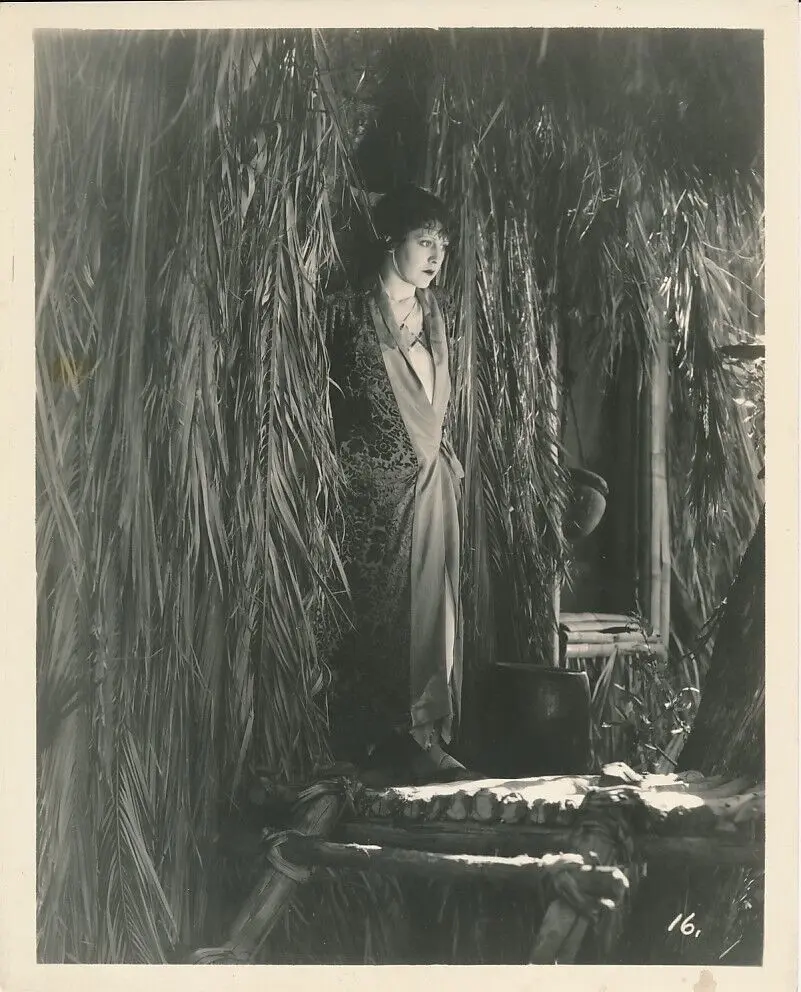
There's a raw honesty in these performances, an unmediated connection between actor and audience that often gets lost in the spoken word. The silent screen demanded a certain kind of magnetism, a charisma that could transcend the lack of dialogue. It works. But it’s flawed. The potential for unintentional caricature is ever-present, especially when portraying characters from different cultural backgrounds, a common pitfall of the era.
The cinematography of 'South Sea Love' would have been paramount to its success. Without dialogue, the camera became the primary narrator, guiding the audience's eye and conveying mood. Expect lush, sweeping shots of what passed for 'tropical paradise' – whether actual location footage or meticulously crafted studio sets. The use of light and shadow would have been crucial, perhaps employing dramatic chiaroscuro effects for moments of tension or soft, diffused lighting for romantic scenes.
Art direction would have worked in tandem, creating an environment that felt both authentic and fantastical. Costumes, props, and set pieces would have been chosen to emphasize the 'otherness' of the South Seas, often through an Orientalist lens. While this approach can be culturally insensitive by today's standards, it was a key part of the escapist appeal of the time. Think of the visual grandeur seen in films like Revelation (1924) or even the more comedic The Nut (1921) in its commitment to visual world-building, though 'South Sea Love' would have aimed for a much more serious, romantic aesthetic.
The visual language of silent film is a marvel to behold, when done well. It forces a viewer to truly *look*, to infer, to participate actively in the storytelling. Every frame was a painting, every gesture a sentence. It’s a lost art, almost, one that modern cinema could learn from in its occasional over-reliance on dialogue.
The pacing of 'South Sea Love,' like most silent films, would have been considerably slower than contemporary blockbusters. This deliberate rhythm allowed for the audience to fully absorb the visual information, the emotional nuances of the actors' expressions, and the impact of the intertitles. It was a more contemplative viewing experience, less about rapid-fire cuts and more about sustained emotional beats.
The tone would have oscillated between high romance and dramatic tension, often with elements of adventure. Given the 'love' in the title, melodrama would have been a significant component, with grand gestures, passionate embraces, and tearful partings. The film would have aimed for heightened emotionality, designed to sweep the audience away on a tide of feeling. This can be jarring for modern viewers accustomed to more understated performances and quicker narrative progression, but it was the very essence of silent drama.
Some might find this pacing agonizing. I find it meditative. It forces a different kind of engagement, a deeper immersion into the visual and emotional tapestry being woven. It's a testament to how effectively filmmakers could manipulate audience emotions without a single spoken word.
Short answer: Yes, but with significant caveats.
For the casual viewer seeking modern entertainment, 'South Sea Love' will likely feel slow, dated, and potentially problematic in its cultural portrayals. Its narrative style is from a bygone era.
However, for film historians, silent film enthusiasts, or those interested in the evolution of cinematic storytelling, it's an invaluable artifact. It offers a direct link to the entertainment values and societal perspectives of 1927.
You should approach it not as a direct competitor to today's films, but as a historical document. It provides context for understanding how cinema developed, how actors honed their craft without dialogue, and how 'exotic' themes were explored.
It's a challenging watch, no doubt, but one that rewards patience and an open mind. It helps us understand the roots of many cinematic traditions, even the ones we now critique.
'South Sea Love' (1927) is not a film for everyone, nor should it be approached as such. It is a cinematic relic, a fascinating echo from a time when the moving image was still finding its voice. Its value lies less in its ability to captivate a modern audience with a fresh narrative, and more in its capacity to transport us to a different era of filmmaking and cultural perception. It offers an unfiltered look at how stories of passion and adventure were crafted for a generation hungry for escapism, long before dialogue became king.
While its themes and portrayals are undeniably products of their time, carrying the baggage of colonial romanticism, they are also integral to understanding the evolution of cinema and societal attitudes. For those willing to engage with its historical context, to appreciate the unique artistry of silent performance, and to critically examine its dated elements, 'South Sea Love' is a worthwhile, if challenging, viewing experience. It's a testament to the enduring power of visual storytelling, even when the stories themselves haven't aged gracefully. It’s important. But it’s not easy.
IMDb —
1936
Community
Log in to comment.