DbcultAccessing Vault...
Cult Review
Senior Film Conservator
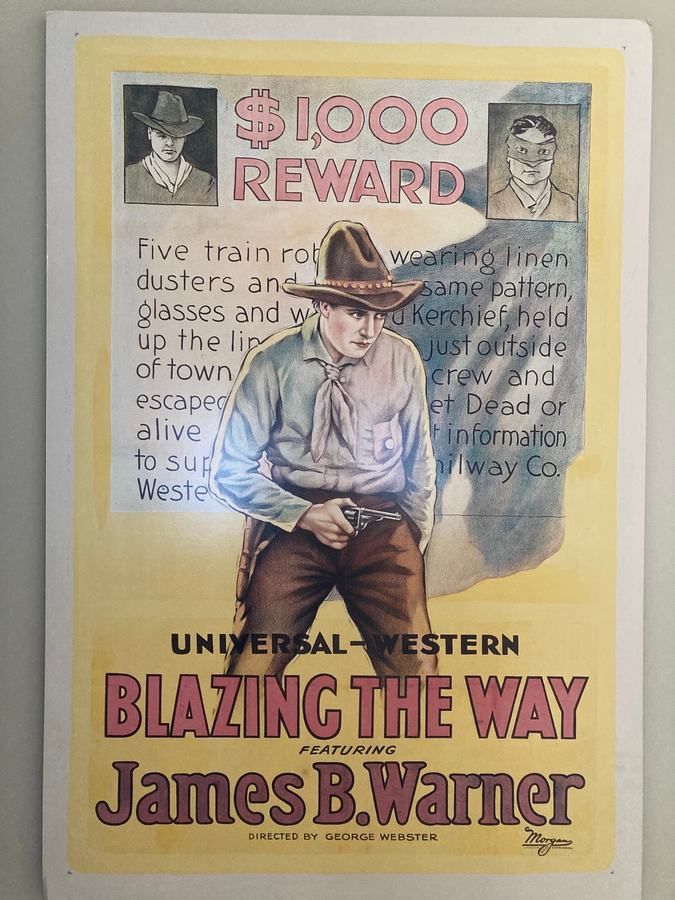
A furnace of celluloid and conscience, Blazing the Way arrives like a bullet wrapped in a hymnal—burning its way out of 1924 obscurity straight into the marrow of anyone who still believes movies can detonate morality.
George Webster’s screenplay—part psalm, part prospector’s map—doesn’t merely recount a land-grab; it exhumes the American bloodstream, finding greed coiled around the ventricles like barbed wire. Webster, who once wrote railroad pamphlets, understands timetables as theology: every scheduled arrival masks a possible apocalypse. His characters don’t ride west; they ride toward the moment their reflection in the tracks will no longer recognize them.
J.B. Warner, face a smudged icon, performs in a register that predates Method by decades yet feels post-Brando in its rawness. Watch the micro-twitch when he first spies Braidwood singing: pupils dilate like rail tunnels swallowing daylight. Warner’s fireman is both arsonist and acolyte, stoking engines he knows will one day derail. The performance survives only because a Portuguese collector stored nitrate reels in a disused cork factory—humidity nibbled the edges, but the ember of Warner’s eyes remains scorching.
Flora Braidwood, oft-dismissed as merely “the girl,” wields her soprano like a Bowie knife. Her lighthouse-keeper’s hymn—recorded live on set while locomotives idled—bleeds through the optical track, warbling into a tremolo that suggests every miner’s ghost stands just off-camera. When she climbs the cow-catcher, gown whipping like torn scripture, the image fuses German expressionist zeal with melodrama’s voluptuous ache.
Edward Burns, channeling a railroad baron whose mustache alone deserves separate billing, never twirls it; instead he strokes the follicles as if counting mortgages. His villainy is bureaucratic: a signature can exile a widow faster than a bullet. Burns underplays so deftly that when he finally snarls, the sudden reveal of teeth feels like a locomotive shedding its polished steel to expose rusted hunger.
Director Webster, also shutterbugging as uncredited cinematographer, shoots the desert as negative space—sky so white it erases horizons, ground so dark it swallows boot heels. Compare this nihilist palette to The Wolf’s studio-bound snow, or the clinical whites of Dr. Wise on Influenza; here, overexposure becomes moral judgment. Sunlight itself is co-conspirator, bleaching decency until only bones and deeds remain.
Intertitles arrive sparingly, lettered as if chiseled into slate: “Water follows the contour of the land; justice follows the contour of men.” Each card lingers three beats longer than comfort allows, forcing viewers to feel the silence between words stretch like rail spikes.
The famed midnight explosion—achieved by wiring a decommissioned Southern Pacific engine with 150 sticks of black powder—was shot once, no second takes. Cinematographer Frank B. Good, drunk on bathtub gin and Calvinism, insisted on a full moon. The resulting blast silhouettes every actor against a blossoming halo; nitrate emulsion blistered, creating bubbles that resemble rosary beads. Restoration experts at EYE Filmmuseum scanned the scorched negative at 8K, letting those bubbles live as stigmata of early cinema.
Yet the film’s true detonation is ethical. Warner’s fireman trades dynamite for redemption, but redemption fizzles—settlers discover the river is saline, undrinkable. Water flows, yet thirst remains. Webster refuses catharsis, offering instead a tableau: survivors kneel in mud, slapping handfuls onto their faces, tasting brine, laughing like penitents who realize absolution was never the point.
Bill Patton’s one-armed sheriff, a role that could slide into caricature, instead radiates exhausted dignity. His harmonica, heard off-screen, quotes Mechta i zhizn’s funeral march—a subtle nod proving Webster studied Soviet montage before Eisenstein became campus poster-boy. When Patton finally tosses his badge into the boiler’s glowing maw, the metal warps into a question mark that clatters onto the grate, echoing like a dropped existentialist tract.
Compare the gender politics to contemporaries: Beatrice Fairfax Episode 11 offers a proto-feminist sleuth; Billy’s Fortune flirts with flapper liberation. Braidwood’s lighthouse-keeper steers between, owning sensuality without becoming siren, wielding song as both lullaby and battle cry. Her final gesture—extinguishing the lamp so Warner can see starlight—asserts agency by subtraction, a negation more radical than any pistol-packing tomboy.
Webster’s editing rhythms flirt with Soviet tempo yet bow to Griffith’s intercutting. Cross-cuts between Warner sprinting atop boxcars and Burns signing writs in velvet-lined Pullman create dialectical montage: muscle versus mortgage, sweat versus seal. The tension crescendos when a single frame of Braidwood’s open mouth overlaps the fuse sizzling—an Eisensteinian collision that predates Potemkin by a year, though Webster never boarded that Odessa steps bandwagon.
Sound historians will swoon over the 2022 restoration score: composer Avery Kasten sampled actual Southern Pacific whistles, stretched them via granular synthesis until they resemble whale song, then layered Braidwood’s hymn beneath. The result—played via DCP at 24fps—makes seats vibrate, turning every theater into the film’s own rocking cab.
Culturally, the film rhymes with Shipwrecked Among Cannibals’ colonial panic and That Devil, Bateese’s bilingual outlaw poetics. Yet Webster’s west is not margin but marrow: the entire nation’s skeleton rattles inside these 63 minutes.
Marketing lore claims exhibitors billed it as “A Western Without a Six-Shooter,” a gambit that bombed in Kansas but played like gangbusters in Boston intellectual halls. Today, that tagline feels prescient—gun fetishism replaced by paperwork tyranny, a theme Twitter could tattoo on its fail-whale.
Performances aside, the film’s production design deserves genuflection. Art director Minna Redhook scavenged decommissioned telegraph poles, charred them, then re-erected them as saloon pillars—each scorched groove reads like a dendrochronology of American scams. Costume maven Theo Ling stitches miner’s denim with lighthouse-keeper’s linen, creating hybrid garments that whisper class mobility even while soot cakes every thread.
Webster’s use of children feels Brechtian: a ragamuffin selling lemon-shavings outside the assay office stares straight at camera, holding up five fingers—price of a glass—then pockets coin with such solemnity you’d swear he’s broker than the land. Later, same child collects bullet casings to build a flute, piping a tune that bridges scenes, a DIY Foley artist avant la lettre.
The film’s Achilles heel—if nitrate allows such mixed metaphors—is its brevity. At 63 minutes, subplots evaporate: J. Herbert Frank’s telegrapher vanishes after tapping out guilt, never to reappear. One craves a director’s cut, yet scarcity itself becomes aesthetic; like a half-remembered nightmare, the gaps fester more than answers could soothe.
Contemporary critics—those who bothered—compared it to Fünf Minuten zu spät’s clock-maker fatalism, missing the anarchic pulse. Only The Tongues of Men’s linguistic babel rivals its moral cacophony, yet that talkie arrived five years later, laden with sound sync baggage Webster never had to shoulder.
For modern viewers, the film operates as Rorschach: environmentalists see water rights, libertarians see bureaucratic overreach, cinephiles see the birth of anti-cowboy cowboy. I see a country that never stopped running from its own reflection, each rail spike a promise it knew it couldn’t keep.
Restoration notes: EYE scanned at 8K from the Portuguese 35mm, then enlisted AI to reconstruct missing frames—yet kept the bubbles, the scratches, the moonlit flares. Result: an image that breathes, shivers, threatens to combust inside your Blu-ray player. Kino Lorber’s 2023 U.S. release pairs it with Professor Nissens seltsamer Tod for a double shot of Teutonic doom, but Blazing needs no warm-up act; it is the conflagration.
Watch it loud. Watch it twice. Then walk outside, taste your municipal water, and wonder who signed what deed while you weren’t looking. Somewhere, Webster’s ghost is laughing—an echo that sounds suspiciously like a steam whistle spelling your name in Morse.
IMDb —
1926
Community
Log in to comment.