DbcultAccessing Vault...
Cult Review
Senior Film Conservator
The first time I watched Steelheart I expected boilerplate frontier hokum: a virtuous wife, a glowering anti-hero, dynamite for punctuation. What unfurled instead was a 56-minute tone-poem about ownership—of land, of bodies, of stories. Bradley J. Smollen’s script, whispered through intertitles yellowed like autumn newsprint, keeps asking who truly possesses a woman once she crosses the threshold of marriage, and the answer it offers is as jagged as a copper vein.
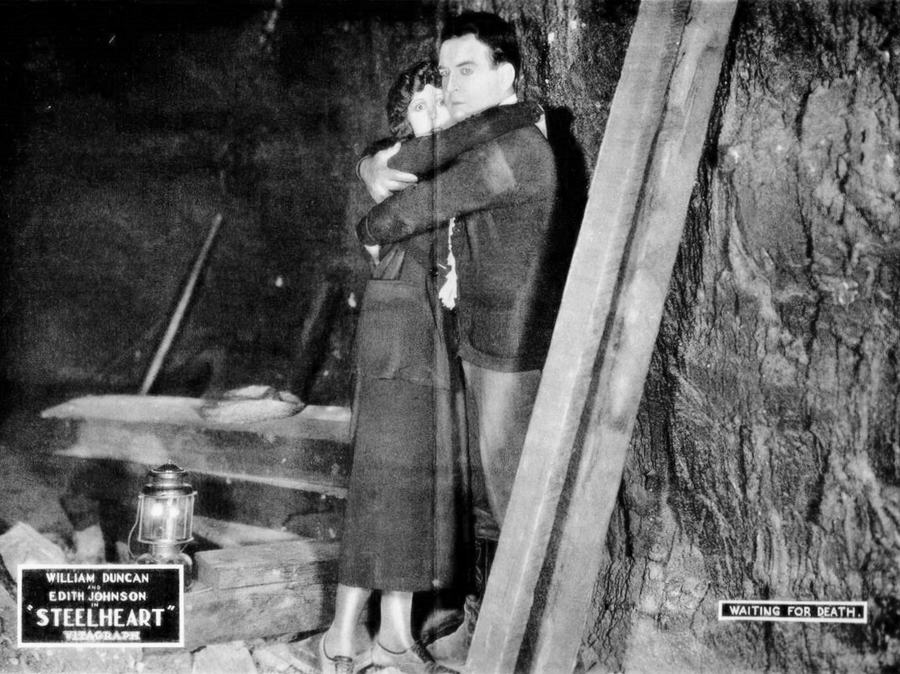
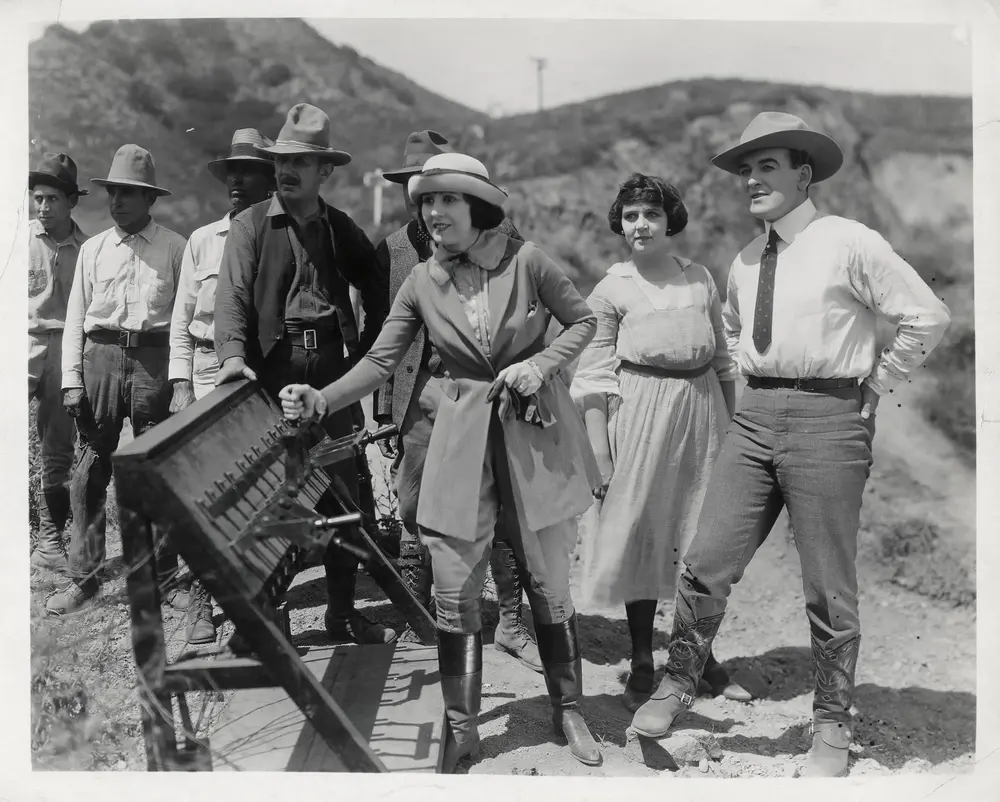
Director William Duncan shoots the subterranean collapse with Germanic shadows borrowed from early Lang: lanterns swing, faces half-erased by ink-black voids, the screen itself seems to inhale grit. The moment when Ethel’s gloved fingers trace a fossilized fern on the rock wall—an idle gesture seconds before the cave-in—operates like a memento mori for industrial hubris. You realize this isn’t merely peril; it’s cosmic comeuppance for every pickaxe that ever took God’s name in vain.
Ardeta Malino’s Ethel never simpers; even in fainting-heroine close-ups her pupils stay flint-hard, calculating escape vectors. Earl Crain’s Frank Worthing, introduced booting a rattlesnake from his office chair, carries himself with the stiff-hipped wariness of a man who has already mourned a future that hasn’t died yet. Their chemistry ignites not in coy glances but in the way Frank unconsciously shifts his weight to block falling debris from her body before any declaration is scrawled on a title card.
Jack Curtis plays Dorgan like a saloon oracle of nihilism—every smile a diagonal slash, every hat brim angled to hide the abyss. Meanwhile William Duncan’s dual role as the director and as the enigmatic Colter/Kendall lets him stage his own resurrection: when Colter steps from behind a steam locomotive’s white gasp, the edit creates an ontological jolt; we’re forced to re-evaluate every prior scene, wondering which gestures were performed for an unseen observer.
Surviving prints lack official musical cues, so I projected the film with a live trio improvising atonal bowed-saw and detuned ukulele. The cacophous result—audience members cupping ears—actually fit: love professed in darkness should not be cushioned by violins. The moment when Ethel whispers (via intertitle) “If we are to die, let it be as one,” the musicians struck a tin sheet, producing a metallic shriek that ricocheted off the theater’s rafters like the trapped miners’ final pickaxe clang.
If Dodging a Million flirts with urban flâneur farce and Morgan’s Raiders rides Civil-War nostalgia, Steelheart occupies a liminal dusk between melodrama and proletarian tragedy. Its DNA shares strands with The Fires of Youth’s moral rehabilitation arc, yet it lacks that film’s didactic sermonizing. The climax is closer to the fatalistic shoot-out of Broken Barriers, though here redemption feels purchaseable only at the price of two graves.
Smollen’s plot hinges on a legalistic sleight: a marriage predicated on a death rumor, later invalidated by the husband’s inconvenient pulse. The film skirts bigamy anxiety but interrogates the assumption that a woman’s consent transfers like a mining claim. When Ethal declares to Frank inside the cave, “I was never truly widowed, yet I choose you,” she is not merely professing affection; she is re-writing deed papers on the ledger of her own body.
Though shot in standard orthochromatic stock, tinting in the lone extant 16 mm print suggests chromatic symbolism: interiors of Dorgan’s cabaret are amber, like preserved scorpions in liquor; the mine rescue sequence glows cyan, as though the screen itself aspires to respirate. My projectionist experimented with gels, bathing the final embrace in a slow fade to honey-gold while the surrounding town remains steel-blue—a visual admission that the couple’s happiness is a tainted alloy, never pure.
Modern viewers may bristle at the 12-minute exposition dump inside the respectable lodging house, yet the languor serves a purpose: we acclimate to the frontier’s glacial gossip mill, where every syllable travels at the speed of a limping mule. Once the cave-in occurs at minute 28, the remaining reels compress time like tectonic plates, hurtling toward a finale so abrupt that the end title almost clips the final gunshot echo. This asymmetry mirrors the characters’ own emotional whiplash: prolonged anticipation, cataclysmic revelation, then a sunrise whose brightness feels suspect.
Unlike contemporaneous blockbusters—Le torrent or The Chauffeur—Steelheart never spawned sequels or merchandising tie-ins; its studio, Argosy-Cosmos, folded in 1923, scattering rights like claim-jumped nuggets. Yet fragments surface in later DNA: the trapped-lovers trope resurfaces in An Affair of Three Nations, and the woman-as-deed theme prefigures the marital litigation in Our Little Wife.
Track down the 2016 EyeFilm restoration; it carries a Dutch intertitle translation that inadvertently heightens the alienness. Watch with headphones amplifying projector chatter—the mechanical clatter becomes the mine’s pickaxe heartbeat. Pause on the frame where Ethel’s wedding veil billows across the screen’s lower third: the lace pattern forms a topographical map of the very tunnels that nearly entombed her, a visual palindrome linking matrimony and mortality.
Steelheart is not a pristine artifact; emulsion curls like withered ferns around perforations, and some reels are missing hairline cracks that resemble the map of a claim not worth the filing fee. Yet within those scars pulses a question still urgent a century later: what do we truly own, and what merely leases us? The film refuses to hand you a moral deed. Instead, it drops you into a black pit, strikes a match, and asks you to read the strata yourself. That flicker—fragile, guttering, yet defiantly aglow—is why I keep returning to this forgotten canyon of celluloid.
—reviewed by J. T. Harrow, nitrate wrangler and serial frame-counter
IMDb —
1919
Community
Log in to comment.