DbcultAccessing Vault...
Cult Review
Senior Film Conservator
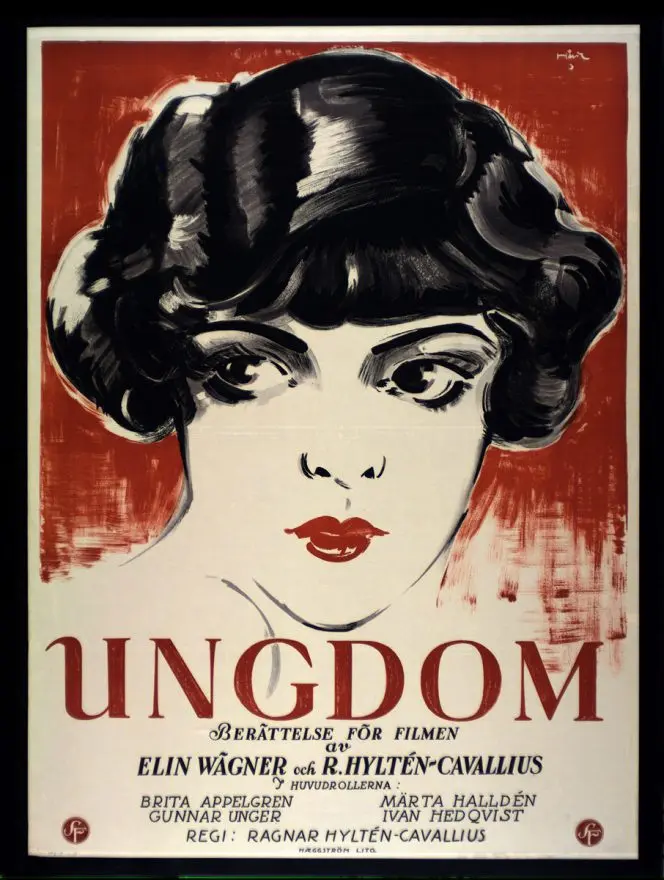
Is 'Youth' a relevant piece of cinema for the modern viewer? Short answer: Yes, but only if you are willing to trade explosive action for a slow-burning psychological autopsy of creative failure.
This film is for the cinephile who finds beauty in the mundane and the social historian interested in the early roots of Swedish realism; it is decidedly NOT for those seeking the high-octane melodrama typical of late-silent era Hollywood.
1) This film works because it captures the specific, claustrophobic irritability of shared living spaces with an honesty that predates the kitchen-sink dramas of the 1950s.
2) This film fails because the narrative pacing in the second act becomes as stagnant as the artists' careers, demanding a level of patience that borders on the excessive.
3) You should watch it if you want to see a rare, unvarnished look at 1920s Stockholm through the lens of Elin Wägner’s sharp social commentary.
The 1927 film Youth is a fascinating anomaly in the Swedish silent canon. While films like The Girl from Beyond leaned into the ethereal and the folkloric, Youth is grounded in the soot and the ego of the city. The collective formed by Lisa, Pontus, and Herman isn't a place of mutual support; it is a pressure cooker.
Take the scene where the trio receives yet another rejection letter. There is no grand weeping, no cinematic shouting. Instead, the director Ragnar Hyltén-Cavallius focuses on the way Pontus avoids eye contact, the way Herman fiddles with a paintbrush, and the heavy, oppressive silence of their shared studio. It is a masterclass in using the limitations of silent film to convey internal rot.
The script, co-written by the formidable Elin Wägner, carries her signature interest in social structures and the plight of the modern woman. Lisa isn't just a muse; she is a participant in this failure, and her frustration is given equal weight to that of her male counterparts. This sets the film apart from contemporaries like The Violinist of Florence, which often relegated its female leads to more decorative roles.
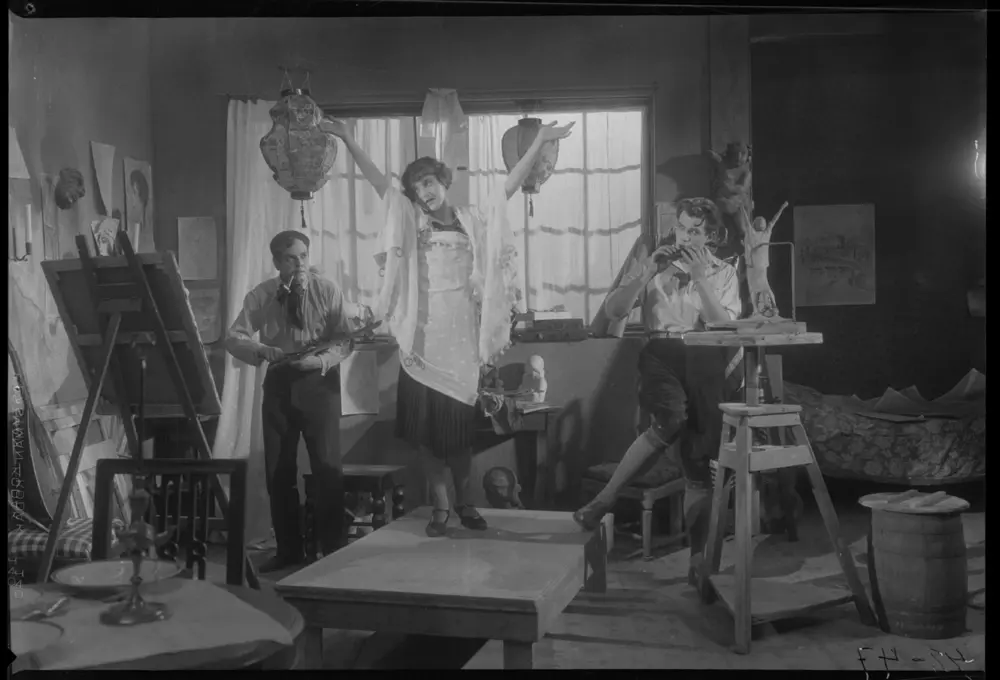
Hyltén-Cavallius avoids the expressionistic shadows of German cinema, opting instead for a flatter, more clinical lighting style that mirrors the harshness of daylight in a cold climate. The cinematography doesn't try to hide the poverty of the collective. The walls are bare, the clothes are slightly rumpled, and the 'irritated mood' mentioned in the plot summary is physically manifest in the composition of the frames.
In one striking sequence, the camera lingers on the three artists as they eat a meager meal. The lack of dialogue—inherent to the medium—actually enhances the scene. We see the resentment in the way bread is broken. It is a far cry from the stylized energy of Tramp, Tramp, Tramp the Boys Are Marching. Here, the comedy is absent, replaced by a biting sense of reality.
The pacing is, admittedly, a hurdle. The film moves with the speed of a Stockholm winter. However, this seems intentional. The stagnation of the plot mirrors the stagnation of the characters' lives. They are stuck, and the audience is forced to sit in that 'stuckness' with them. It works. But it’s flawed.
Yes, for the historical and psychological depth. If you are looking for a film that captures the authentic spirit of the 1920s without the Gatsby-esque glitz, Youth is an essential watch. It offers a rare glimpse into the early 20th-century Swedish middle class and the precarious nature of the artistic life. It is a film that values character over spectacle.
Brita Appelgren delivers a performance that is remarkably restrained. In an era often defined by grand gestures, her Lisa is a study in subtle facial ticks. When she looks at Herman, you can see the conflict between her loyalty to the collective and her growing realization that they are all going nowhere. It is a performance that would not look out of place in a modern indie drama.
Gunnar Unger and Ragnar Arvedson as Pontus and Herman provide the necessary friction. Their relationship is the heart of the 'irritated mood.' There is a specific scene in the latter half of the film where a small success for one character leads to a silent, bitter resentment in the other. It’s a brutal observation of human nature that feels more honest than the redemptive arcs found in films like Sunny Side Up.
The supporting cast, including veteran actors like Ivan Hedqvist, provides a solid foundation, grounding the younger characters' flighty ambitions in a world that clearly has no time for them. The contrast between the hopeful 'youth' and the cynical older generation is a recurring theme that Hyltén-Cavallius handles with a light touch.
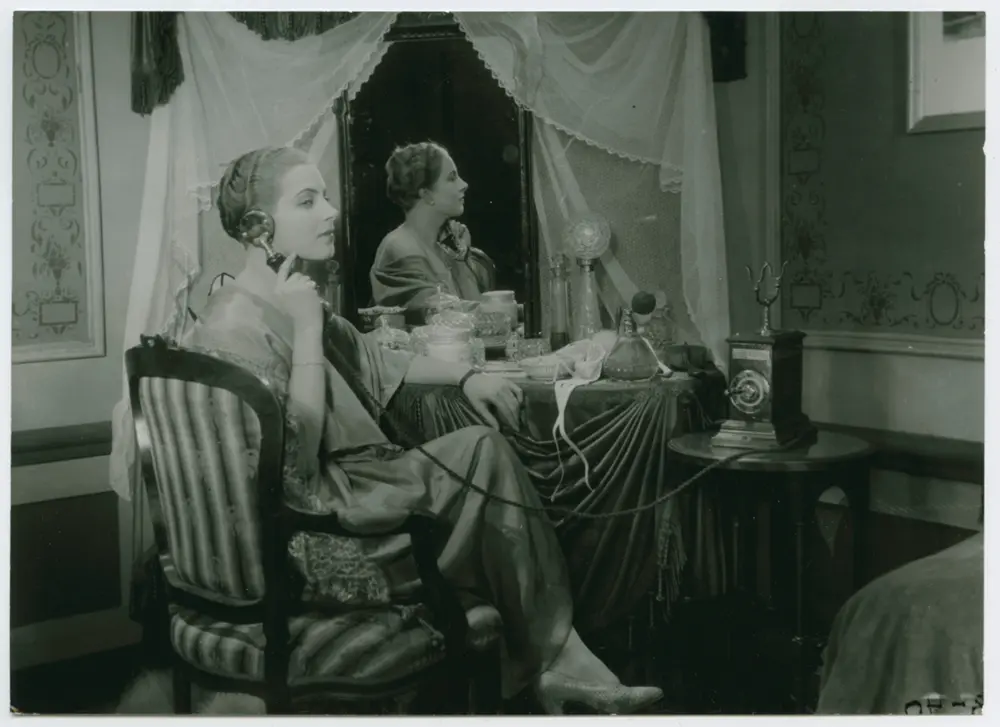
One of the most striking aspects of Youth is its lack of a villain. In many silent dramas, such as The Devil's Circus, there is a clear antagonist to drive the plot. In Youth, the antagonist is time and the economy. It’s a daring choice for 1927. The film posits that the greatest threat to our dreams isn't a mustache-twirling villain, but the slow, grinding reality of paying rent. This makes the film feel strangely contemporary.
“Youth is not a celebration of potential, but a eulogy for the illusions of the young.”
The film also touches on the gender dynamics of the creative world in a way that feels surprisingly sharp. Lisa’s role in the collective is constantly being redefined by the men around her, yet Wägner’s script ensures she maintains a core of autonomy that is rare for the period. It lacks the overt melodrama of Revenge, opting instead for a quiet, persistent subversion of expectations.
Youth is a difficult film to love, but an easy one to admire. It lacks the visual flair of Flygande holländaren or the visceral punch of 100% Nerve, but it possesses a psychological depth that was rare for its time. It is a film about the 'in-between' moments—the arguments over coffee, the shared silence of failure, the irritation of being stuck with people you are supposed to love.
If you can sync your internal clock to its deliberate rhythm, you will find a rewarding, unvarnished look at the human condition. It doesn't offer easy answers or a comforting resolution. Instead, it offers a mirror. And in that mirror, we see the same creative anxieties that haunt artists nearly a century later. It is a quiet, persistent, and ultimately essential piece of Swedish cinema.
IMDb —
1923
Community
Log in to comment.