DbcultAccessing Vault...
Cult Review
Senior Film Conservator
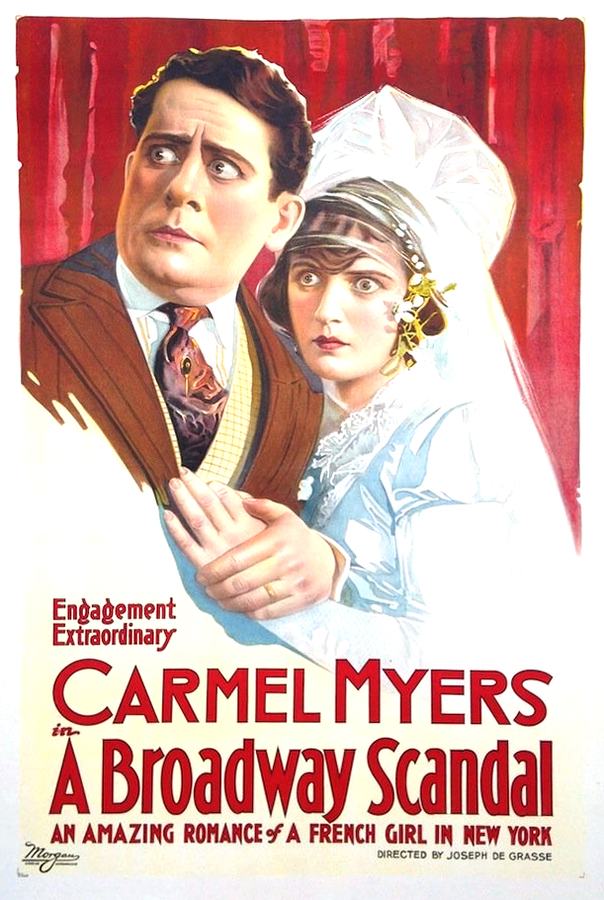
Stepping into the flickering glow of A Broadway Scandal, a cinematic artifact from 1918, is to journey back to an era where nascent storytelling grappled with profound social commentary and evolving human relationships. This silent drama, directed by Edwin August and penned by Harvey Gates, unfurls a narrative rich in the trials of prejudice, the crucible of war, and the enduring power of redemption. It's a film that, despite its century-old vintage, still resonates with themes of societal judgment and the transformative capacity of experience, offering a fascinating glimpse into the moral landscape of early 20th-century America.
At its heart lies Nenette Bisson, portrayed with a compelling blend of vivacity and vulnerability by Carmel Myers. Nenette is introduced as a dancer in her father's French restaurant in New York, a setting that immediately establishes her as an 'other' within American society, a crucial point given the xenophobic undertones that permeate the film's initial acts. Her youthful exuberance, perhaps bordering on recklessness, propels her into a fateful joyride with a character named 'Kink' Colby, played by the inimitable Lon Chaney. Even in these early, supporting roles, Chaney's magnetic presence is undeniable, his 'Kink' serving as the catalyst for Nenette's precipitous fall from grace. The stolen car, the ensuing police chase, and Nenette's resultant gunshot wound are not merely plot devices; they are the blunt instruments that shatter her world, exposing her to public scrutiny and familial disownment. This dramatic sequence, a staple of early cinema's flair for heightened melodrama, efficiently sets the stage for Nenette's arduous journey.
Her abandonment at the hospital of Dr. David Kendall, brought to life by Andrew Robson, marks the entry of the film's romantic foil and primary agent of societal prejudice. David, a man of standing and presumed moral rectitude, finds himself drawn to Nenette, yet his affections are stubbornly curtailed by a deeply ingrained, almost casual, disdain for French women, whom he dismisses as inherently frivolous. This particular brand of prejudice, common in the era, serves as a significant hurdle, reflecting broader cultural anxieties and stereotypes of the time. It's a fascinating study in character flaw, presenting a protagonist who, despite his professional competence, is shackled by narrow-mindedness. Nenette's unrequited love for David, therefore, becomes a poignant symbol of the innocent individual crushed by societal and personal biases.
The film then delves into the profound consequences of Nenette's actions and David's prejudice. Her parents, embodying the rigid social mores of the period, cast her out, unable to reconcile her brush with the law with their own sense of propriety. This act of familial rejection is a powerful moment, highlighting the harsh realities faced by women who deviated from prescribed norms. Yet, it is precisely this crucible of ostracization that forges Nenette's indomitable spirit. She channels her adversity into ambition, embarking on a stage career that blossoms into resounding success. This arc, from public scandal to professional triumph, is a classic narrative trope, but Myers imbues Nenette with an authenticity that elevates it beyond mere cliché. Her transformation speaks to the burgeoning independence of women in the early 20th century, a theme also explored in films like Il fuoco (1915), which often depicted women challenging societal expectations through their artistic or personal choices.
The narrative's brilliance, however, truly shines in its use of World War I as a transformative force. David Kendall's two-year service overseas is not merely a plot device to separate the lovers; it is a profound journey of re-education. Immersed in the grim realities of the conflict, witnessing firsthand the courage, resilience, and unwavering spirit of French women on the front lines and in their communities, David's entrenched prejudices are systematically dismantled. This experience serves as a powerful commentary on the war's impact beyond the battlefield, challenging nationalistic stereotypes and fostering a deeper, more empathetic understanding of humanity. It is a testament to Harvey Gates's writing that such a significant character arc is woven so intrinsically with a global historical event. This period of reflection and growth allows David to return not just as a man, but as a transformed individual, capable of genuine love and profound appreciation.
Upon his return, David's declaration of love for Nenette is not simply a romantic gesture; it is an acknowledgment of his past errors and a testament to his newfound respect. His efforts to reconcile Nenette with her parents, who initially dismissed her, underscore the film's message of forgiveness and the possibility of healing fractured bonds. This resolution, while perhaps leaning towards the melodramatic convention of the happy ending, is earned through the characters' arduous journeys. It speaks to the idea that understanding and empathy can bridge even the widest divides, whether born of personal prejudice or societal condemnation. The reconciliation is not just for Nenette, but for the family unit, signifying a broader societal acceptance of individual resilience and change.
The performances in A Broadway Scandal are archetypal of the silent era, relying heavily on exaggerated facial expressions and gestures to convey emotion in the absence of spoken dialogue. Carmel Myers, as Nenette, carries the emotional weight of the film with considerable grace, her expressive eyes and body language communicating despair, defiance, and eventual triumph. Andrew Robson's David Kendall, while initially somewhat stiff, effectively conveys the character's internal struggle and eventual enlightenment. However, it is Lon Chaney, even in his relatively minor role as 'Kink' Colby, who often steals the scene. Known for his transformative make-up and intense characterizations in later films like The Fool's Revenge (1928) or The Royal Slave (1915), here he provides a potent, albeit brief, glimpse into the darker corners of society, a harbinger of the complex, often grotesque figures he would later embody. His portrayal of 'Kink' is less about overt villainy and more about being a consequence, a shadowy figure who inadvertently propels the protagonist's journey.
Edwin August's direction, while adhering to the conventions of 1918 filmmaking, manages to maintain a compelling pace. The use of intertitles is effective, providing necessary exposition and character thoughts without overwhelming the visual storytelling. The cinematography, though rudimentary by today's standards, capably captures the bustling energy of New York and the intimate emotional beats of the characters. The film's aesthetic is unpretentious, serving the narrative rather than overshadowing it, a common characteristic of many silent dramas from this period, such as A Man's Man (1918) or Shadows from the Past (1919), which prioritized direct emotional engagement.
The thematic depth of A Broadway Scandal extends beyond mere romance and redemption. It subtly critiques the rigid social hierarchies and xenophobic tendencies prevalent in American society during the war years. David Kendall's initial prejudice against French women is a microcosm of broader nationalistic sentiments, making his transformation all the more significant. The film suggests that true understanding often requires stepping outside one's comfort zone, confronting one's biases, and experiencing the world through a different lens. This message, delivered amidst a compelling personal drama, elevates the film from a simple melodrama to a more thoughtful social commentary. The narrative of a woman overcoming scandal to achieve success also aligns with a growing trend in early cinema, where female characters were increasingly portrayed as resilient and independent, even when faced with significant adversity, a departure from more passive roles seen in earlier productions like The Life and Death of King Richard III (1912) which focused on historical, male-dominated power struggles.
Moreover, the film's title itself, A Broadway Scandal, is indicative of the era's fascination with public morality and the dramatic consequences of perceived transgressions. The 'scandal' here is not merely a personal failing but a public spectacle that shapes Nenette's destiny. This preoccupation with reputation and social standing was a recurring motif in silent cinema, often serving as the primary antagonist against which protagonists had to struggle. Films like The Sin Woman (1917) also explored the societal condemnation of women who stepped outside moral boundaries, but often with a more tragic outcome. A Broadway Scandal, in contrast, offers a more optimistic vision of overcoming such societal judgment through personal fortitude and a change of heart from those who judged.
The historical backdrop of World War I provides a solemn and powerful context. While not a war film in the conventional sense, the conflict acts as a crucible for David's character, illustrating how global events can profoundly alter individual perspectives. The shift in his perception of French women reflects a broader, more nuanced understanding that the war fostered in many Americans, moving beyond simplistic stereotypes to appreciate the shared humanity and resilience of allied nations. This integration of global conflict into a personal drama is a sophisticated narrative choice for its time, demonstrating an awareness of how macro-level events impact micro-level lives and beliefs. It's a far cry from the more fantastical or purely thrilling narratives of films like The Mystery Ship (1917) or Seven Keys to Baldpate (1917), which focused on suspense and puzzles rather than deep character evolution tied to world events.
Harvey Gates's screenplay is notable for its clarity and progression. While the plot points might seem straightforward to a modern audience, for its time, the intertwining of personal drama with social commentary and a global event was a nuanced approach. The character arcs are well-defined, and the pacing, though occasionally deliberate, allows for sufficient emotional impact. The writer skillfully navigates the moral questions without becoming overtly preachy, letting the characters' experiences speak for themselves. This narrative precision distinguishes it from some of the more fragmented or overtly sensationalist narratives prevalent in early cinema, such as Spiritisten (1916) which delved into the occult, or Borgkælderens mysterium (1914) with its intricate mysteries. Gates grounds his story in human experience and societal reflection.
In conclusion, A Broadway Scandal stands as a compelling testament to the power of early silent cinema. It transcends its period trappings to deliver a timeless narrative about overcoming adversity, challenging prejudice, and finding redemption. Carmel Myers delivers a memorable performance as Nenette, embodying the resilience of a woman scorned but not broken. Andrew Robson's portrayal of David Kendall's transformation is equally vital, showcasing the profound impact of experience on deeply held beliefs. And while Lon Chaney's role is brief, his presence underscores the film's dramatic intensity. For enthusiasts of cinematic history and those interested in the social fabric of early 20th-century America, this film offers a rich, insightful, and emotionally resonant experience. It reminds us that even a century ago, filmmakers were grappling with complex human issues, using the nascent art form to reflect, critique, and ultimately, celebrate the enduring human spirit. Its enduring relevance lies in its exploration of themes that, regrettably, remain pertinent today: the danger of snap judgments, the capacity for personal growth, and the redemptive power of understanding and forgiveness.

IMDb 6.2
1924
Community
Log in to comment.