DbcultAccessing Vault...
6.6/10
Senior Film Conservator
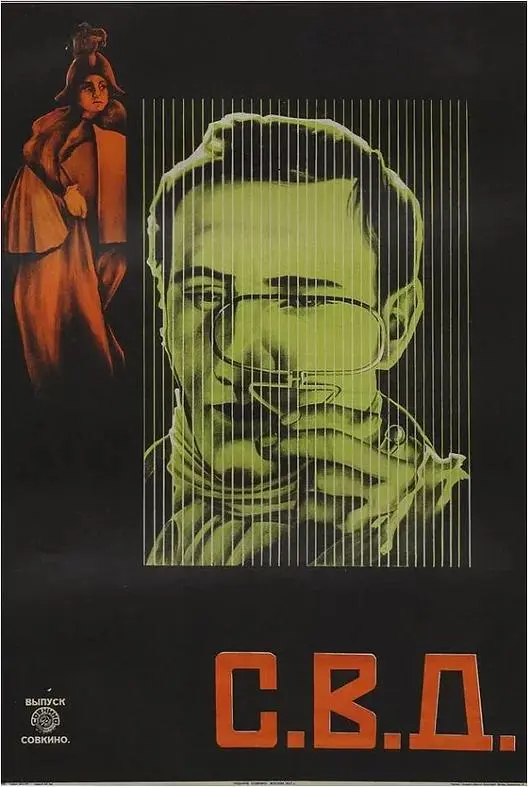
A definitive 6.6/10 rating for a film that redefined the boundaries of cult cinema. S.V.D. - Soyuz velikogo dela remains a cornerstone of transgressive art.
Is S.V.D. - Soyuz velikogo dela worth watching today? Short answer: yes, absolutely, but with a crucial caveat. This 1927 silent film is a profound historical artifact and a compelling piece of early Soviet cinema, offering a unique window into a pivotal moment in Russian history through a distinctly cynical lens. It is unequivocally for cinephiles, historians, and those fascinated by the technical and narrative innovations of the silent era. However, it is decidedly not for viewers seeking modern pacing, conventional character arcs, or dialogue-driven storytelling.
This film works because of its audacious thematic ambition, daring to frame a national uprising through the eyes of a self-serving gambler, thus injecting a potent dose of moral ambiguity into historical narrative. It fails because its reliance on period-specific cinematic language, while groundbreaking for its time, can feel inaccessible to contemporary audiences unprepared for the demands of silent film viewing. You should watch it if you appreciate cinema as a historical document, a medium for exploring complex political ideas, and a testament to the power of visual storytelling before sound took hold.
At its core, S.V.D. - Soyuz velikogo dela (which translates to 'The Union of the Great Cause') is a masterclass in historical reinterpretation. The film plunges us into the tumultuous atmosphere preceding the Decembrist Revolt of 1825, a pivotal moment of aristocratic rebellion against Tsarist autocracy. Rather than presenting a straightforward historical epic, writers Yulian Oksman and Yuri Tynyanov, themselves scholars of considerable repute, introduce a singular, almost allegorical figure: a 'chevalier of fortune.' This isn't a hero or a villain in the conventional sense, but a dispassionate observer, a player in the grand cosmic game, who sees the impending revolution as merely another opportunity for a calculated wager.
His decision-making process, chillingly depicted, is guided not by conviction or loyalty, but by the random shuffle of playing cards. This isn't just a quirky character trait; it’s a profound philosophical statement. The film suggests that even the most monumental historical shifts, often attributed to grand ideals or heroic sacrifice, can be influenced by the most capricious, self-serving, and even absurd individual choices. The 'game' he plays is not solitary, however. The plot subtly weaves in the machinations of others, hinting that his personal gamble is but one thread in a vast tapestry of competing interests, loyalties, and betrayals. This elevates the narrative beyond simple historical retelling into a meditation on free will versus determinism, and the often-unseen forces that truly shape destiny.
The directorial vision of Grigoriy Kozintsev and Leonid Trauberg, two titans of early Soviet cinema, is nothing short of audacious. They eschew the overt propaganda often associated with Soviet-era films, instead crafting a nuanced, almost fatalistic portrait of revolutionary fervor. The film’s visual language is its most potent weapon. Working with cinematographer Andrei Moskvin, they paint a stark, often expressionistic canvas in black and white, utilizing deep shadows and dramatic lighting to convey mood and character without a single spoken word.
Consider the scene where our 'chevalier' – let's infer his name as Andrei, a composite of cynical ambition – retreats to his private chambers to consult his cards. Kozintsev and Trauberg employ a series of rapid cuts, interspersing close-ups of Andrei's intensely focused face, the fanned deck, and then stark, almost hallucinatory shots of the unfolding street protests. This montage technique, a hallmark of Soviet filmmaking, doesn't just show his internal conflict; it visually equates his personal gamble with the fate of the nation. The flickering shadows on his face, a signature of Moskvin, hint at the moral murkiness of his motivations, a stark contrast to the often heroic portrayal of revolutionaries in other Soviet films like Pudovkin's The End of St. Petersburg.
The scale of the crowd scenes is particularly impressive. Thousands of extras, meticulously choreographed, convey the raw energy and unpredictable chaos of a populace on the brink of revolt. Yet, even amidst this grandeur, the directors never lose sight of the individual. A poignant close-up of a peasant woman’s tear-streaked face in the midst of a surging crowd speaks volumes about the human cost, anchoring the historical spectacle in deeply felt emotion. This balance between epic scope and intimate detail is a testament to their mastery of the silent medium, a skill that rivals even the great American directors of the era, such as D.W. Griffith in The Splendid Sinner, though with a distinctively European aesthetic.
The performances in S.V.D. are, by necessity, highly physical and emotionally charged. Silent film acting demands a unique blend of exaggerated gesture and nuanced facial expression to convey complex internal states. Sergey Gerasimov, in the role of the 'chevalier of fortune,' delivers a mesmerizing performance. His eyes, often narrowed and calculating, speak volumes, revealing a man who observes the world with a detached, almost predatory intelligence. He is not a man of passion, but of cold, logical assessment, a living embodiment of the film's central conceit.
Lyudmila Semyonova and Sofiya Magarill provide crucial counterpoints, embodying characters who are driven by conviction, love, or despair, rather than cynical opportunism. Their expressive faces, often framed in dramatic close-ups, serve as emotional anchors, reminding the audience of the human stakes involved in this grand 'game.' The contrast between Gerasimov's controlled, almost reptilian calm and the passionate outbursts of Semyonova’s character creates a potent dramatic tension that drives the narrative forward.
The supporting cast, including Aleksandr Melnikov and Pyotr Sobolevsky, contribute to a rich tapestry of characters, each representing a different facet of society on the brink. From the zealous revolutionary to the conflicted loyalist, their performances, though lacking dialogue, are imbued with a palpable sense of purpose and inner life. It's a testament to the actors' skill that these archetypes feel distinctly human, avoiding the pitfalls of caricature that could plague less accomplished silent films. The ensemble truly elevates the material.
The pacing of S.V.D. is deliberate, building tension slowly and meticulously before erupting into moments of frenetic action. This ebb and flow mirrors the historical period it depicts – long periods of simmering discontent punctuated by sudden, violent outbursts. The film’s narrative unfolds with a classical precision, each sequence contributing to the overarching sense of impending doom and the inexorable march of history. While some modern viewers might find the initial build-up slow, those patient enough to immerse themselves in its rhythm will be amply rewarded.
The tone is remarkably complex for a film of its era. It’s a historical drama, certainly, but infused with a strain of profound cynicism and moral ambiguity. It avoids simplistic heroics, instead presenting a world where motivations are murky and outcomes are unpredictable. This isn't a celebratory ode to revolution, but a thoughtful, even somber, examination of its costs and the diverse, often ignoble, forces that can set it in motion. This nuanced approach, particularly within the Soviet context of 1927, makes it a surprisingly modern film, one that asks difficult questions rather than providing easy answers.
Perhaps the film's greatest triumph isn't its historical accuracy, but its radical suggestion that even grand revolutions can be, at their core, just another roll of the dice for certain individuals. It challenges the romanticized view of history, suggesting that the personal, the selfish, and the purely accidental play as significant a role as the ideological. This perspective makes it a fascinating companion piece to more overt historical dramas like Bonnie Prince Charlie, offering a stark contrast in narrative approach.
Yes, S.V.D. - Soyuz velikogo dela is absolutely worth watching, but with specific expectations. It's a foundational text for understanding Soviet cinema's early artistic ambitions. The film is a masterclass in visual storytelling, showcasing groundbreaking techniques for its time. It offers a unique, cynical perspective on historical events, challenging conventional narratives. However, its silent film format and deliberate pacing require patience. It is best suited for those interested in film history, silent era aesthetics, and political allegories. If you prefer fast-paced, dialogue-heavy contemporary films, this might not be for you. But for those willing to engage, it’s a rewarding experience.
S.V.D. - Soyuz velikogo dela is more than just a historical curiosity; it's a vital piece of cinematic art that continues to resonate. It's a gamble. And a fascinating one. This isn't a film for everyone, nor does it aim to be. It demands patience, an appreciation for the silent era's unique storytelling prowess, and a willingness to engage with complex, even uncomfortable, themes. But for those who venture into its shadowy world, it offers a profoundly rewarding experience. It challenges viewers to look beyond the surface of history, to question the motivations behind grand movements, and to consider the often-unseen forces – be they fate, chance, or cynical opportunism – that shape our world. Its legacy is secure, not just for its technical achievements, but for its audacious intellectual honesty. It works. But it’s flawed. Essential viewing for the discerning cinephile.
IMDb 5.4
1926
Community
Log in to comment.