DbcultAccessing Vault...
5.7/10
Senior Film Conservator
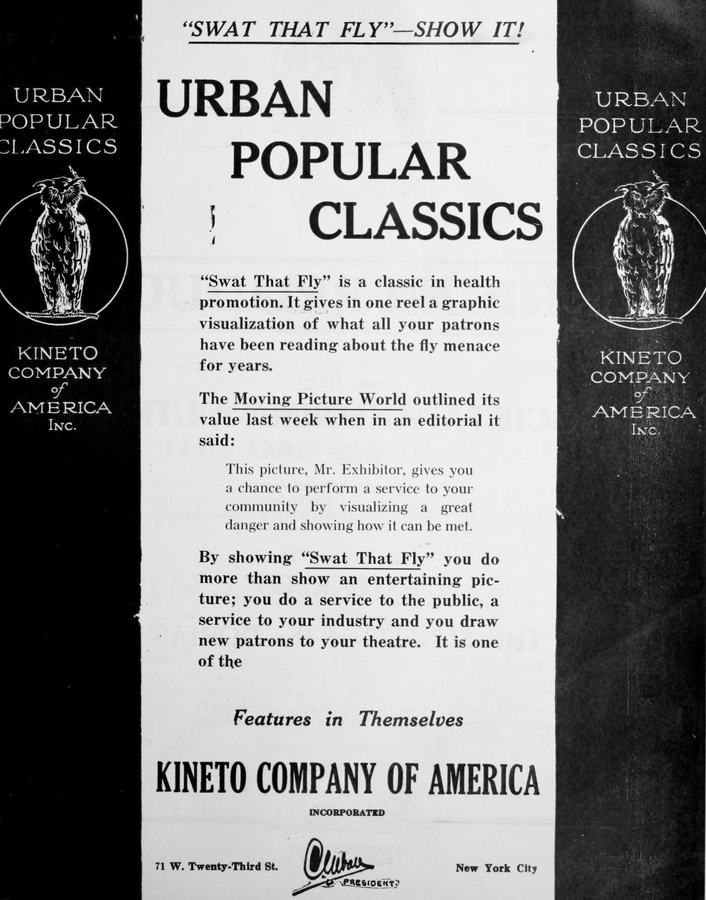
A definitive 5.7/10 rating for a film that redefined the boundaries of cult cinema. Swat That Fly remains a cornerstone of transgressive art.
The year 1917 serves as a watershed moment in the visual arts, a period where the primitive flickers of the nickelodeon era began to solidify into the sophisticated language of modern cinema. Amidst the grand historical epics and the burgeoning star system, a curious little animated short titled Swat That Fly fluttered into existence. Directed by the legendary Dave Fleischer, this piece is far more than a mere ephemeral novelty; it is a seminal artifact that captures the frantic energy of an industrializing world through the lens of domestic frustration. While mainstream audiences were perhaps more attuned to the sprawling narratives of films like Womanhood, the Glory of the Nation, the Fleischers were busy reinventing the very physics of the screen.
At its core, Swat That Fly is a psychological profile disguised as a comedy. The premise is deceptively simple: a man wants to kill a fly. However, in the hands of the Fleischers, this mundane objective becomes a Sisyphean struggle. The protagonist’s descent from calm annoyance to homicidal mania is paced with a rhythmic precision that rivals the best live-action slapstick of the era. Unlike the romanticized heroism found in The Scarlet Pimpernel, here the hero is a victim of his own lack of self-control. Every swing of the swatter is a failed attempt to assert dominance over a world that refuses to be tamed.
The visual language of the film utilizes a stark, high-contrast aesthetic. The black ink lines are bold and expressive, a necessity of the time but also a stylistic choice that emphasizes the chaotic movement of the insect. When we compare this to the lush, folkloric visuals of the Russian masterpiece Ruslan i Lyudmila, we see two vastly different approaches to the fantastic. While the latter seeks to build a world of mythic wonder, Swat That Fly deconstructs the mundane world into a series of kinetic shocks. The fly itself is an agent of entropy, a tiny black speck that carries the power to dismantle the order of a household.
Dave Fleischer’s genius lay in his understanding of squash and stretch—well before the term was codified by the giants of the industry. In Swat That Fly, the protagonist’s body becomes as malleable as the ink he is made of. His eyes bulge with a manic intensity that mirrors the psychological isolation seen in dramas like Where Bonds Are Loosed. However, where that film deals with the literal isolation of an island, Fleischer’s short explores the internal isolation of a mind consumed by a singular, trivial task. The man is alone in his room, yet he is at war with the entire universe, represented by a single pair of wings.
The film’s pacing is relentless. There is no preamble, no slow build-up. From the first frame, we are thrust into the middle of the conflict. This brevity is a hallmark of early animation, but Fleischer imbues it with a sense of escalating stakes. Every missed swat leads to a more significant piece of collateral damage. A vase shatters; a table is overturned; the very walls seem to vibrate with the man’s fury. It is a masterclass in the escalation of tension, a precursor to the elaborate Rube Goldberg-esque sequences that would later define the golden age of animation.
While often dismissed as mere children's entertainment, the animated shorts of 1917 often mirrored the social anxieties of their time. Swat That Fly can be read as a satire of the modern man’s inability to cope with the small, uncontrollable variables of life. In an era of burgeoning bureaucracy and global conflict, the fly represents the ultimate uncontrollable element. Unlike the structured social hierarchies explored in Shirley Kaye or the romantic entanglements of The Summer Girl, the conflict in this short is primal and egalitarian. The fly does not care about the man’s status or his domestic sanctity.
There is also a subtle commentary on the technology of the time. The swatter itself—a simple tool—becomes an instrument of self-destruction. This theme of technology failing its user is a recurring motif in early 20th-century art. Just as the characters in To Have and to Hold are often at the mercy of historical forces beyond their control, Fleischer’s protagonist is at the mercy of a biological force he cannot comprehend. The fly is faster, smarter, and infinitely more resilient than the man’s clumsy attempts to eradicate it.
Technically, Swat That Fly is a fascinating study in early rotoscoping techniques and hand-drawn fluidity. The way the fly moves across the screen is not random; it follows a specific, almost musical pattern. This rhythmic quality is what makes the gag work. If the fly were merely a static dot, the comedy would vanish. Its movement is lifelike, yet exaggerated, creating a sense of uncanny intelligence. This attention to detail is what separates Fleischer from his contemporaries who were often content with static backgrounds and stiff character movements.
Consider the mystery elements often found in films like The Double Room Mystery or the investigative tropes of A Social Sleuth. In Swat That Fly, the 'mystery' is the fly’s location. The protagonist’s eyes dart across the room, searching for the invisible threat, mirroring the audience’s own search for clues in a detective story. The suspense is real, even if the stakes are absurd. When the fly finally lands—usually on the man’s own nose—the payoff is both inevitable and shocking.
The year 1917 was a time of intense cultural production. While audiences were weeping over the melodrama of Ramona, they were also seeking the cathartic release of laughter. Swat That Fly provided that release by mocking the very idea of human competence. There is a certain nihilism in the film’s conclusion—the fly usually escapes, and the man is left amidst the ruins of his own home. It is a 'blue' ending in the vein of Blue Sunday, though played for laughs rather than tears.
The film also predates the more sophisticated 'human' comedies like Once a Mason or the lighthearted surprises of You'll Be S'prised. In those films, the humor comes from social faux pas and verbal wit. In Fleischer’s world, the humor is purely visual and visceral. It is a pre-lingual form of comedy that speaks to a universal human experience: the frustration of the small. Whether you are a laborer or a lord, a fly in your room is a universal equalizer.
When we place Swat That Fly alongside a serial like The Iron Test, the contrast is jarring. The latter relies on cliffhangers, physical stunts, and a sprawling narrative of endurance. Fleischer’s short is also an 'iron test' of sorts, but for the nerves rather than the muscles. The endurance required is mental. How long can a man stay sane while a fly buzzes in his ear? The short format (only a few minutes long) is the perfect vehicle for this kind of intense, focused energy. Any longer, and the joke would become wearisome; any shorter, and the psychological descent wouldn't feel earned.
The film also lacks the sentimentalism of The Nightingale. There is no beauty here, only action. The fly is not a creature of song or grace; it is a pest. This honesty is refreshing. Fleischer doesn't ask us to sympathize with the fly, nor does he ask us to respect the man. He simply asks us to watch the collision of two opposing forces. It is a pure cinematic experiment in motion and reaction.
Reflecting on Swat That Fly over a century later, its brilliance remains untarnished by the passage of time. While the technology of animation has evolved from hand-drawn cells to complex CGI, the fundamental truth of Fleischer’s gag remains. We are all, at some point, that man with the swatter. We are all fighting battles against tiny, insignificant foes that threaten to unhinge us. The film’s ability to capture this universal truth with nothing but black ink and a few frames of film is a testament to the power of the medium.
In the grand tapestry of 1917 cinema, Swat That Fly is a small but vibrant thread. It lacks the political weight of propaganda or the emotional heft of a feature-length drama, but it possesses a purity of purpose that is rare. It is a film that understands exactly what it is and what it wants to achieve. It doesn't aim for the heart or the mind; it aims for the gut. As the man finally collapses in exhaustion, and the fly continues its rhythmic buzzing, we are reminded that some battles are simply not meant to be won. In the end, the fly always wins, and that is perhaps the greatest joke of all.
For those interested in the evolution of the animated form, this short is essential viewing. It bridges the gap between the static illustrations of the 19th century and the living, breathing characters of the 20th. It is a frantic, messy, and utterly delightful piece of film history that deserves to be remembered alongside the 'serious' works of its era. Dave Fleischer didn't just animate a man swatting a fly; he animated the very essence of human frustration, and in doing so, he gave us a mirror that still reflects our own absurdities today.
IMDb 5.4
1929
Community
Log in to comment.