DbcultAccessing Vault...
4.1/10
Senior Film Conservator
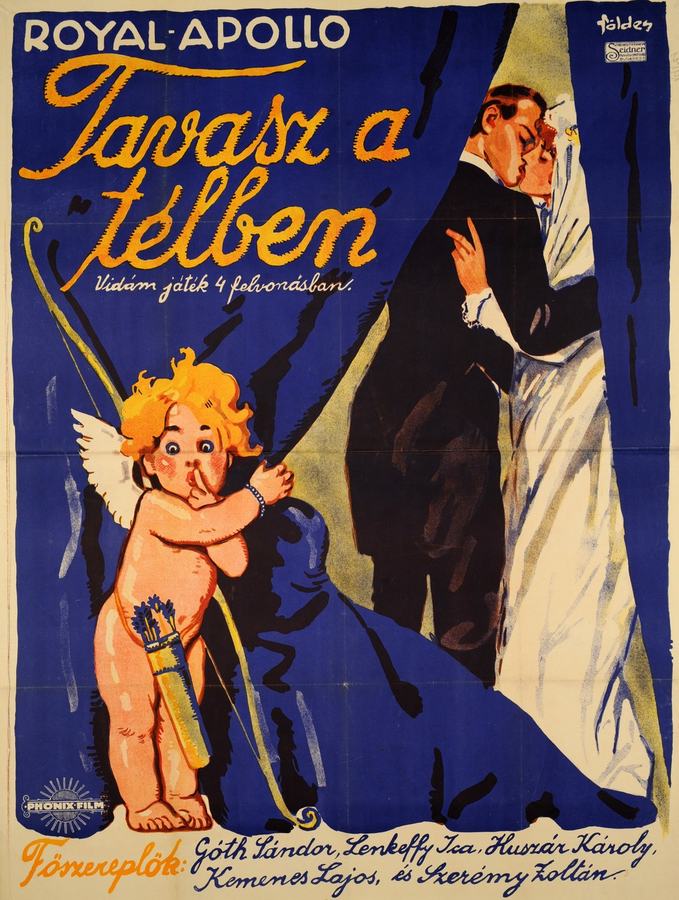
A definitive 4.1/10 rating for a film that redefined the boundaries of cult cinema. Tavasz a télben remains a cornerstone of transgressive art.
From the silent era's often-overlooked Hungarian cinematic landscape emerges Tavasz a télben (Spring in Winter), a film whose evocative title alone promises a narrative steeped in poignant contrasts and redemptive arcs. While many European productions of the early 20th century were grappling with the nascent language of cinema, this particular feature, with its rich emotional palette and sophisticated thematic undertones, stands as a testament to the profound artistic ambition prevalent in the region. It is a work that, even through the veil of time, communicates a universal yearning for light amidst encroaching shadows, a perennial human struggle that resonates as powerfully today as it did upon its initial release.
The film’s central conceit—the revitalization of a despondent soul by an unexpected catalyst—is hardly novel, yet its execution here is imbued with a striking authenticity and a delicate artistry that elevates it beyond mere melodrama. We are introduced to René Sellõ’s character, a painter whose once vibrant artistic spirit has been calcified by the pervasive gloom of post-Great War Budapest. His studio, a cavernous space bathed in perpetual twilight, becomes a visual metaphor for his internal state: canvases lie neglected, brushes gather dust, and his gaze is fixed upon an unseen horizon of despair. Sellõ’s portrayal is a masterclass in silent acting, conveying a complex inner world through subtle gestures and the eloquent sorrow etched upon his features. His performance alone provides a compelling reason to revisit this cinematic relic, offering a nuanced depiction of creative paralysis and existential ennui.
The arrival of Rózsi Szöllösi’s character, a character brimming with an almost elemental force of life, shatters this stasis. Rózsi is not merely a love interest; she is the personification of the film’s titular 'spring,' a burst of vibrant color in René’s monochrome existence. Szöllösi imbues Rózsi with an infectious optimism and an unyielding spirit that feels both genuine and revolutionary for the period. Her energy is a stark counterpoint to the somber societal backdrop, a world still reeling from conflict and clinging to antiquated conventions. The contrast between her effervescence and the rigid social fabric is palpable, creating a tension that drives much of the narrative. One might draw parallels to the spirited heroines found in films like Life's Harmony, where female protagonists often serve as beacons of change in restrictive environments, or even the subtle defiance seen in Lady Windermere's Fan, where societal expectations clash with individual desires.
The film masterfully explores the societal resistance to Rózsi’s unconventional vivacity. Sándor Góth’s character, perhaps a stern patriarch or a formidable societal figure, represents the entrenched conservatism that views Rózsi’s free spirit with suspicion. Góth, a veteran of the Hungarian stage and screen, brings a gravitas to his role, embodying the weight of tradition and the fear of change that often characterized European societies in the wake of the Great War. His interactions with Rózsi are fraught with unspoken judgments, his presence a constant reminder of the external pressures threatening to extinguish her light. This dynamic is reminiscent of the moralistic policing found in films like Hypocrites, where societal norms are rigidly enforced, often to the detriment of individual expression.
Visually, Tavasz a télben is a triumph of early cinematic language. The directors, drawing from the wellspring of European artistic movements, employed striking chiaroscuro lighting to underscore the film’s thematic concerns. René’s world is rendered in deep shadows and muted tones, while Rózsi’s appearances are often accompanied by a sudden influx of light, her image almost glowing against the somber backdrops. This visual rhetoric is not merely decorative; it is integral to the storytelling, communicating emotional states and narrative shifts without the need for extensive intertitles. The cinematography, while constrained by the technology of its time, exhibits a remarkable sophistication in its composition, utilizing deep focus and thoughtful framing to create a sense of depth and psychological realism. The set designs, particularly René’s studio and the opulent, yet suffocating, social gatherings, are meticulously crafted, serving as more than just backdrops; they are active participants in the emotional landscape of the film.
The performances, beyond Sellõ and Szöllösi, are uniformly strong. Ica von Lenkeffy, as a figure perhaps representing the more cynical or manipulative aspects of high society, delivers a performance of subtle menace, her elegant demeanor masking a calculating intellect. Her presence adds another layer of conflict, as she perhaps sees Rózsi as a threat to the established order or to her own influence. Lajos Kemenes and Erzsi B. Marton, in their supporting roles, contribute to the rich tapestry of characters, each sketching out believable human types that populate this post-war world. Even minor characters, like those portrayed by Károly Huszár and Karola Gárdi, are given moments of genuine human expression, preventing them from becoming mere caricatures.
At its heart, Tavasz a télben is a profound meditation on the redemptive power of art and love. René’s journey from artistic barrenness to a vibrant rebirth is directly tied to his connection with Rózsi. She doesn't just inspire him; she reawakens his capacity for feeling, for seeing the world with fresh eyes. This transformation is depicted not as an instantaneous miracle, but as a gradual thawing, a slow emergence from the frost. The film suggests that true art can only spring from genuine human connection and an open heart, a theme explored with similar philosophical depth in works like Pesn torzhestvuyushchey lyubvi, which also delves into the transformative, sometimes mystical, power of love and passion. The screenplay, credited to Robert de Flers, Sándor Góth, Iván Siklósi, and Gaston Arman de Caillavet, likely drew upon contemporary literary and dramatic traditions, infusing the narrative with a literary richness that is evident in its character development and thematic complexity.
The film also subtly critiques the societal pressures that can stifle individual expression. The 'winter' in the title refers not just to René’s internal state, but to the broader cultural and social climate. The rigidity, the judgment, the expectation of conformity – these are the forces that threaten to keep spring at bay. Rózsi, with her defiant spirit, becomes a symbol of resistance against these forces, a harbinger of a more open, more emotionally honest world. This struggle against an oppressive system, whether political or social, finds echoes in other historical films of the era, such as Votsareniye doma Romanovykh, which, though dealing with grander historical events, similarly portrays individuals caught within the inexorable currents of their time.
What makes Tavasz a télben such a compelling artifact is its enduring emotional resonance. Despite the passage of a century, its core message about finding hope and beauty in adversity remains timeless. The performances of the ensemble cast, including Zoltán Szerémy and Claire Lotto in their roles, contribute significantly to this lasting impact. Each character, no matter how small their part, feels fully realized, adding texture and depth to the narrative. The film's ability to communicate profound emotional states without spoken dialogue is a testament to the power of pure cinema, a skill that was honed to perfection by the masters of the silent era.
For modern viewers, it offers a fascinating glimpse into the nascent stages of Hungarian cinema and the broader European artistic consciousness of the early 20th century. It’s a film that asks us to consider the sources of our own despair and the unexpected avenues through which rejuvenation can arrive. The climax, where René unveils his masterpiece, is not just the culmination of his artistic journey but a powerful affirmation of Rózsi’s transformative influence. It is a moment of profound beauty and triumph, symbolizing the ultimate victory of 'spring' over 'winter.' This sense of overcoming formidable odds or personal demons can be seen in other films of struggle and perseverance, such as Ashes of Hope or Saints and Sorrows, which similarly explore the human capacity for resilience in the face of adversity.
In an era where cinematic spectacle often overshadows genuine human emotion, Tavasz a télben serves as a gentle yet potent reminder of the enduring power of intimate storytelling. It reminds us that the greatest narratives are often those that explore the landscape of the human heart, its capacity for sorrow, and its remarkable ability to find renewal. The film's title, 'Spring in Winter,' is not just a poetic phrase; it is a profound declaration of faith in the cyclical nature of life, art, and love, a belief that even in the bleakest moments, the promise of new beginnings remains. It is a work that deserves rediscovery, a silent masterpiece whose voice, though unspoken, resonates with timeless eloquence.
IMDb —
1924
Community
Log in to comment.