DbcultAccessing Vault...
Cult Review
Senior Film Conservator
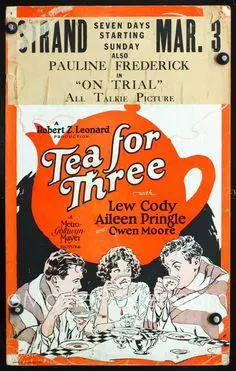
Should you invest your time in a silent film about a husband who wants to kill himself over a poorly received joke? Short answer: Yes, but only if you appreciate the razor-thin line between sophisticated comedy and psychological horror. This film is for viewers who enjoy the 'marriage circle' style of 1920s cinema; it is absolutely not for those who require fast-paced action or logical character motivations.
1) This film works because it transforms a mundane domestic spat into a high-stakes life-or-death gamble with genuine tension. 2) This film fails because the third-act resolution on the ocean liner feels like a tonal whiplash compared to the dark card-game sequence. 3) You should watch it if you want to see Lew Cody deliver a masterclass in controlled, simmering resentment.
Tea for Three is a fascinating relic of 1927, a year that saw the silent era reaching its absolute peak of visual storytelling. While many films of the era, such as Cops, focused on physical comedy and kinetic energy, Tea for Three is a claustrophobic study of the mind. The premise is almost absurdly simple. A husband is jealous. Not of an affair, but of an atmosphere. He is jealous of the way his wife, Doris, breathes when she is around Philip Collamore. It is a psychological rot that starts small and ends with a suicide pact.

The scene that triggers the descent is brilliantly handled. We see Carter tell a joke. It lands with a thud. Later, Philip tells the exact same joke, and Doris erupts in genuine, joyous laughter. The camera lingers on Lew Cody’s face. It is a terrifying moment. He isn't just annoyed; he is erased. In his mind, his wife’s laughter is a confession of love for another man. It is a petty, small-minded motivation that the film treats with the gravity of a Shakespearean tragedy. It works. But it’s deeply uncomfortable.
For the modern cinephile, Tea for Three offers a unique glimpse into the 'Sophisticated Comedy' genre before the Hays Code fully clamped down on adult themes. It deals with suicide and emotional abuse with a surprising lack of sentimentality. If you can handle the slower pacing of the late 1920s, the psychological interplay between the three leads is more rewarding than most modern rom-coms. It is a dark, cynical, and ultimately redemptive look at how we project our insecurities onto those we love.
The centerpiece of the film is the card game. This isn't a game for money or property. It is a game for the right to exist. The loser must exit the stage of life. The lighting in this sequence is stark, moving away from the bright, high-key lighting of the early domestic scenes into something approaching German Expressionism. The shadows are long, and the focus is tight on the hands and the cards. It reminds me of the visual intensity found in Le brasier ardent, where the internal state of the characters dictates the visual language of the film.
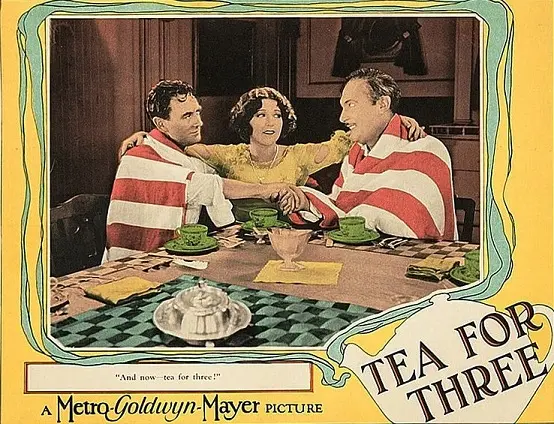
Owen Moore plays Philip with a breezy confidence that makes Carter’s jealousy feel justified, even if his actions are insane. Moore’s Philip is the 'other man' who doesn't even realize he's in a competition. This makes the stakes feel even more lopsided. Carter is playing for his life; Philip is just playing a game. This contrast is the engine that drives the second act. The silence of the medium actually enhances the tension here. We don't need dialogue to hear the frantic beating of Carter’s heart as he flips the card.
The final act takes place on an ocean liner, a classic trope of the era used to signify a transition or a 'liminal space' where social rules are suspended. Doris, played with a sharp intelligence by Aileen Pringle, finally takes control of the narrative. Pringle was often cast in 'ice queen' roles, such as in Three Weeks, but here she shows a much warmer, more manipulative side. She realizes that her husband's jealousy is a disease, and she decides to treat it with a dose of its own medicine.
This is where I have a debatable opinion: I believe the ending is actually quite cruel. While the film frames it as a 'cure,' Doris essentially gaslights Carter into sanity. It’s a fascinating, if morally grey, resolution. She forces him to see the absurdity of his own position by out-maneuvering him emotionally. Is it a happy ending? The film says yes. I say it’s a temporary truce in a lifelong domestic war. This ambiguity is what makes the film stay with you long after the final iris-out.
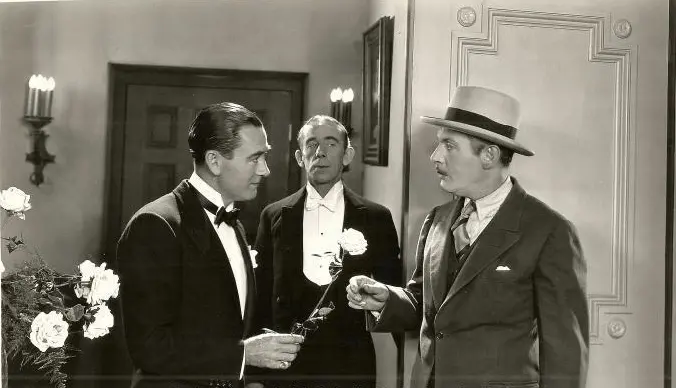
The direction is fluid, using the camera to move between characters in a way that emphasizes the 'three' of the title. There are constant triangular compositions. Whether they are sitting at a table or standing on the deck of the ship, the director places Doris at the apex, with the two men competing for the base. It’s a subtle but effective way to reinforce the power dynamics without a single line of intertitle text.
The pacing, however, is where the film shows its age. The transition from the dark intensity of the card game to the lighter, more comedic tone of the ocean liner feels jarring. One moment we are contemplating a man’s self-inflicted death, and the next we are watching shipboard antics. It’s a common issue in 1920s films that tried to bridge the gap between genres, much like the erratic shifts in Die Zirkusprinzessin. Despite this, the individual scenes are so well-crafted that the overall experience remains cohesive.
Pros:
The acting is remarkably restrained for 1927. Lew Cody avoids the 'eye-rolling' histrionics common in lesser silent films. The set design of the Langford home is a beautiful example of Art Deco influence, and the cinematography on the ocean liner captures a real sense of scale and luxury.
Cons:
The plot relies on a level of male fragility that might be hard for modern audiences to empathize with. The resolution of the suicide pact is handled a bit too conveniently, robbing the film of some of its earlier bite. It also lacks the visual experimentation found in more avant-garde films of the same year.
Tea for Three is a sharp, if slightly uneven, exploration of the dark side of marriage. It manages to be both a witty social comedy and a grim character study. While it doesn't reach the heights of the era's true masterpieces, it remains a compelling watch for anyone interested in the evolution of the domestic thriller. Lew Cody’s performance alone is worth the price of admission. He manages to make a monster feel human, and a human feel like a monster. It’s a nasty little film wrapped in a tuxedo, and it’s all the better for it.
Ultimately, this is a film about the power of a laugh—how it can build a bridge or burn a house down. It’s a reminder that in the world of high society, the smallest slight is often the most dangerous.
IMDb 5
1936
Community
Log in to comment.