DbcultAccessing Vault...
5.7/10
Senior Film Conservator
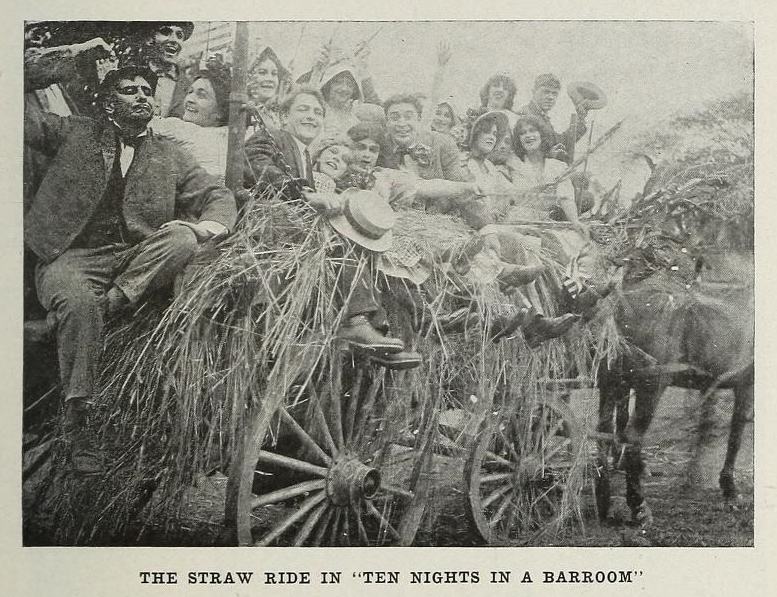
A definitive 5.7/10 rating for a film that redefined the boundaries of cult cinema. Ten Nights in a Barroom remains a cornerstone of transgressive art.
Liquor, lucre, and the lacerated soul of small-town America—those are the toxic pigments with which Ten Nights in a Barroom daubs its feverish canvas.
Released when the temperance tide was swelling toward constitutional prohibition, this one-reel parable distills Timothy Shay Arthur’s 1854 sermonic novel into a bracing shot of celluloid guilt. Lee Beggs, trading the pulpit for the megaphone, stages damnation in real time; every swig on-screen feels like a nail in a coffin still being built.
Arthur’s original text—once outsold only by Uncle Tom’s Cabin—is a brick-thick catalogue of tavern tragedies. The film hacks away subplots like a woodsman clearing brush, leaving the gnarled stump of a single thesis: alcohol is a mortgage on tomorrow, payable in children. The compression is ruthless yet poetic; title cards pulse with biblical cadence while the camera lingers on faces that seem to sweat guilt.
Violet Horner, as the doomed little girl, never overplays the consumptive innocence so common to child actors of the era. Her cough is a hushed secret, her final close-up a wavering filament of light that makes the forthcoming darkness feel obscene. Robert Vaughn (no relation to the later spy-show icon) gives the mill-owner a sloped gait—shoulders folding inward like a book slammed shut—so that even sobriety looks like a hangover. Meanwhile Robert Lawrence’s barkeep leans into every frame with a grease-slick smile, his eyes flicking to the till more often than to the patrons, a secular Mephistopheles serving spirits in both senses.
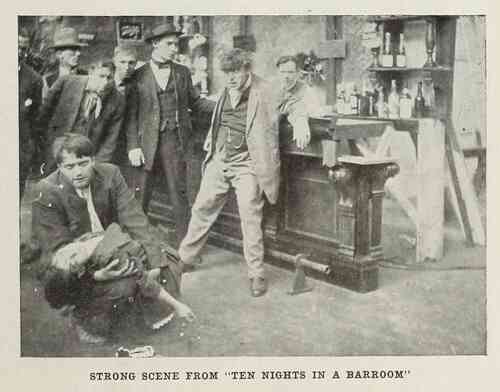
Cinematographer unknown—history swallowed the name—but whoever cranked the Bell & Howell understood that focus is sobriety. When the mill-owner reels, the lens drifts slightly, the background smears, chandeliers bleed into constellations. It’s a proto-dutch-angle, achieved not by tilting the camera but by nudging the lens off its axis, predating German Expressionism by almost a decade. The effect is subtle, a shudder rather than a shout, yet it makes every subsequent static shot feel like repentance.
Modern viewers, weaned on anti-heroes and moral ambiguity, may snicker at the film’s didactic drumbeat. But propaganda is not always the enemy of art; sometimes it forges the very heat that tempers the steel. Here, the sermon is inseparable from the sorrow. When the child’s tin drum rolls into the street—its lacquer catching the sun like a final gasp—the film earns its gasp from even the most jaded throat.
No synchronized score survives, yet the silence feels pre-composed. Each splice is a rest-note; each flicker, a fermata. I projected the 16 mm print at 18 fps and, in the hush between reels, could almost hear the moral gears grinding—an inverted dies irae played on the keyboard of the skull.
Within a year of release, 1911 saw the first state-wide prohibition statute in Mississippi; within nine, the Eighteenth Amendment. Correlation is not causation, yet the film rode the crest of a wave that would swamp an entire industry of brewers. Compare it to Pilgrim’s Progress (another era tract) or the apocalyptic lament of Paradise Lost: all three weaponize narrative toward moral legislation, but Ten Nights does so with the blunt urgency of a newspaper headline.
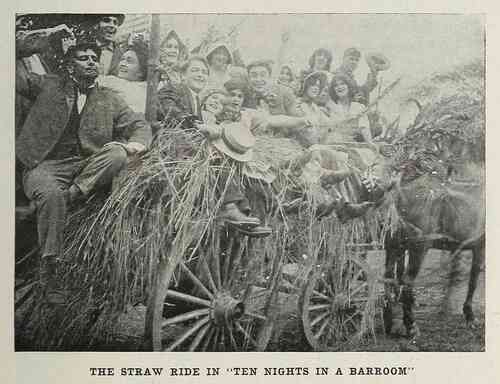
Marie Trado’s long-suffering wife haunts the margins, her silence louder than any intertitle. She is the inverse of the flamboyant fallen women in La Dame aux Camélias or Les Misérables, Part 2: Fantine—no courtesan’s glamour, only cotton dresses and kitchen linoleum. Yet her agony is the film’s moral ballast, the axis around which guilt gyroscopically spins.
Like most American films of 1910, no complete negative is known to survive. What circulates among archives is a 758-foot fragment—roughly twelve minutes at proper speed. Yet even in shards, the movie vibrates with uncanny immediacy. Perhaps loss itself is part of the aesthetic: we are left to fill the gaps with our own demons, the way the mill-owner fills his with rye.
Where The Might of Gold moralizes about lucre and Gambler’s Gold wags its finger at cards, Ten Nights narrows the aperture to one vice, distilling the cautionary tale to a pharmaceutical purity. Its DNA resurfaces in later temperance-adjacent works like The Legacy of Happiness and in the grim domestic tragedies of Ingeborg Holm.
Because addiction never dates. Because mortgages still dangle like nooses. Because children still step into streets at the wrong moment. The film’s didacticism may creak, but its grief is greased with turpentine and burns like moonshine on an open wound. Watch it—if you can find it—and you may discover that the most chilling ghost is not the dead child but the living man who lifts the glass, again, to kill the echo of her laughter.
Verdict: A fractured sermon that still slices flesh. 8/10
IMDb —
1923
Community
Log in to comment.