DbcultAccessing Vault...
6/10
Senior Film Conservator
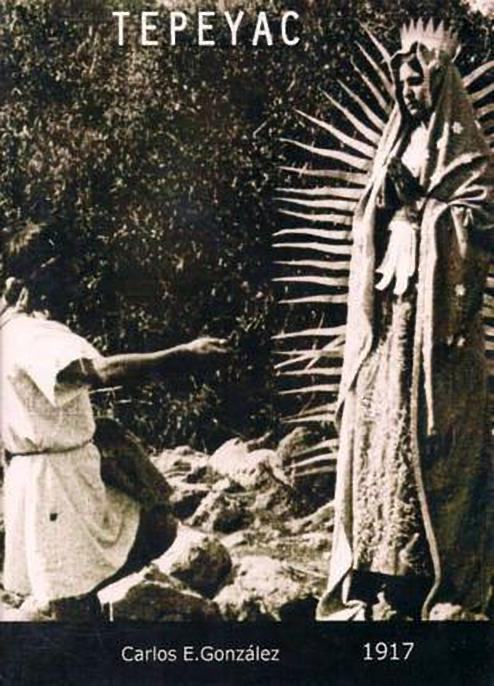
A definitive 6/10 rating for a film that redefined the boundaries of cult cinema. Tepeyac remains a cornerstone of transgressive art.
Tepeyac is less a story than a tremor: the kind that rattles the censer in a country chapel at 3 a.m. when no priest is watching. Directed by José Manuel Ramos and Carlos E. González in the apocalyptic spring of 1917, while Europe swallowed chlorine and Mexico drafted another constitution, the film slips between war bulletin and liturgical hallucination, stitching U-boat dread to Guadalupan lullaby with a needle made of pure celluloid faith.
The print—recently salvaged from a Guadalajara warehouse—arrives flecked like a bruised banana, its nitrate scars glowing amber against the digital blacks. Watch the first reel and you’ll swear the ocean itself is a cathedral: waves lap like velvet hassocks, moonlight drips through a rigging that resembles rosary beads. When the torpedo hits (a German postcard of havoc inserted, then hand-tinted blood-crimson) the screen seems to inhale, as though the projector feared drowning.
Arroyo Carrillo, played by the director himself with the gaunt swagger of a man who already knows he’s a ghost, boards the SS Alfonso XIII wearing a three-piece suit the color of damp sand. He carries sealed dispatches nobody will ever read and a photograph of Lupita (Pilar L. Cotta) tucked inside a missal. Carrillo’s screen-time before the sinking is barely four minutes, yet every gesture—how he fingers the photo’s scalloped edge, how the wind lifts his collar like a cleric’s stole—predicts the afterlife of Mexican masculinity: martyr, lover, absent center.
Compare this to On the Belgian Battlefield where the protagonist’s trench diary becomes the whole narrative scaffold; Tepeyac refuses such documentary earnestness. Carrillo disappears so that Mexico can hallucinate him back into existence, a reverse Lazarus engineered by feminine grief.
Cotta’s performance is silent cinema’s forgotten master-class. She receives the telegram—white rectangle, black letters—and her face cycles through seven micro-seasons: disbelief (spring), rage (summer), bargaining (hurricane), resignation (winter fog), then something rarer than grace: militant curiosity. Instead of collapsing, she opens a pamphlet titled Apparitions of the Virgin to Juan Diego. The camera lingers on her pupils dilating like dark suns; in extreme close-up the printed Nican Mopohua becomes a living codex, glyphs writhing off the page.
Here the film pivots to its oneiric core: a 12-minute dream sequence shot on double-printed stock, superimposing 16th-century tilma roses onto 20th-century tram wires, tilting the Basílica’s blue-domed miniature against a cardboard ocean where cardboard conquistadors drown. Lupita, now clad in a shift of pure silver nitrate, walks through these layers like Orpheus in a poblana skirt. The Virgin’s face—played by Beatriz de Córdova with an eyebrow raised in flirtatious omnipotence—materializes on a tortilla steam, on a soldier’s bandolier, finally on the negative itself: a brown ellipse that swallows the frame. You half expect the projector bulb to dim in devotional fear.
No musical score survives, yet the film demands a sonic imagination: the chirimía that would have accompanied outdoor screenings in 1917, the cough of a Carrancista soldier in the third row, the soft thud of women kneeling on packed earth. Contemporary restorations have commissioned a minimalist trio—flute, jarana, electronic drone—resulting in a soundtrack that hovers between lullaby and submarine sonar. It works because Tepeyac is already about faulty transmissions: telegrams that lie, miracles that arrive collect, lovers reunited by bureaucratic error.
Compare the auditory void to Whispering Smith where locomotive rhythms dictate moral fate; here fate rattles inside a votive candle, sputtering.
Shot in the actual capilla abierta of Tepeyac days before the new basilica’s first stone was laid, the finale is a palimpsest of three centuries: 16th-century indigenous converts carrying tulips made of tissue paper, 19th-century porfiriato soldiers in cardboard shakos, 1917 revolutionaries with bandoliers and bowler hats. Carrillo and Lupita ascend the hill amid this tide, their bodies suddenly miniaturized, as though the camera retreated into heaven’s crow’s-nest. The couple lights a candle the size of a sequoia; the flame blooms into a superimposed image of the Virgin’s mantle, stars swirling like cathode sparks. The iris closes, not on a kiss, but on the mantle devouring the screen—a rare happy ending that feels like cauterization.
Scholarship still debates whether the filmmakers knew of Buñuel in Madrid; regardless, Tepeyac predates Un Chien Andalou by a decade yet already slices eyeballs metaphorically. When Lupita’s tears fall onto the pamphlet, the ink bleeds into tiny Guadalupanas that march off the page like ants. It’s a miracle staged with the pragmatic machinery of a Méliès trick shot: stop-camera, substitution splice, continue. Catholic surrealism, then, is not oxymoron but tautology: only a culture that already believes the bread becomes flesh can accept that paper becomes intercession.
The 2019 4K restoration by Cineteca Nacional reveals textures that convert pixels into archaeology: you can count the lint balls on Carrillo’s wool coat, gauge the salt-crust on the telegram envelope. Yet the digital scrub also unmoors the film’s ghostliness; some prefer the 1970s 16 mm dupes where emulsion damage looks like stigmata. Both versions circulate on Cineteca’s streaming portal, geo-blocked but mercifully subtitled in Náhuatl, English, and Portuguese.
Collectors whisper of a nitrate fragment—Lupita’s dream in magenta tint—hidden in a Belgian monastery. Like the missing Reverón footage from The Devil at His Elbow, it may surface, or may combust.
Roberto Arroyo Carrillo’s screen persona carries the melancholic eroticism of Rudy Valentino minus the mascara; his cheekbones could slice pan de muerto. In the reunion scene he lifts Lupita and spins her inside the basilica’s atrium, yet the camera catches a flicker of doubt: does he resent being prayed back into existence? Cotta answers by pressing her palm against his chest, fingers splayed as though listening for a heartbeat that might stop again. Their chemistry is so understated it feels like documentary; you sense they continued the embrace after the director yelled basta.
Supporting cast members are walking costumbrista paintings: Emilia Otaza as the grandmother who counts beans while murmuring litanies, Pedro Walker as the postman whose bicycle bell substitutes for Gabriel’s trumpet. Even the German submarine captain appears—via telegram typeface—as an off-screen metaphysical menace, Lovecraft before Lovecraft.
Hand-painted exhibition prints used a palette that would make a tlapance weaver blush: the Virgin’s mantle a cerulean unattainable even by modern pigments, the roses Fiesta Pink, Carrillo’s blood in the water a sulfurous #C2410C. Restorationists matched these hues using Raman spectroscopy and a lot of prayer. The result is a film that teaches color theory via catechism: blue equals protection, yellow equals revelation, red equals the wound that permits both.
Tepeyac birthed a micro-genre of Guadalupan melodramas that flourished until the Códices of Emilio Fernández. Yet none matched its frail paradox: a film about imperishable faith that survives only in fragments. When the 1985 Mexico City earthquake struck, a print was screening at a parish hall; the projector fell, crushed the middle reel, but the first and last survived—an accidental metaphor for every Mexican family that lost someone yet kept the photo on the ofrenda.
Contemporary directors return to Tepeyac the way poets return to El cantar del mio Cid: source code, not footnote. You can trace its DNA in The Miracle of Life’s obstetric montage, in The Victory of Conscience’s use of negative space as moral reckoning, even in the submarine POV of The Explosion of Fort B 2.
Stream the 4K restoration on Cineteca Nacional until your geolocation sins are forgiven. Blu-ray from Flicker Alley includes a booklet with essays by revisionist nuns and a spectrogram of church bells. If you’re in Mexico City, attend the monthly 35 mm screening at Cine Tonalá; they pass around copal resin to sniff during Lupita’s dream—olffactory indulgence for the faithless.
Tepeyac is not a relic to be shelved between Sealed Lips and The Labyrinth; it is a fever that breaks every time a lover boards a bus, every time a telegram—now an SMS—arrives with catastrophic brevity. Watch it once for the shipwreck, twice for the dream, a third time to notice that the Virgin’s star-studded mantle is shaped exactly like Mexico at the moment of its 1917 birth. Then walk outside, smell diesel and marigolds, and understand why cinema was invented where miracles are just another civic protocol.

IMDb 7
1936
Community
Log in to comment.