DbcultAccessing Vault...
Cult Review
Senior Film Conservator
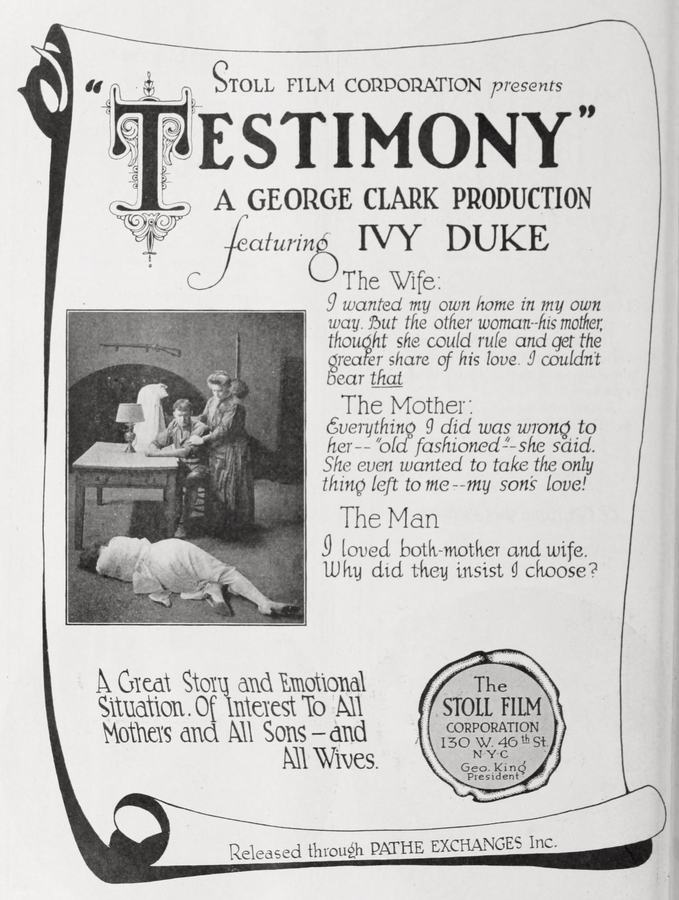
Picture a lantern swinging in a blacked-out barn: each swing grazes the dark, reveals a splinter of wood, a rusted scythe, a face swallowed by shadow. Testimony is that lantern—its 68 minutes flicker with what Victorian parlor verse once dubbed "the crime of coming back." Released in November 1923, when British cinema still coughed on the dust of war and the perfume of flappers drifted across the Atlantic, the picture plants its boots in loamy domestic soil and refuses the cosmopolitan wink flaunted by contemporaries like Dodging a Million. There are no jazz-age confetti drops here, only the sour reek of turned milk and the squeak of a hinge that will never get oil.
Guy Newall, pulling double duty as co-scenarist and directorial eye, structures the tale like a triptych hinged on absence. Act I sketches the departure: quick, almost off-hand, a woman’s heel twists in mud, a shawl clutched like contraband. Ivy Duke plays Lilian—no grand tragedienne, just a farmer’s wife whose pupils dilate at the scent of locomotive soot. She vanishes between cuts, a magic trick so abrupt it feels accidental, as though the film itself blinked. Act II is the long marination: hay seasons cycle, the sun bleaches linen on the moor, and Miles Mander’s farmer—named only John in the intertitles—fossilizes into a monolith of restraint. Douglas Munro, superb as the mute farmhand, keeps watch with a pair of eyes that seem to store rainwater. Finally Act III, the return, lands like a torn letter. Lilian steps out of morning mist, shoes cracked, hat askew, the city’s tinsel long peeled away. The mother—Barbara Everest, regal as frost—meets her at the gate. One intertitle suffices: "You forfeited your welcome the day you left." No courtroom, no violins—only the matriarch’s hand raised like a railway signal.
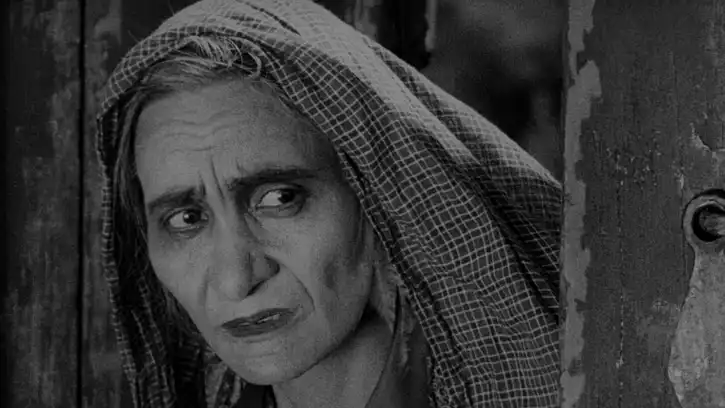
Mander, known to slither through drawing-room noirs, strips off urban gloss here. Watch the shoulders: they start the film squared, descend into a forward roll, as though perpetually bracing against wind. His John is not cruel, merely ossified by generational duty—an emotional descendant of the tormented patriarch in Sønnen, though minus that film’s religious flogging. Opposite him, Duke refuses the fallen-woman cliché. She walks the yard as if testing ice, each footfall calculating memory against rejection. The camera dawdles on her profile against a cracked windowpane: reflection and flesh overlap, suggesting a woman split into haunted selves.
Everest, meanwhile, weaponizes stillness. Seated at the oak table shelling peas, she listens to Lilian’s plea without a twitch; the pea pods rupture like tiny executions. One senses decades of village gossip calcified into vertebrae—her spine could prop open the Good Book. When she finally speaks, an intertitle flashes in serif so stark it feels incised: "My son owes you nothing." The line arrives sans musical cue on most surviving prints, letting the silence balloon until the viewer’s own pulse becomes underscore.
Cinematographer Claude L. McDonnell—unheralded artisan of British shorts—renders the landscape as moral ledger. Dawn exteriors smolder with umber tones; interiors bask in sulfuric lamplight that yellows the skin, hinting at old master paintings hung too long in tobacco parlors. Note the pivotal shot: Lilian stands outside the farmhouse window, her breath fogging the glass. Inside, the mother’s candle backlights her, casting a double shadow—one on the wall, one on the pane—so that both women occupy the same silhouette, a visual confession that each is the other’s negative. Such compositional bravura rivals the mirror gambits in Scandinavian works like Der Knute entflohen, though achieved here with far thriftier resources.
Husband-wife writing team Claude and Alice Askew, prolific suppliers of salty seaside melodramas, collaborate here with Newall to pare dialogue intertitles to the marrow—only 34 in the entire reel. Economy breeds potency; each card lands like a dropped horseshoe in a quiet stable. Compare this to the logorrheic captions of Alice in Wonderland from the same year, where text often re-describes what is already shown. In Testimony, subtextual trenches run between spoken lines: when Lilian murmurs "I’ve borne the winter," the spectator must excavate what brand of winter—penury, prostitution, penitence? The writers trust the audience as co-authors, an instinct closer to modernist literature than to the spoon-feeding morality plays then dominating British screens.
While Hollywood flappers such as Two-Gun Betty galloped toward libertine horizons, Testimony redraws the map; here, female agency ricochets off an older woman’s battlements. The mother-in-law’s refusal to re-admit Lilian is less personal vendetta than cultural immune response—she guards the oikos, the inherited furrow of land and name. Some feminist scholars brand her a traitor to sororal solidarity; others argue she is the last sentinel against erotic capitalism that would commodify the rural family. The film, to its credit, refuses adjudication. Like the storm-battered matrons in The Storm, these women operate within a matrix where survival trumps sentiment, and every womb is also a battlefield.
Modern viewers conditioned by TikTok velocity may squirm during the middle stretch—an unbroken twelve-minute harvest sequence where scythes hiss, wheat falls, clouds curdle. Yet that lull is strategic; it allows seasonal dread to seep in. Editors Herbert & Bosworth cut on movement, not emotion, so a reaper’s swing in October rhymes visually with Lilian’s frantic wave at the departing cart in September. Time becomes circular, a Möbius strip of labor and loss. Critic Paul Rotha, in his 1930 survey Celluloid Prism, praised this "relentless agrarian heartbeat," likening it to the later pastoral minimalism of Lone Star, though that film grafts political intrigue atop furrowed fields.
Surviving prints lack composer attribution; many provincial exhibitors screened it accompanied only by house pianists thumping out generic folk reels. Yet the film’s cadence—its lingering close-ups of cracked teacups, its vistas where skylarks become accidental metronomes—begs for negative space. In the 2018 BFI restoration, composer John Sweeney supplied a sparse chamber suite dominated by viola and bodhrán; he withholds resolution, letting the final chord hover in suspended fourth, an audio equivalent of the wife’s unfinished trek. That choice honors the original’s refusal of catharsis. You exit not with cathartic purge but with the sour taste of unripe berries, akin to the downbeat finales of Whom the Gods Destroy.
For decades Testimony slumbered in the BFI’s "missing-believed-truncated" crypt until a 16mm print surfaced in a Devonshire rectory attic in 2007, nibbled by choir-mice yet identifiable via the mother’s distinctive cameo brooch. Its rediscovery nudged scholars to re-chart the genealogy of British rural realism, locating it upstream from the later social documentaries of Rotha and Grierson. In narrative DNA, one detects pre-echoes of Her Game, where a woman’s return also detonates latent family explosives, though that 1928 talkie replaces furrowed mud with Deco chrome.
Strip away the bonnets and butter churns, and Testimony is a scalpel on the myth of home as sanctuary. Its emotional circuitry—guilt soldered to pride, exile wired to return—feels eerily contemporary in an age of visa denials and Brexit checkpoints. The film proffers no hashtag-ready empowerment, only the chill of a slammed gate. Yet within that chill lies a strange warmth: the recognition that landscapes remember, that thresholds are carved by precedent, that every family is an unwritten legislation on who belongs. Nearly a century on, the wife’s receding silhouette remains an open question mark scrawled across our own doors. Knock, and the echo answers back: possession is a flimsy shield against the trespass of time.
IMDb 5.7
1932
Community
Log in to comment.