DbcultAccessing Vault...
Cult Review
Senior Film Conservator
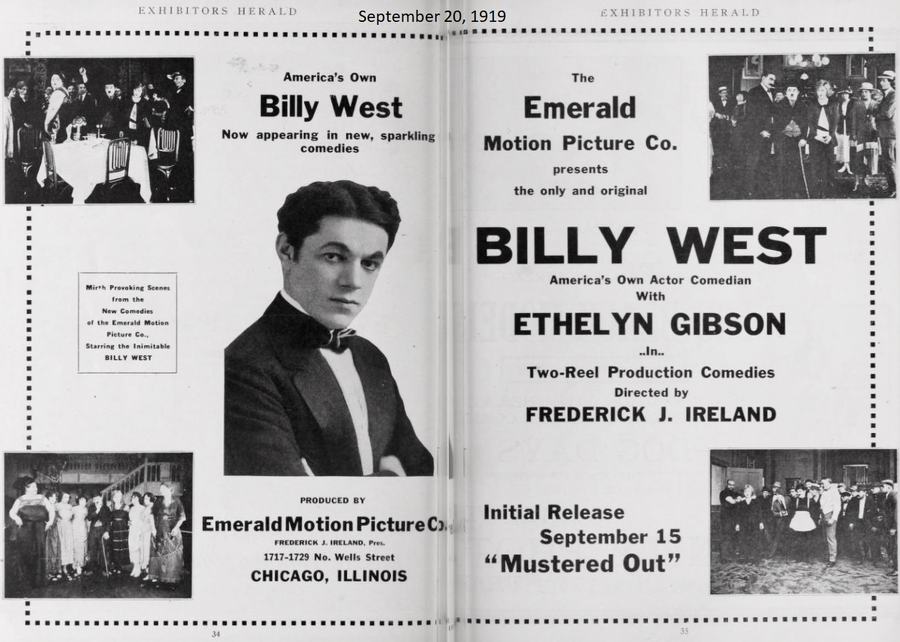
The year 1918 stands as a monolithic pivot in the history of human conflict and creative expression. As the smoke of the First World War began to dissipate, the cinematic medium was undergoing a metamorphosis, shifting from the primitive nickelodeon shorts to more sophisticated, narratively driven experiences. In this volatile atmosphere, Mustered Out arrived not merely as a comedy, but as a cathartic release for a society weary of global strife. Starring the enigmatic Billy West—a man whose career was built on the uncanny, almost supernatural duplication of Charlie Chaplin’s screen presence—this film serves as a fascinating artifact of an era where imitation was the highest form of box-office flattery.
To discuss Mustered Out without addressing the Billy West paradox is to ignore the elephant in the screening room. West was not merely a copycat; he was a virtuoso of mimicry. In films like Lend Me Your Name and All Man, he proved that he possessed the athletic grace and timing necessary to sustain the illusion of being the 'Little Tramp.' However, in Mustered Out, we see a subtle divergence. There is a sharper, perhaps more cynical edge to West’s performance here, likely influenced by the immediate post-war context. While contemporary works like The Revolutionist sought to tackle political upheaval with gravity, West used the military setting to poke fun at the very structures that had just consumed millions of lives.
The film’s title itself carries a heavy weight. To be 'mustered out' is to be formally discharged from military service. For the 1918 audience, this was a lived reality. The genius of the film lies in how it transforms this bureaucratic process into a playground for anarchy. Unlike the more pastoral humor found in Our Friends the Hayseeds, Mustered Out is urban, gritty, and relentlessly paced. It lacks the sentimentalism of The Opened Shutters, opting instead for a visceral, bone-crunching brand of comedy that feels surprisingly modern in its execution.
The chemistry between Billy West and Charles Reisner is the engine that drives this production. Reisner, who would later go on to direct some of the greatest comedies of the silent era, brings a directorial sensibility to his acting. He understands the geometry of a gag. When he looms over the diminutive West, the screen vibrates with a tension that is only broken by a perfectly timed pratfall. This dynamic is far more sophisticated than the simple 'big man vs. little man' trope seen in Riders of the Night. It is a choreographed dance of dominance and subversion.
The female presence in the film, led by Ethelyn Gibson and Nema Catto, provides more than just aesthetic relief. In many ways, their characters represent the civilian world that West’s protagonist is so desperate to rejoin. While films like The Woman Suffers or Joan of the Woods were exploring the plight and power of women in more dramatic contexts, Gibson’s role in Mustered Out is one of comedic agency. She isn't just a prize to be won; she is a participant in the chaos, often serving as the catalyst for West’s most daring stunts.
Technically, Mustered Out is a marvel of its time. The cinematography captures the dusty, sun-drenched reality of a military camp with a clarity that rivals the atmospheric depth of Fantasma. The use of deep focus, though perhaps accidental in some sequences, allows for multiple layers of action to occur simultaneously. In the background, soldiers drill with a mechanical precision that contrasts sharply with West’s erratic, fluid movements in the foreground. This visual dissonance highlights the theme of the individual vs. the institution.
Consider the editing. The cuts are sharp, designed to accentuate the impact of a punch or the surprise of a sudden appearance. This is a far cry from the slower, more theatrical pacing of international features like A kölcsönkért csecsemök or A Csitri. There is a distinctly American urgency here—a desire to move the story forward at breakneck speed. The film doesn't linger on its emotions; it moves through them, using laughter as a vehicle for narrative progression.
By 1918, the world had lost its innocence, and cinema was reflecting that loss. While The Miracle of Life explored biological and social regeneration, Mustered Out looked at the awkward, painful, and hilarious reality of 'starting over.' The protagonist is a man without a clear place in the new world order. His military uniform is a shell he is trying to shed, but the civilian clothes he eventually dons don't quite fit either. This sense of displacement was universal.
Even when compared to the high-stakes crime drama of La banda del automóvil o la dama enlutada or the grim atmosphere of The Stranglers of Paris, Mustered Out feels remarkably grounded in its absurdity. It acknowledges the darkness of the world but chooses to light a candle of slapstick. It is a film that understands the necessity of the 'fool' in a society that has taken itself too seriously for too long. The 'mustering out' is not just a military procedure; it is a psychological release for the audience.
Why does this film matter today? In an age of digital perfection, the raw, physical commitment of performers like Billy West and Rose Burkhardt is a breath of fresh air. There are no safety nets here, no CGI enhancements. When a character falls, they hit the ground with a thud that you can almost feel through the screen. This visceral connection to the performer is something that has been somewhat lost in modern cinema. Mustered Out reminds us that at its core, cinema is an art of motion.
Furthermore, the film serves as a crucial link in the evolution of comedy. You can see the DNA of Mustered Out in the later works of Buster Keaton and even the Marx Brothers. The way it utilizes space, the way it builds a gag through repetition and variation, and the way it treats the physical world as a series of obstacles to be overcome—all of these elements became the foundation of the genre. While it may not have the narrative complexity of The Land of Promise, it possesses a purity of purpose that is undeniably infectious.
In the final reel, as West’s character finally navigates the hurdles of his discharge, there is a sense of hard-won freedom. It is a small victory, a comedic triumph over the mundane, but in 1918, that was enough. Mustered Out remains a testament to the power of laughter in the face of transition. It is a film that refuses to be forgotten, a flickering remnant of a world in flux, and a masterclass in the art of the silent gag. It invites us to look back at our own history not with solemnity, but with a wry smile and an appreciation for the beautiful chaos of being human.
A celluloid relic that pulsates with the heartbeat of 1918—Mustered Out is essential viewing for any serious student of the silent era.
IMDb 6.1
1930
Community
Log in to comment.