DbcultAccessing Vault...
Cult Review
Senior Film Conservator
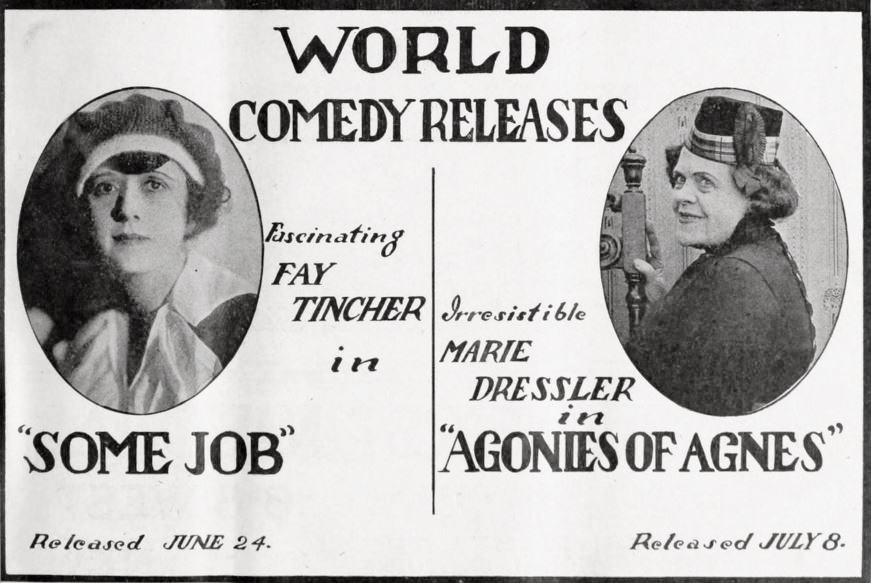
Step back into the nascent days of cinema, a time when narratives unfolded through hyperbolic gestures and the expressive power of a performer's face. In this vibrant epoch, Marie Dressler, a force of nature both on stage and screen, delivered a performance in "The Agonies of Agnes" that remains a benchmark for early comedic genius. This isn't merely a film; it's a boisterous carnival of human foibles, a madcap ballet of ludicrous situations, and a testament to Dressler’s unparalleled ability to command an audience with sheer presence and impeccable timing. From its very premise, the film establishes a world delightfully unhinged from reality, inviting viewers to revel in its glorious, unrestrained silliness.
At the heart of this cinematic maelstrom is Aggie, portrayed with an unforgettable gusto by Dressler. Described as a "tiny tot" weighing some two hundred pounds, Aggie is a character designed for grand comedic effect, a physical manifestation of an era's embrace of the exaggerated. Her fondness for mixed ale isn't merely a character quirk; it's a central pillar of her emotional architecture, a constant companion through her numerous, self-proclaimed "agonies." These agonies, dramatic paroxysms of distress, define her existence, much to the perennial despair of her long-suffering parents. Her father, a baker of dubious philanthropy, dispenses loaves of plaster of Paris to the impoverished, a detail that, while peripheral to the main plot, paints a vivid picture of the film's wonderfully askew sensibility. Her mother, meanwhile, is a perpetual fount of tears, her emotional state inextricably linked to Aggie's latest dramatic outburst. This domestic tableau, a blend of the mundane and the utterly bizarre, sets the stage for a narrative that consistently defies expectation, preferring the path of the ridiculous to the logical.
Aggie herself is a fascinating study in early cinematic femininity. While she might be seen through a modern lens as a caricature, in her time, she was a revolutionary figure. Dressler imbues her with a robust agency, a woman whose desires and discontents drive the plot. Her initial encounter with Cuthbert Caramel, her earnest wooer, is a masterclass in physical comedy and emotional excess. Cuthbert, arriving with a bouquet, is met with an outpouring of affection so fervent it literally floors him. This tempestuous embrace isn't just a comedic beat; it's a declaration of Aggie's passionate nature, a woman who loves, and suffers, with every fiber of her being. This intensity, however, proves to be a double-edged sword. The discovery of Cuthbert's seemingly innocuous habit – taking snuff – propels Aggie into another profound "agony." Her young heart, she declares, is on the verge of shattering, leading her to dramatically banish her bewildered suitor with the heart-wrenching cry, "Must this love depart from my life?" This moment, played for both pathos and humor, underscores the film's delightful oscillation between genuine emotion and outright parody. Her subsequent theatrical "agging," a protracted display of distress, is only quelled by the timely intervention of her parents and the comforting embrace of her beloved mixed ale, leaving her "a bit woozy" but, crucially, herself again.
Just as the audience settles into the rhythm of Aggie’s personal dramas, the narrative pivots to introduce a villain of truly magnificent absurdity: The Itching Mitt. This character, whose very name evokes a sense of petty irritation rather than grand menace, is served by a gang of twelve "desperate followers" who, in a stroke of brilliant comedic writing, pass their idle time knitting. This detail alone encapsulates the film's commitment to subverting expectations and finding humor in the incongruous. The Mitt’s nefarious scheme is refreshingly straightforward: he intends to marry Aggie's money. This mercenary ambition is revealed in his "be-draped den," a setting that suggests a theatrical villainy rather than genuine evil, further cementing the film's lighthearted tone. His plan to "get" Aggie involves a mysterious substance called "Beevo," to be slipped into her ale – a direct assault on her most cherished comfort.
The execution of this dastardly plot is a masterclass in silent film pacing and visual comedy. On a fateful evening, as Cuthbert and Aggie share a stick candy, the Mitt makes his grand entrance, disguised as a representative of the Food Commission. Aggie, ever susceptible to novelty and perhaps a handsome face, is immediately taken with the stranger, prompting a huffy departure from Cuthbert. The Mitt, seizing his opportunity, offers Aggie ale, subtly administering the Beevo. Her subsequent collapse is swift and dramatic, a classic trope of the era, but here imbued with a specific comedic weight given Aggie’s known dependence on her brew. What follows is a sequence of pure, unadulterated slapstick: the waiting gang leaps in through the windows, and the limp Aggie is unceremoniously carried down over the front porch via "two large and conspicuous ladders," then tossed into a wagon and rushed to the Mitt's lair. The sheer theatricality of the kidnapping, with its visible ladders and gang of knitters, highlights the film's deliberate embrace of the artificial, turning what could be a moment of tension into one of heightened comedic spectacle.
In the Mitt's den, Aggie regains consciousness, and true to form, she "ags" considerably, her complaints and lamentations serving as entertainment for the gleeful gang. They "agg" her on, a darkly humorous inversion of her parents' attempts to soothe her. The Mitt, attempting to break her "proud spirit," finds himself on the receiving end of Aggie's formidable physical prowess, as she "wallops" him and his entire entourage. This moment is crucial, showcasing Aggie's inherent strength and refusal to be easily subdued, even in the direst circumstances. It's a powerful assertion of female agency, even within the confines of a comedic narrative. The gang, however, eventually overpowers her, resorting to the truly ingenious "ale torture" – setting ale in plain sight, tantalizingly close, yet denying her a single sip. This psychological torment, playing on Aggie's most fundamental desire, forces her to promise marriage to the Mitt, only then earning her a drink, a moment of tragicomic relief.
Meanwhile, the world outside is in a flurry of activity. Aggie’s distraught parents discover the Mitt's incriminating note and, in a stroke of narrative brilliance, summon the "great detective." This isn't your typical trench-coated sleuth; this detective is a connoisseur of Limburger cheese, whose virtues he has been "investigating for a long time." This detail alone elevates the film from mere slapstick to a realm of surreal genius. The news of Aggie’s plight reaches Cuthbert, who is, predictably, "overcome." The detective, armed with his potent cheese and a clothes pin clamped firmly to his nose, bursts into the Mitt's den, closely followed by a trembling Cuthbert. The climax is a symphony of sensory overload and comedic timing. Just as the Mitt, in a moment of triumphant villainy, proclaims, "She's mine - Cheese Mine!" (a line that cleverly plays on Aggie's love for ale and the detective's weapon), the overpowering aroma of the Limburger cheese overwhelms the Mitt and his entire gang, rendering them incapacitated. Aggie, freed from her torment, collapses into the arms of her beloved Cuthbert, her trials concluded, her thirst finally quenched.
The enduring power of "The Agonies of Agnes" rests almost entirely on the shoulders of its star, Marie Dressler. A veteran of vaudeville and Broadway, Dressler brought a formidable stage presence to the nascent film industry. Her performance as Aggie is a masterclass in physical comedy, broad gestures, and nuanced facial expressions, essential tools for silent film actors. She doesn't just play Aggie; she embodies her, with every exaggerated sigh, every dramatic flail, and every triumphant wallop. Dressler, who also held a writing credit for the film, clearly understood the mechanics of her own appeal and how to leverage her unique persona for maximum comedic impact. Her ability to convey both genuine pathos and uproarious humor simultaneously is a rare gift, and it's on full display here. She was not the demure ingenue typical of many early films; instead, she was a larger-than-life figure, unafraid to be loud, messy, and fiercely independent, carving out a unique niche for herself in an industry often focused on more conventional beauty standards. Her performance paved the way for future comedic actresses who dared to be unconventional.
"The Agonies of Agnes" is a vibrant exemplar of early silent comedy, a genre that often borrowed heavily from the theatrical traditions of vaudeville and melodrama. The film's exaggerated performances, its clear-cut hero-villain dynamic, and its reliance on visual gags over intricate dialogue are all hallmarks of this era. Unlike the more subtle character studies that would emerge later, early silent comedies thrived on broad strokes and immediate impact. The use of intertitles, while sparse in the plot summary provided, would have guided the audience through the narrative, amplifying the dramatic pronouncements and punchlines. The film's absurdity, from plaster of Paris bread to knitting gangs and cheese-wielding detectives, isn't a flaw; it's its greatest strength. It revels in its own illogicality, inviting the audience to suspend disbelief and simply enjoy the ride.
Comparing "The Agonies of Agnes" to other films of its time reveals its unique position. While films like Hearts of the World or The Dawn of Freedom might have aimed for grand historical or dramatic narratives, "Agnes" embraces the purely comedic, finding its power in the personal and the preposterous. It shares a certain spirit of unbridled energy with other early comedies, but Dressler’s unique star power sets it apart. The sheer physical comedy and theatricality might draw parallels to the early works of figures who would later become giants of the form, but Dressler’s particular brand of matriarchal slapstick is singular. It's less about the intricate stunts of a Chaplin or Keaton, and more about the force of personality and the power of a well-timed reaction shot. Even in more dramatic fare like The Foolish Virgin or Loyalty, the emotional registers, though different, still relied on overt expression, a trait "Agnes" exaggerates for comedic gold. The villainy of The Itching Mitt, for example, is far removed from the more sinister antagonists found in titles like Satan in Sydney or The Witch Woman; his malevolence is tempered by an almost childlike pettiness, making him an ideal foil for Aggie's robust character.
The film’s narrative structure, though episodic, builds towards a satisfyingly outlandish climax. The great detective, with his bizarre investigative methods centered on Limburger cheese, is a character plucked straight from the realm of the surreal, a comedic answer to the more serious gumshoes of the era. His weaponization of smell is a stroke of genius, a sensory assault that perfectly encapsulates the film's commitment to finding humor in the unexpected. The final scene, with the villain and his gang incapacitated by dairy fumes, and Aggie falling into Cuthbert's arms, is a triumphant conclusion that leaves the audience with a smile. It's a reminder that sometimes, the most effective solutions are the most absurd, and that true love, even if temporarily derailed by snuff and Beevo, will always find its way back, perhaps with a little help from a pungent cheese.
"The Agonies of Agnes" is more than just a relic of early cinema; it's a vibrant, hilarious, and surprisingly insightful look at human nature, albeit through a funhouse mirror. Marie Dressler's portrayal of Aggie is a testament to the power of a strong, unconventional female lead, a character who, despite her exaggerated flaws, is undeniably endearing and resilient. The film's willingness to embrace the outlandish, its commitment to physical comedy, and its memorable cast of eccentric characters make it a joy to revisit. It reminds us that laughter often springs from the most unexpected places and that sometimes, the greatest dramatic tension can be found in a woman's struggle against a craving for ale, or a villain's downfall by way of pungent dairy. Its influence, while perhaps not always explicitly acknowledged, can be felt in the DNA of subsequent comedic performances and narratives that dared to push the boundaries of realism for the sake of a good laugh. It stands as a robust example of how early filmmakers, with limited technical means, still managed to craft engaging, memorable, and profoundly entertaining stories that resonate even today. The sheer joy derived from watching Aggie navigate her chaotic world, from the depths of her self-induced "agonies" to her triumphant walloping of villains, is a timeless pleasure, cementing "The Agonies of Agnes" as a true, albeit delightfully bizarre, masterpiece of silent comedy. The film, much like a fine, aged ale, only gets better with time, its flavors of absurdity and charm deepening with each viewing. It’s a riotous celebration of life’s little (and large) dramas, filtered through the inimitable lens of Marie Dressler’s comedic genius.
IMDb —
1923
Community
Log in to comment.