DbcultAccessing Vault...
6.1/10
Senior Film Conservator
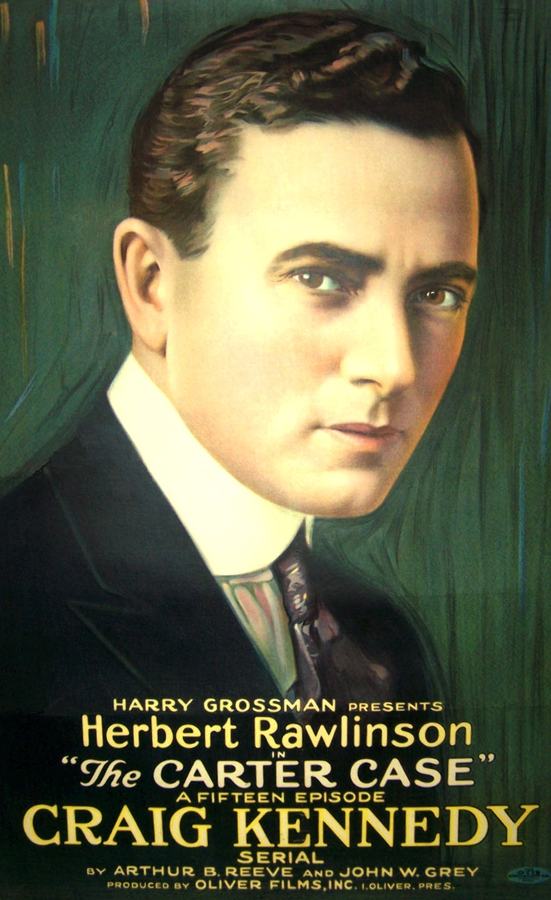
A definitive 6.1/10 rating for a film that redefined the boundaries of cult cinema. The Carter Case remains a cornerstone of transgressive art.
Step into the flickering glow of the silver screen, back to an era when stories unfolded in silent grandeur, propelled by exaggerated gestures and the poignant swell of an unseen orchestra. It's a journey to 1919, a time of profound societal shifts and technological marvels, where the burgeoning art of cinema was finding its voice, even without dialogue. Among the myriad narratives vying for public attention, detective thrillers held a particular allure, offering audiences a cerebral escape into worlds of intrigue and deduction. It's within this vibrant context that we encounter The Carter Case, a serial that, even a century later, retains a fascinating grip, drawing us into a labyrinthine plot of industrial espionage, murder, and the relentless pursuit of truth.
The film plunges us headfirst into the high-stakes world of Shelby Carter, a titan of the chemical industry whose genius has birthed a revolutionary formula. This isn't just a simple concoction; it's the very cornerstone of his empire, a testament to his inventive spirit and an object of intense desire for rivals both domestic and international. The narrative skillfully establishes an atmosphere of escalating paranoia around Carter, a man besieged by the insidious threat of his intellectual property being pilfered. His secret formula, the lifeblood of his colossal chemical works, is systematically being stolen, transmuted into a weapon in the hands of foreign competitors. This betrayal gnaws at his psyche, transforming his once-commanding presence into a figure consumed by fear and suspicion.
The tension in The Carter Case is palpable from the outset. Carter's refuge, a clandestine observation tower, becomes a symbol of his desperate attempt to control an uncontrollable situation. It's a fortress built not for defense against physical assault, but against the invisible hand of espionage. Yet, even within this self-imposed sanctuary, death finds him. The mysterious 'Avion' strikes, leaving behind a chilling enigma and a grieving family. This pivotal event catapults the story into full-blown detective mode, setting the stage for a classic whodunit that challenges both its characters and its audience to piece together fragmented clues.
Enter Anita Carter, Shelby’s daughter, portrayed with a compelling blend of grief and steely resolve. Adrienne Richards imbues Anita with a compelling agency, a defiance of the passive female archetypes often seen in early cinema. Her fiancé, Lester Mason (Herbert Rawlinson), embodies the voice of caution, urging a more conventional approach, perhaps fearing the public scrutiny or the dangers inherent in probing such a dark mystery. However, Anita, fueled by a potent mix of filial loyalty and an innate desire for justice, rejects his protests. Her decision to enlist the services of Craig Kennedy, a character who had already captivated audiences in Arthur B. Reeve’s popular stories, marks a crucial turning point. This choice immediately signals that The Carter Case is not merely a melodrama, but a sophisticated intellectual puzzle.
Craig Kennedy, often dubbed 'the American Sherlock Holmes,' is a fascinating figure. Unlike the intuitive, observational genius of Holmes, Kennedy is a scientific detective, employing the cutting-edge forensic techniques of his era. He represents a nascent fascination with empirical evidence and rational deduction, a stark contrast to the more romanticized detectives of earlier fiction. The casting of Herbert Rawlinson as Kennedy is particularly apt; his presence exudes an intellectual gravitas and quiet confidence that perfectly suits the role of a man who relies on laboratory analysis and meticulous investigation rather than dramatic pronouncements. The dynamic between Anita's emotional drive and Kennedy's methodical approach forms the narrative's backbone, promising a satisfying unraveling of the complex web of deceit.
The screenplay, crafted by John Grey and Arthur B. Reeve himself, is a testament to the enduring appeal of a well-constructed mystery. It's not just about who committed the murder, but *how* the industrial secrets were stolen, *why* 'Avion' became the chosen moniker, and the intricate motivations driving each character. The film capitalizes on the public's growing awareness of industrial espionage, a very real concern in the post-World War I landscape where technological advancements were rapidly reshaping global power dynamics. This grounds the fantastical elements of the mystery in a relatable, contemporary fear, elevating the narrative beyond mere escapism.
The performances throughout the film, though constrained by the conventions of silent cinema, are remarkably effective. Franklyn Hanna, as Shelby Carter, manages to convey the character’s descent into fear and isolation with nuanced facial expressions and body language, making his eventual demise all the more impactful. Adrienne Richards’ Anita is a beacon of strength, her determination shining through in every frame. Even characters like Lester Mason, played by Herbert Rawlinson (who also plays Kennedy – a common practice in serials), contribute significantly to the narrative’s tension, providing necessary counterpoints to Anita’s resolve. The ensemble cast, including George Dupree, Leslie Stowe, Frank Wunderlee, Marguerite Marsh, and Louis Wolheim, each contribute to the rich tapestry of suspects and supporting players, ensuring that the mystery remains multi-layered and unpredictable.
One of the most compelling aspects of The Carter Case, and indeed of silent cinema in general, is its reliance on visual storytelling. Directors of this era were masters of conveying emotion, plot points, and suspense through composition, lighting, editing, and the performances of their actors. The use of close-ups to emphasize a character's internal struggle or a crucial clue, the dramatic wide shots to establish settings, and the rapid-fire editing during moments of action all contribute to a dynamic viewing experience. The film’s ability to build and sustain tension without spoken dialogue is a testament to the artistry of its creators. The intertitles, far from being mere plot summaries, serve as an integral part of the narrative, delivering key information, advancing dialogue, and often adding a poetic or dramatic flourish that enhances the overall mood.
Consider, for instance, the scenes depicting Shelby Carter's paranoia within his observation tower. The cinematography likely employed stark contrasts of light and shadow, creating a claustrophobic atmosphere that visually communicates his isolation and fear. The sudden appearance of 'Avion' would have been a masterclass in visual shock, relying on quick cuts and dramatic framing to maximize its impact. This visual vocabulary is what makes silent films so powerful; they demand active engagement from the viewer, who must interpret and internalize the story through purely visual and emotional cues. While we may not have direct access to the film's original score, one can imagine how a live orchestra would have expertly manipulated mood, from ominous undertones during moments of suspense to triumphant fanfares during breakthroughs.
The character of Craig Kennedy represents a fascinating evolution in detective fiction. Unlike the intuitive deductions of Sherlock Holmes or the brute force of earlier police procedurals, Kennedy's methods are rooted in the emerging fields of forensic science. He uses chemistry, psychology, and various technological gadgets to solve crimes, reflecting a public fascination with scientific progress and its potential to demystify even the most baffling enigmas. This commitment to scientific realism, even if somewhat exaggerated for dramatic effect, gives The Carter Case a distinct flavor. It positions the film not just as a thrilling mystery, but as a cultural artifact reflecting the era's optimism about science's ability to solve complex problems.
The serial format itself, popular during this period, was perfectly suited for such intricate narratives. Each chapter would end on a cliffhanger, ensuring audiences would return week after week, eager to see how Kennedy would escape the latest trap or uncover another piece of the puzzle. This episodic structure allowed for a gradual build-up of suspense and the meticulous layering of plot details, creating a rich, immersive experience for viewers. The long-form narrative also provided ample opportunity for character development, allowing the audience to grow invested in Anita’s quest and Kennedy’s ingenious methods.
When considering The Carter Case within the broader context of silent cinema, it's clear that it stands as a significant example of the burgeoning mystery genre. While films like More Truth Than Poetry might have explored domestic dramas and Wife or Country delved into moral dilemmas of wartime, The Carter Case carved out a niche with its focus on intellectual puzzles and industrial intrigue. Its serial nature, a common format of the time, meant it was designed for sustained engagement, a quality shared by other popular episodic adventures.
The film's exploration of hidden motives and the dark underbelly of corporate ambition resonates with later, more complex thrillers. The idea of a brilliant mind brought low by paranoia and the theft of intellectual property is a timeless theme. While perhaps not as overtly socially conscious as Birth Control or What Becomes of the Children?, The Carter Case subtly reflects societal anxieties about unchecked technological power and the shifting landscape of global commerce. It’s a snapshot of an era grappling with the implications of rapid industrialization and the vulnerability of individual genius in a cutthroat world.
The film also provides an interesting contrast to other mysteries of the period, such as The Secret of the Swamp. While both undoubtedly aim to thrill, The Carter Case distinguishes itself through its embrace of scientific detection, placing a greater emphasis on the methodical application of emerging forensic techniques rather than relying solely on atmospheric dread or purely intuitive leaps. This made Craig Kennedy a particularly modern hero for his time, a figure embodying the nascent faith in science as the ultimate arbiter of truth.
Revisiting The Carter Case today offers a unique window into the craftsmanship and narrative sophistication of early cinema. It demonstrates that even without the benefit of synchronized sound or elaborate special effects, filmmakers were adept at weaving intricate tales that captivated audiences. The core elements of a great mystery—a compelling victim, a determined protagonist, a brilliant detective, and a formidable antagonist—are all present and exquisitely rendered. The film stands as a testament to the enduring power of a well-told story, regardless of the technological limitations of its time.
For silent film aficionados, mystery buffs, and anyone interested in the evolution of cinematic storytelling, The Carter Case remains a compelling watch. It’s a reminder that the fundamentals of suspense, character development, and plot construction are timeless, transcending the specific technological advancements of any given era. It’s a piece of cinematic history that continues to intrigue, a silent testament to the ingenuity of its creators and the timeless appeal of a good, old-fashioned whodunit.
The film, with its detailed plot and engaging characters, invites us to appreciate the subtle art of non-verbal communication and the sheer imaginative power required to fill in the auditory gaps. It's an immersive experience that challenges modern viewers to slow down, pay attention to visual cues, and allow the narrative to unfold at its own deliberate, yet utterly captivating, pace. The legacy of Craig Kennedy, the scientific detective, and the enduring mystery of 'Avion' continue to echo through the annals of cinematic history, proving that some stories are simply too good to be forgotten, even a century after their initial flicker across the silver screen.
IMDb 6.7
1928
Community
Log in to comment.