DbcultAccessing Vault...
Cult Review
Senior Film Conservator
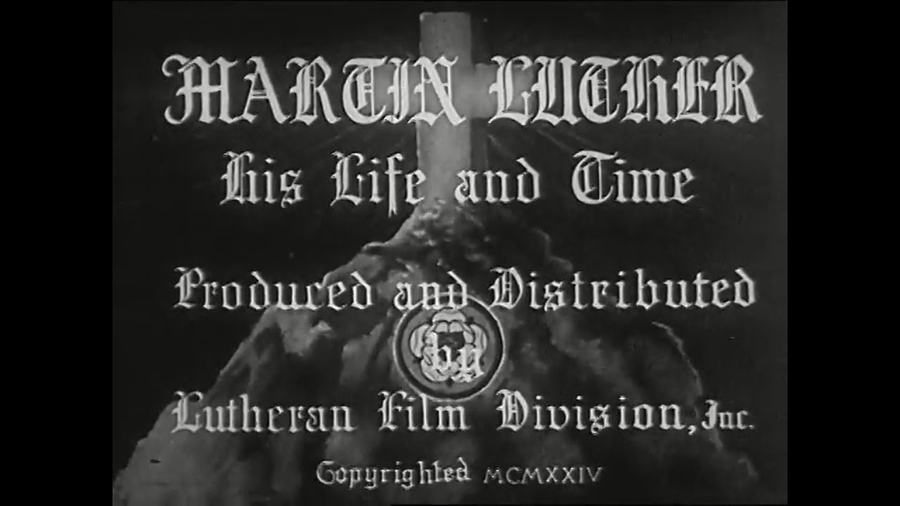
The cinematic venture titled Martin Luther, His Life and Time unfolds as a chiaroscuro meditation on faith, power, and the relentless quest for doctrinal purity. From the opening tableau—Luther (portrayed with austere gravitas by an unnamed lead) hunched over a candle‑lit desk, his quill scratching furiously against parchment—the film signals its ambition: to render the theological tempest of the early 1500s in visceral, almost tactile terms.
Rather than relying on a conventional linear chronology, director P. Kurz opts for a mosaic structure, stitching together episodic vignettes that oscillate between the cloistered silence of the Augustinian monastery and the raucous clamor of Wittenberg’s market square. This approach mirrors the fragmented nature of Luther’s own spiritual journey—a series of ruptures and reconciliations that ultimately coalesce into the seismic act of nailing the Ninety‑Five Theses to the Castle Church door.
The film’s first act immerses the viewer in the oppressive austerity of monastic life. Elise Aulinger, embodying Katharina von Bora, appears only fleetingly in this segment, her presence a spectral reminder of the domestic world Luther will later abandon. The cinematography employs a muted palette—grays and deep blues—interrupted only by the harsh glare of torchlight, a visual metaphor for Luther’s internal conflict between divine illumination and institutional darkness.
Schwartze, as the stern Abbot, delivers a monologue on the virtues of penance that feels less like exposition and more like a ritual incantation, echoing the medieval liturgical cadence. This scene resonates with the same solemnity found in the opening of Made in Heaven, where the protagonist’s yearning for transcendence is similarly framed by religious iconography.
The narrative’s fulcrum arrives with Luther’s discovery of Augustine’s treatise on grace, a moment rendered in close‑up as the monk’s eyes flicker with a sudden, almost electric, recognition. The script, penned by Kurz, deftly weaves Augustine’s theological language into Luther’s own internal dialogue, creating a lyrical echo that underscores the continuity between past reformist thought and Luther’s burgeoning rebellion.
Dary Holm, cast as the skeptical university rector, challenges Luther in a heated disputation that feels reminiscent of the courtroom drama in Playing with Fire. The intellectual sparring is punctuated by rapid cuts and a pulsating score that rises in a minor key, amplifying the tension between orthodoxy and innovation.
When Luther finally affixes his Ninety‑Five Theses, the camera lingers on the hammer’s arc, the wood grain splintering under force. The ensuing montage—a cascade of pamphlets, secretive meetings in taverns, and the echoing footsteps of soldiers—captures the viral spread of his ideas long before the age of digital memes. The film’s sound design, a low rumble of distant bells, suggests the looming ecclesiastical storm.
Karl Wüstenhagen’s portrayal of Prince Frederick the Wise is a study in political pragmatism; his measured gestures and measured speech contrast sharply with the fervent zeal of Anton Walbrook’s Cardinal Cajetan, whose crimson robes and sharp jawline convey both authority and menace. Their clash evokes the political intrigue of Attila, the Scourge of God, where personal ambition intertwines with ideological conflict.
The excommunication sequence is a masterclass in visual storytelling: a solitary candle flickers as the papal bull is read aloud, the flame sputtering in tandem with Luther’s resolve. The subsequent Diet of Worms, filmed in a cavernous hall awash in sea‑blue light (#0E7490), showcases the tension between the imperial authority and the lone reformer. Luther’s declaration, “Here I stand, I can do no other,” reverberates against stone walls, each syllable resonating like a drumbeat of defiance.
Wilhelm Diegelmann, playing the role of Emperor Charles V, delivers a monologue that feels less like a historical footnote and more like a Shakespearean soliloquy, pondering the weight of empire on his shoulders. The scene’s pacing, deliberately measured, allows the audience to feel the gravitas of a continent teetering on the brink of religious schism.
Luther’s translation of the Bible into German is rendered with a tender intimacy; the camera focuses on his calloused hands, the ink blotting his fingertips as he painstakingly renders sacred text into the vernacular. This act, both scholarly and revolutionary, is juxtaposed with scenes of peasant unrest, illustrating how the democratization of scripture ignited socio‑political upheaval.
The film does not shy away from the darker repercussions of Luther’s reforms. The Peasants’ War is depicted with harrowing realism: smoke‑filled fields, anguished faces, and the stark contrast between the idealistic rhetoric of reform and the brutal suppression by feudal lords. This narrative thread aligns with the thematic undercurrents of Dangerous Curve Ahead, where lofty aspirations collide with grim reality.
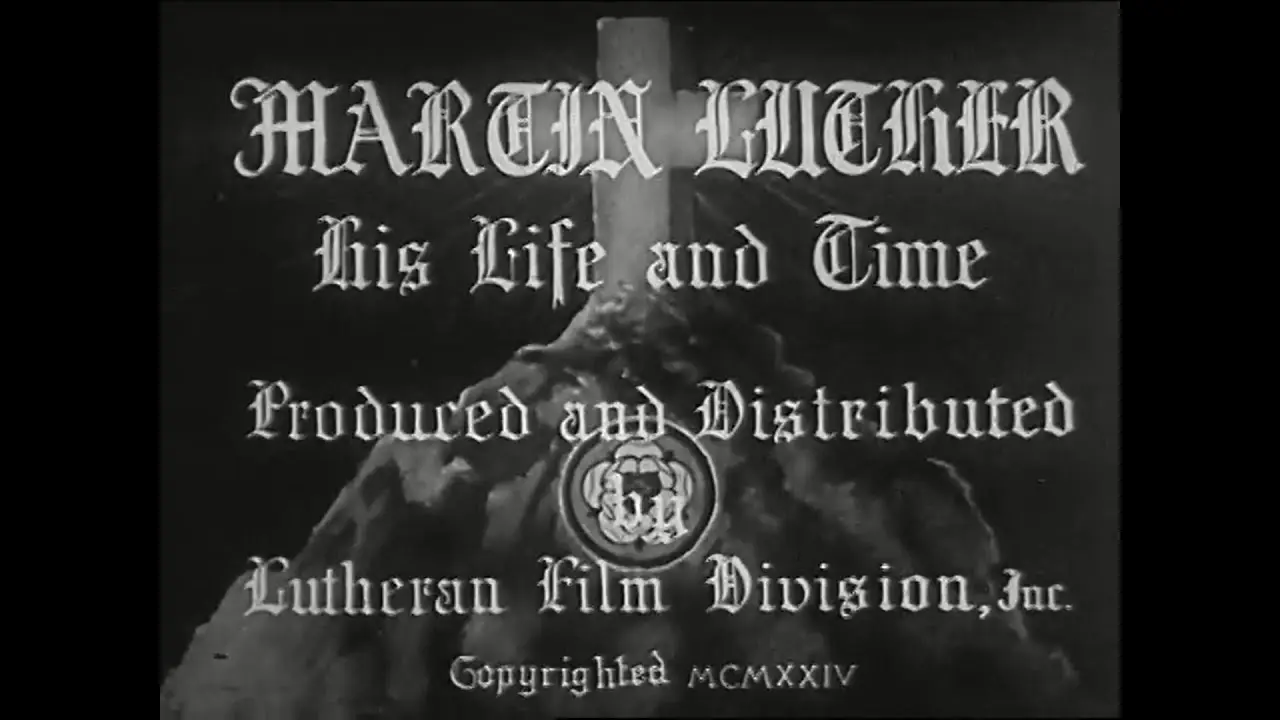
The concluding act presents an aging Luther, his once vigorous voice now hoarse, yet his eyes still alight with unyielding conviction. The final scene—a slow pan across a sunrise‑kissed German landscape, the sky painted in hues of amber and teal—symbolizes both the dawn of Protestantism and the lingering shadows of controversy.
In a subtle nod to cinematic history, the film’s closing credits roll over a faint echo of a Gregorian chant, intertwining the old with the new, much like the film itself bridges scholarly rigor with artistic flourish.
The ensemble cast delivers performances that oscillate between restrained restraint and visceral passion. Anton Walbrook’s Cardinal Cajetan is particularly noteworthy; his measured cadence and piercing gaze convey a man convinced of his divine mandate, yet haunted by the inevitability of change. Charlotte Krüger, in the role of a devout parishioner, provides a grounding perspective on how Luther’s doctrines permeated everyday life.
Director P. Kurz demonstrates an uncanny ability to balance historical exposition with cinematic poetry. His use of long takes, especially during the Diet of Worms, invites the audience into a contemplative space, while rapid intercutting during the pamphlet distribution sequences injects kinetic energy that mirrors the spread of reformist ideas.
Cinematographer Rudolf Hoch employs a palette that shifts from the muted earth tones of monastic interiors to the stark, high‑contrast lighting of public debates. The strategic deployment of dark orange (#C2410C) for titles and key textual overlays provides visual cohesion, while occasional splashes of yellow (#EAB308) highlight moments of revelation—such as the moment Luther first reads Augustine.
Production design, helmed by Viktor Gehring, reconstructs 16th‑century Wittenberg with meticulous attention to detail: timber‑framed houses, cobblestone streets, and the imposing silhouette of the Castle Church. The authenticity of set pieces rivals that of period epics like Die Brüder von Zaarden, yet the film’s intimate focus on Luther’s personal sphere distinguishes it.
The musical score, composed by Ulmer, weaves together plaintive strings with resonant organ chords, evoking both the solemnity of liturgical rites and the restless yearning of reform. The subtle inclusion of period‑appropriate hymns adds an aural authenticity that deepens immersion.
Sound design is equally meticulous; the clatter of printing presses, the murmur of crowded market stalls, and the distant toll of church bells are layered to create an acoustic tapestry that feels alive and immediate.
When positioned alongside other biographical epics of the silent era, such as The Under Dog or Life Story of John Lee, or The Man They Could Not Hang, this film stands out for its intellectual depth. While many contemporaneous works prioritized melodrama, Martin Luther, His Life and Time opts for a measured, scholarly approach that respects its subject’s theological complexity.
The film also shares a thematic kinship with Nature and Poet, in that both explore the intersection of personal conviction and broader cultural currents. Yet, Luther’s story is uniquely anchored in the seismic shift of religious thought, a dimension that elevates the film beyond mere character study.
While the film adheres closely to documented events—such as the exact wording of the Ninety‑Five Theses and the chronology of the Diet of Worms—it does take artistic liberties in dramatizing private conversations for which no records exist. These invented dialogues, however, are crafted with a reverence for the theological positions of the era, ensuring they feel plausible rather than contrived.
The decision to portray Katharina von Bora’s influence primarily through silent glances rather than spoken counsel is a deliberate narrative choice, underscoring the limited agency afforded to women in historical accounts while still acknowledging her pivotal role.
Martin Luther, His Life and Time emerges as a cinematic tour de force that marries rigorous scholarship with evocative storytelling. Its layered performances, judicious use of color—particularly the recurring dark orange motifs—and its unflinching portrayal of both triumph and tragedy render it a benchmark for historical biopics. For scholars, cinephiles, and anyone intrigued by the origins of modern religious thought, the film offers an immersive, thought‑provoking experience that lingers long after the credits fade.
IMDb —
1918
Community
Log in to comment.