DbcultAccessing Vault...
6.5/10
Senior Film Conservator
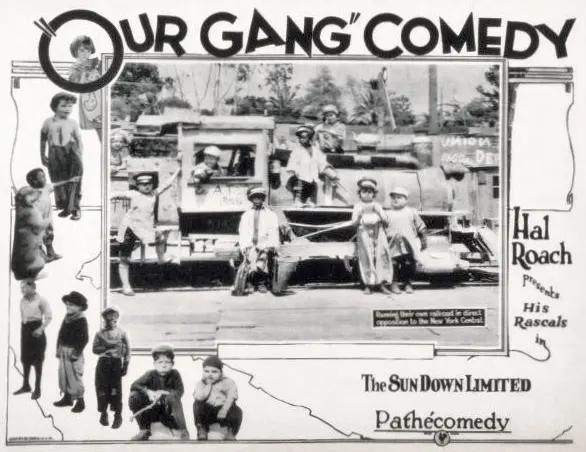
A definitive 6.5/10 rating for a film that redefined the boundaries of cult cinema. The Sun Down Limited remains a cornerstone of transgressive art.
The cinematic landscape of 1924 was a crucible of experimentation, a period where the syntax of visual storytelling was being forged in the white-hot heat of audience demand and directorial ambition. Amidst the grandiose historical epics like Marc'Antonio e Cleopatra, there existed a more tactile, grounded form of entertainment: the Hal Roach 'Our Gang' shorts. The Sun Down Limited stands as a towering achievement within this sub-genre, not merely for its humor, but for its profound understanding of the architecture of childhood imagination.
At its core, the film is a celebration of the proletarian spirit filtered through the lens of prepubescence. The opening sequences, which detail the meticulous construction of the 'Sun Down Limited' locomotive, are a masterclass in visual exposition. We see the gang—featuring stalwarts like Joe Cobb, Mickey Daniels, and the incomparable Farina—assembling a machine from the refuse of an adult world. This isn't just play; it is a reclamation of space. Unlike the more structured athletic endeavors seen in Casey at the Bat, the Our Gang ensemble engages in a form of spontaneous urban planning.
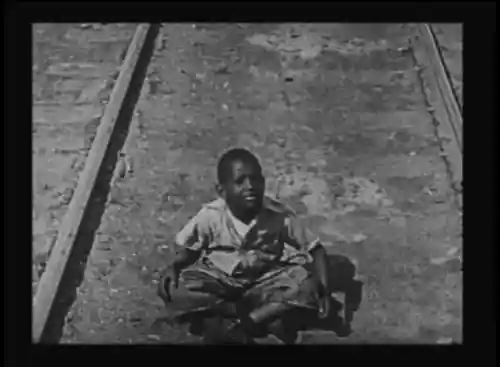
The locomotive itself is a character, a clattering, wheezing beast of wood and iron that reflects the ingenuity of its creators. Hal Roach and H.M. Walker’s script treats this contraption with a reverence usually reserved for the high-seas vessels in Britain's Bulwarks. Every bolt and rickety wheel is a testament to a world where children were not merely observers of technology but its active interrogators. The cinematography captures the grease and the grit, grounding the comedy in a palpable reality that makes the subsequent peril feel genuine.
Every utopia requires a serpent, and in this suburban Eden, that role is filled by Gabe Saienz’s Toughy. He is the personification of unearned malice, a figure who finds the gang’s industry offensive to his own lethargic dominance. While films like The Fourth Musketeer deal with adult notions of honor and rivalry, The Sun Down Limited explores the raw, unfiltered territorialism of the schoolyard. Toughy’s attempt to sabotage the tracks is not just a prank; it is a strike against the collective harmony of the group.
The tension escalates with a rhythmic precision that rivals the best dramatic features of the era. As the train begins its ill-fated journey, the editing—sharp and relentless—mirrors the increasing velocity of the locomotive. We see the juxtaposition of the children’s joy against the looming catastrophe, a technique that evokes the same suspense found in The Greatest Question. The physicality of the performers, particularly the wide-eyed terror of Jackie Condon and the stoic focus of Mary Kornman, elevates the slapstick into a realm of high-stakes drama.
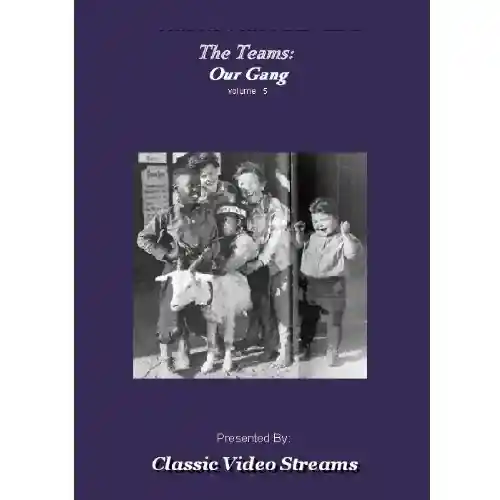
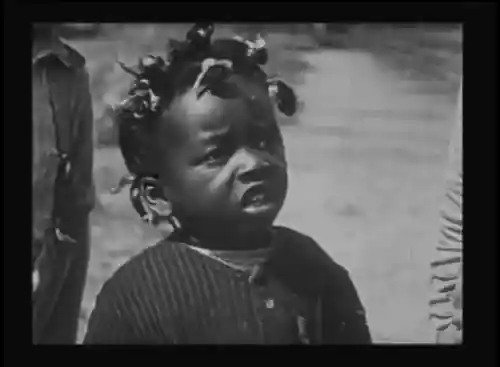
To discuss an Our Gang short without acknowledging the sheer charisma of its cast would be a critical oversight. Allen 'Farina' Hoskins remains a revelation; his timing is impeccable, his reactions providing a soulful anchor to the frenetic energy surrounding him. In an era where child actors were often coached into grotesque mimicry of adults, the Roach studio allowed for a certain naturalism. There is a spontaneity here that is absent in more rigid productions like Johanna Enlists.
Mickey Daniels, with his trademark freckled grin, embodies the spirit of the American Every-boy, while Joe Cobb provides the necessary comedic weight—both literally and figuratively. The chemistry among these children is palpable, suggesting a genuine camaraderie that transcends the scripted page. This ensemble dynamic is what separates the Our Gang series from contemporary works like Smiling Jim, where the focus remains stubbornly on a singular protagonist. Here, the 'Gang' is a singular organism, moving and reacting in unison to the mechanical and social threats they encounter.
The visual gags in The Sun Down Limited are not merely punchlines; they are integrated into the physics of the world. When the train navigates the improvised tracks, the camera placement—often low to the ground—accentuates the speed and the fragility of the craft. There is a sequence involving a cow on the tracks that, while seemingly simple, requires a level of choreographic precision that would make the directors of Gypsy Love envious. It is the geometry of comedy: the intersection of velocity, timing, and spatial awareness.
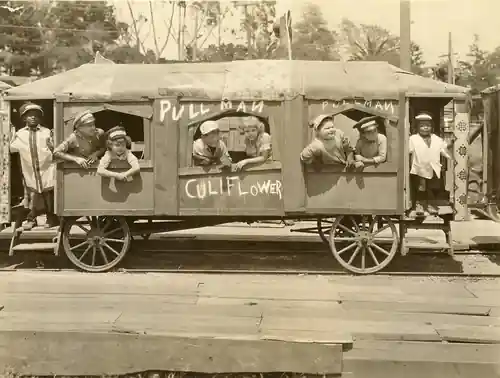
Furthermore, the film’s use of location—the dusty backlots and unpaved streets of 1920s Culver City—provides an authentic texture that studio-bound films like Ashoka often lack. The sunlight feels hot, the dirt feels real, and the danger of a runaway wooden train feels imminent. This realism serves to heighten the comedy, as the absurdity of the situation is played against a backdrop of mundane, everyday life. It is the same contrast that makes Beaches and Peaches such a fascinating relic, though The Sun Down Limited possesses a superior narrative cohesion.
While ostensibly a comedy, there is an underlying current of class consciousness that permeates the film. These are children of the working class, finding joy not in expensive toys but in their own labor. This theme of self-reliance is a recurring motif in Hal Roach’s work, contrasting sharply with the more affluent settings of films like Gimme. The 'Sun Down Limited' is a triumph of the spirit over economic limitation. When Toughy attempts to destroy it, he is effectively trying to suppress the upward mobility of his peers.
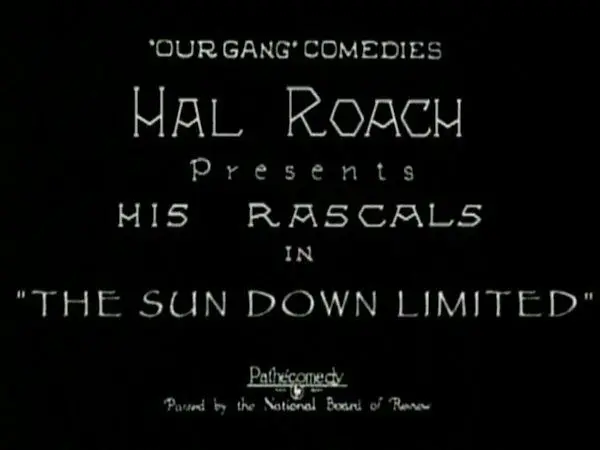
The resolution of the film, which involves a frantic chase and a spectacular (for its time) derailment, offers a catharsis that is both visceral and moral. The gang’s victory is not just over Toughy, but over the physical laws that threaten to crush their creation. It is a microcosm of the American dream: building something from nothing, defending it against those who would tear it down, and ultimately surviving the wreckage to build again. This resilience is what has allowed the Our Gang shorts to endure while more polished dramas like Os Fidalgos da Casa Mourisca have faded into obscurity.
Looking back from a century’s distance, The Sun Down Limited remains a startlingly vibrant piece of cinema. It lacks the cynicism of modern children’s programming, offering instead a world of consequence and craft. The stunts, performed with a reckless abandon that would never pass modern safety standards, possess a terrifying beauty. When the train careens through the streets, one cannot help but feel a sense of genuine awe at the sheer audacity of the production. It is a far cry from the safe, sanitized environments of Follow Me or the static theatricality of The Tents of Allah.
The film’s influence can be seen in everything from the DIY aesthetic of 1980s adventure films to the complex physical comedy of contemporary animation. It taught us that the best stories are often found in the most humble settings—a vacant lot, a pile of scrap wood, and a group of friends with a shared vision. In the pantheon of silent comedy, where giants like Keaton and Chaplin loom large, the Our Gang ensemble carved out a space that was uniquely theirs: a space where childhood was treated with the seriousness, the danger, and the hilarity it deserves.
Ultimately, The Sun Down Limited is more than a two-reel comedy; it is a cinematic time capsule. It captures a moment in American history when the machine age was meeting the boundless energy of a new generation. It is a film about the joy of making, the pain of losing, and the necessity of starting over. In the final analysis, it remains as essential a watch as any high-budget feature, a reminder that with enough imagination and a few spare parts, one can build a world that is entirely their own, even if only for twenty minutes on a flickering screen.
Verdict: An Essential Artifact of Silent Ingenuity
Whether you are a historian of the slapstick era or a casual viewer seeking the roots of ensemble comedy, this film offers a rich, rewarding experience that transcends its 1924 origins. It is, quite simply, a masterpiece of the miniature.
IMDb —
1932
Community
Log in to comment.