DbcultAccessing Vault...
7.3/10
Senior Film Conservator
A definitive 7.3/10 rating for a film that redefined the boundaries of cult cinema. The Bridge remains a cornerstone of transgressive art.
You should definitely watch this if you have ten minutes and want to see how people were already messing with 'dream logic' back in the late twenties. It’s a silent short, so if you need explosions or witty dialogue to stay awake, you will probably hate it.
It is based on that famous Ambrose Bierce story about the hanging at Owl Creek Bridge. Most people read it in school, but seeing it acted out in 1929 hits different.
The movie starts out very cold and grey. There is this kid playing a drum and he looks *way* too serious for his age.
The soldiers are just standing there. They look like they are waiting for a bus rather than getting ready to kill a guy.
I noticed one soldier's hat is tilted just a bit too far forward. It makes him look less like a guard and more like a guy who’s bored out of his mind.
The guy being hanged has a face that does a lot of heavy lifting. You can see the actual panic in his eyes, which is rough to watch even now.
Then he falls. And the movie just... breaks open.
The rope snaps, he hits the water, and suddenly the camera is everywhere. It’s shaky and messy in a way that feels intentional.
Usually, movies from this era, like maybe The Dawn of a Tomorrow, feel very static and staged. Not this one.
The water looks thick and heavy, almost like oil. He’s swimming for his life and the soldiers are shooting at him from the bridge.
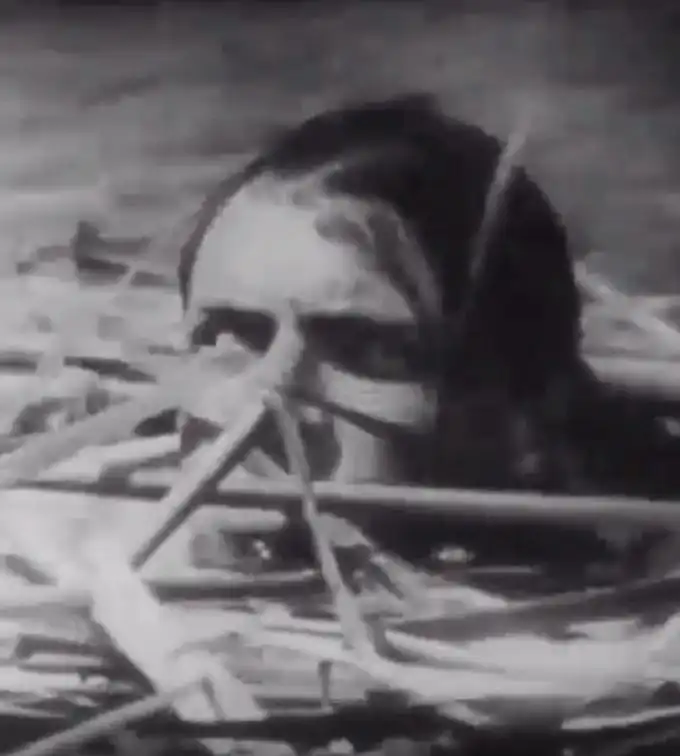
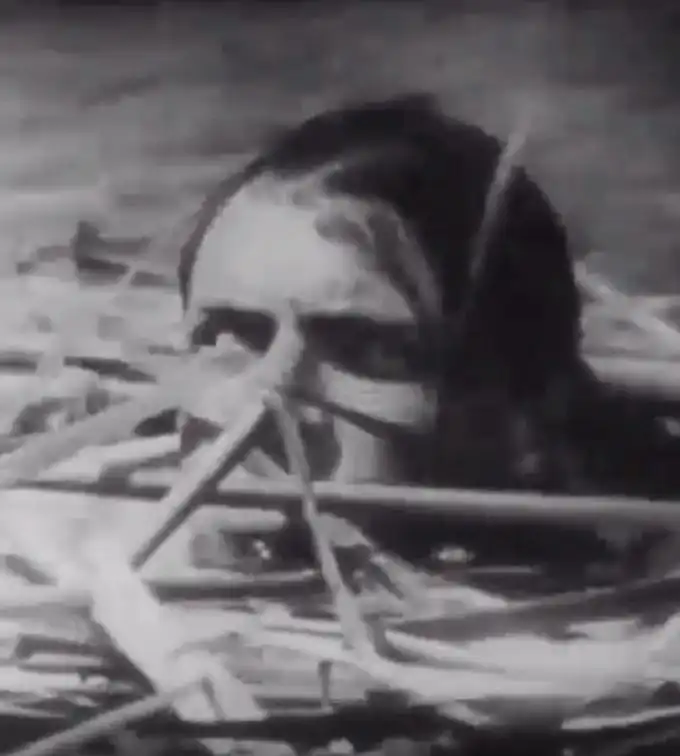
There is a shot of the reeds on the surface of the water that lingers for a long time. It’s just silence and bubbles.
It makes you feel like you are under there with him, holding your breath until your lungs hurt.
Once he gets out of the water, the movie gets even weirder. He’s running through these woods that look like they’re made of light and shadows.
The sun is hitting the leaves in a way that makes everything look too bright. It feels like a migraine is starting.
He keeps thinking about his wife and kids. The shots of the wife are very soft, almost blurry, like a memory that’s starting to fade.
I think the actor playing the prisoner, Charles Darvas, runs in a very specific way. He’s not a movie runner; he looks like a guy who is actually about to collapse.
His movements are jerky and desperate. It’s much more realistic than the polished acting you see in something like Cleopatra or other big dramas of the time.
There is a moment where he reaches out for his wife at the end of a long path. The way the scene is cut is so fast it almost feels like a modern music video.
It’s funny because you can tell the director, Charles Vidor, was really trying to show what’s happening inside the guy's head.
The ending is... well, if you know the story, you know. If you don't, it’s a bit of a gut punch.
The way the film just cuts to black is perfect. No long credits, no big music swell, just *done*.
I did notice that some of the soldiers in the background look like they aren't even holding real guns. Or maybe they just don't know how to hold them.
One guy in the back is just staring off into space while the main action is happening. It’s a tiny detail but it makes the whole thing feel more like a real, messy day.
It’s not a perfect movie, but it’s got a soul. It feels like someone took notes on a nightmare and then tried to film it with whatever they had lying around.
If you’ve seen other silent shorts like Camping Out, this will feel like a massive jump in how stories are told.
It’s much more interested in how it feels to be alive than in telling a big complicated plot.
I’ll probably think about that drumming kid for the rest of the week. He had such a blank, spooky look on his face.
Anyway, go watch it. It’s short. You have no excuse.
IMDb 7.1
1936
Community
Log in to comment.