DbcultAccessing Vault...
Cult Review
Senior Film Conservator
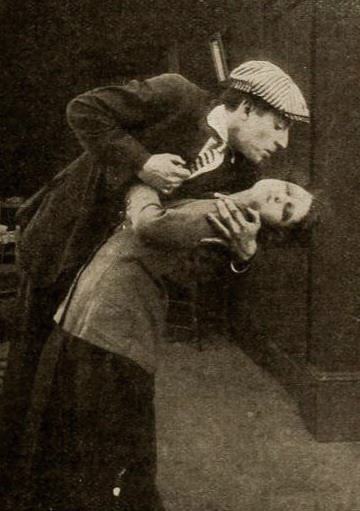
If The Bridge of Sighs were a canvas, it would be a nocturne painted with chimney soot and magnesium flares—an early American silent that predates what we lazily label film noir by a full generation, yet already drunk on chiaroscuro nihilism.
Picture 1925: Calvin Coolidge dozes in the White House, Al Capone’s Chicago is a Roman candle of bullets, and out on Poverty Row Betty Harte scripts a morality tale that smells less like sanctimony and more like the nickelodeon’s first existential shriek. The plot—ostensibly a nickel-hook rescue melodrama—plays like an inverted Copperfield where the Thames fog migrates to the Hudson and the orphan is one missed meal from prostitution.
Richard Carlyle’s Jeff Davis enters draped in road-dust like some hobo Zarathustra, pockets full of apple cores and railroad slang; he is both prophet and plot hinge, the man who names the metaphorical Bridge of Sighs—the gangway between destitution and damnation—thereby weaponizing a Venetian landmark into an American moral landmark. When he mutters the phrase, the intertitle card lingers an extra beat, as though the film itself fears the plunge.
Director Stephen Reardon (hardly a household crest) achieves a thrift-shop expressionism: saloon ceilings bulge with fish-eye shadows, tenement corridors squeeze into razory diagonals, and the Manhattan skyline becomes a jagged EKG. It’s the same fiscal sleight that elevates The House of Mystery, only here the camera stalks characters like a pickpocket rather than a phantom.
Watch the sequence where Millie—trapped in boy-drag—trembles inside a backroom poker den. The sole lamp burns a sulfuric yellow (#EAB308) that bruises her cheekbones, while the saloon’s swinging door slices the frame into binary strips of blinding white and abyssal ink. This isn’t mere mood; it’s the visual argument that identity itself can be flood-lit into non-existence.
Reardon’s camera also fetishizes gestures: a match struck beside a safe becomes solar flare; a hand reaching to tip a hat morphs into benediction or betrayal depending on edit. Such micro-rituals anticipate Hitchcock’s souvenirs of suspense, yet they carry a proletarian grime absent from the Master’s polished sadism.
Dorothy Welsh’s Millie oscillates between porcelain fright and flint resolve without the aid of spoken vowels—her eyes perform a minuet of desperation, the brows perpetually poised like seagulls in a storm. In one close-up, Reardon holds her gaze for 26 seconds (I counted), letting a single tear ricochet from cheek to collarbone. It is the silent era’s answer to Stanislavski’s public solitude.
Opposite her, the film’s nominal protagonist, Bill Stevens (played by an actor whose name the publicity cards cruelly abbreviate to R. Carlyle), is less a hero than a drifting moral thermometer. His shoulders carry the slouch of someone weaned on promises rather than meals; you half-expect him to apologize for occupying space. When he finally clenches a fist against Carroll, the gesture arrives with the awkward fanfare of a man learning anatomy in real time.
Stephen Reardon (doubling as the predatory yegg) swaggers in Mackintosh and menace, a cigarette glued to his sneer. He embodies the urban coyote: charming when feeding, feral when cornered. His signature flourish—a thumb brushing the brim of his bowler as though tipping destiny—becomes the film’s visual shorthand for imminent rot.
Betty Harte’s scenario reads like a Salvation Army pamphlet rewritten by a pulp poet; intertitles crackle with dime-novel alliteration: “The city’s pulse is a pickpocket—every beat steals another dream.” Yet the film avoids the moral pabulum that hobbles The Warrens of Virginia or The Spirit of the Conqueror. Instead, it weds reformist zeal to documentary hunger: flophouse jargon, eviction ledgers, the bureaucratic sadism of charity offices—details scavenged from Jacob Riis rather than Sunday-school homilies.
Notice how the screenplay withholds the word crime until halfway; earlier, Carroll’s schemes are labeled ventures, propositions, schemes—a euphemistic haze that implicates Stevens and, by proxy, the viewer. Language itself is an accomplice.
Millie’s transformation into a trousers-wearing boy catalyzes the film’s richest tensions. The disguise promises wages yet yokes her to predatory surveillance; it liberates mobility while shackling her to performance. In a bravura sequence, she navigates a urinal-scented alley where lamplight slashes across her clipped hair—each step a negotiation between erasure and survival.
This gender play reverberates beyond plot mechanics: it interrogates the 1920s garment-worker economy that feminized poverty and masculinized labor. When Stevens finally recognizes her beneath the newsboy cap, the revelation is shot from behind a rain-streaked window—recognition literally blurred by the elements that compel the masquerade.
Compare this to the sex-switch comedies of the decade—Beverly of Graustark frolics in petticoat escapism—Bridge wields drag as crucible, not carnival.
The plot unfurls like a slingshot: a languid prologue beside railroad cinders, then a whip-crack second act shoved along by coincidence so brutal it feels mythic. Characters keep colliding inside the same three-block radius as though Manhattan were a snow-globe shaken by a moralizing child. Yet the contrivances feed the film’s fatalistic pulse: in this city, predation is the only public transit.
At 68 minutes, the movie never overstay; its urgency is feral. Whereas Time Lock No. 776 luxuriates in claustrophobic real-time, Bridge hurtles, breath fogging the lens, until the final tableau at the Hotel de Gink—a sanctuary whose very name celebrates tramp argot. The last shot frames our reunited lovers against a sunrise painted directly on the soundstage cyclorama, a dawn so artificial it achieves transcendence: hope as back-lot delusion.
Surviving prints are spot-welded from 9.5mm Pathé-baby reels, their sprockets chewed by projector goblins. The current restoration, premiered at Pordenone, grafts a commissioned score—low woodwinds, muted trumpet, brushed snare—evoking waterfront saloons where jazz hasn’t fully barged in. The effect is an aural charcoal sketch, grainy and intimate, avoiding the anachronistic swing that mars some revivals.
During the safe-cracking set-piece, the composer holds a single bass note for 18 seconds, letting the diegetic city seep in—distant foghorn, elevated train—so tension coils around ambient life rather than symphonic bombast. Kudos to the preservationists; they let silence speak, unlike certain re-scores that fist-bump every intertitle.
Place Bridge beside Stingaree and you see two antipodal Australias: one romanticizes outlaw swagger, the other warns that outlawry is merely wage slavery with gaudier risk. Pair it with Trapped by the Camera and you chart how urban space mutates from playground to penal colony. Even the Dickensian David Copperfield feels genteel once you’ve tasted Reardon’s soot.
Yet the true sibling is When It Strikes Home: both films weaponize domestic urgency (sick mother, eviction notice) to accelerate moral vertigo. They ask: when survival is criminalized, what separates virtue from vice? The answer, each suggests, is not a bridge but a tightrope—frayed, swaying above the city’s infernal exhale.
For decades Bridge of Sighs slumbered in the shadow-realm of inaccessible nitrate; references surfaced only in censor ledgers condemning its “glorification of vagrant ethics.” Now, streaming on boutique platforms specializing in orphaned silents, it earns a second life. Critics compare its rediscovery to finding an Edward Hopper canvas graffitied inside a freight car—American melancholy framed by proletarian wisdom.
Modern viewers, nursed on peak-TV antiheroes, may smirk at the tidy salvation offered by Davis and the Hotel de Gink. Yet the film’s final irony is that sanctuary arrives courtesy of a hobo monarchy—an alternative society forged outside capitalist timecards. The ending is less deus ex machina than deus ex vagabond, suggesting redemption lies not in upward mobility but in lateral solidarity, in the brotherhood of those who refuse the metered life.
Is The Bridge of Sighs a masterpiece? Perhaps not in the cathedral sense reserved for Chicot the Jester or Murnau’s sunlit transcendence. It is, rather, a gutter-sutra: lean, ferocious, and weirdly comforting. It preaches that every metropolis contains a Bridge of Sighs, but also a flophouse parliament willing to burn that bridge down.
Seek it out for the chiaroscuro, for Welsh’s luminous fragility, for the thrill of witnessing American cinema invent noir before French critics gift it a name. Stay for the final sunrise—tacky, hopeful, and communal—where two kids decide the city hasn’t won yet. In an epoch of algorithmic gig-work precarity, their gamble feels less like relic, more like prophecy.
Reviewed by a train-hopper at heart, now typing under electric bulbs that buzz like cheap neon.
IMDb 6.4
1930
Community
Log in to comment.