DbcultAccessing Vault...
Cult Review
Senior Film Conservator
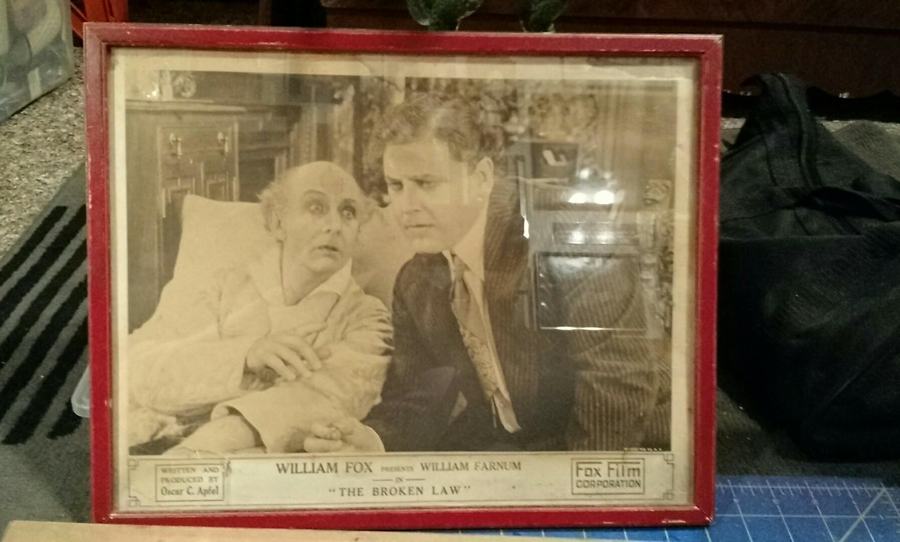
Oscar Apfel and Monte M. Katterjohn weld Victorian guilt to Balkan firelight in a film that should have rotted in a Kansas vault, yet crackles on like a stubborn coal.
Imagine, if you can, a Britain still coughing up the soot of Dickensian fog while the jazz age is merely a distant crackle on foreign headphones. Into this liminal soot strides Daniel Esmond—played with brittle hauteur by William Farnum—clad in a Norfolk jacket so aggressively English it could apologize on its own. The camera loves the early contrast: white gloves against wagon tar, silver tie-pin winking beside horse brass. That visual gag is the first bite of a much spicier meal; the film will spend its next hour stripping those symbols of empire off the hero like bark off a storm-battered birch.
What follows is not the orientalist safari you might fear. Apfel’s gypsies refuse to be picturesque extras; they gamble, cheat, nurse grudges, and quote ancestral poetry with the same breath. Christine Mayo’s bare-footed Esmeralda surrogate—here reimagined as sultry strategist Tamara—commands the screen through sheer kinetic scorn. Watch her in the fortune-telling scene: she flips cards with the boredom of a croupier, yet every time the lens catches her eye-lights, the frame seems to inhale. She is the film’s first rupture with polite silent melodrama, a harbinger of the flapper ferocity that would explode two years later in The Redemption of White Hawk.
The missing half-sister functions as lure, but Katterjohn’s screenplay is too mischievous to deliver simple reunion porn. Each act relocates the emotional bull’s-eye: Act I hungers for blood, Act II hungers for belonging, Act III hungers for metaphysical overhaul. By the time Daniel stands in a moonlit clearing, challenged to a knife duel that will decide the tribe’s next leader, the question is no longer "Will he find her?" but rather "Which version of him will emerge alive?" The answer is a sublime, almost cruel flourish: the sister materializes only after the duel is won, as if the universe demands payment before revelation.
Surviving prints carry amber and cyan tinting that ignites night sequences into campfire hallucinations. Cinematographer unknown (likely Aubrey Beattie doubling duties) opts for double-exposure to ghost Daniel’s city-self behind his caravan-self, a trick less gimmick than thesis: identity as palimpsest. The climactic campfire—shot day-for-night then soaked in crimson—feels like a direct ancestor to the infernal finale of Huo wu chang, though here the blaze baptizes rather than annihilates.
Farnum had spent the prior decade flexing swashbuckler charm in Fox’s boisterous programmers. Here he weaponizes that same physical confidence for self-interrogation; watch the way his shoulders fold inward the first time the tribe calls him "gorgio" with a sneer. The performance is calibrated in millimeters—a twitch at the corner of a prim smile, a blink held half a second too long—so that when he finally shouts "I am Rom!" the moment lands like a cathedral bell rather than vaudeville bombast.
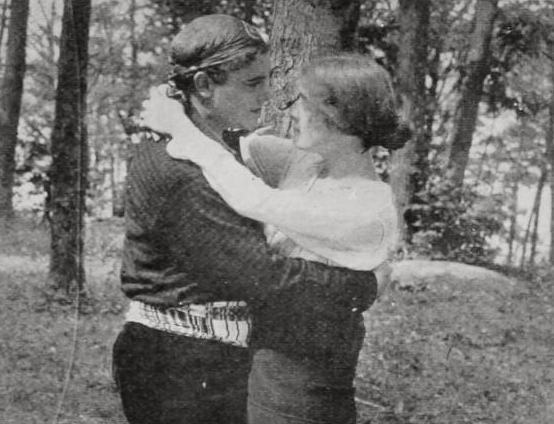
Opposite him, Christine Mayo detonates. She refuses the demure hand-wringing that plagues so many 1920s heroines, replacing it with a hip-shot swagger and a laugh that starts in her boots. In the sequence where she teaches Daniel to read tea leaves, her fingers keep brushing his wrist, but the gesture reads less seduction than territorial branding. It’s the kind of tactile subtext that would feel at home in the anarchic cabaret universe of Drama v kabare futuristov No. 13, though Apfel frames it within pastoral dusk rather than expressionist neon.
For a story that ends with a man crowned "king," The Broken Law is strikingly matriarchal. The realpolitik flows through the elderly drabarni who speaks only in Romani aphorisms and through Tamara, who engineers Daniel’s ascendancy because she deems him malleable enough to protect the clan from railroad speculators. The film’s final tableau—Daniel astride a wagon seat, crown askew, while Tamara stands behind holding the reins—reads as sly visual punchline: the king rules, the queen steers.
While As You Like It was flirting with gender-bending pageantry and The Patchwork Girl of Oz was bending fairy-tale physics, The Broken Law opts for ethnographic mysticism. Yet all three share the era’s obsession with shape-shifting identity. Likewise, fans of maritime fatalism in The Mystery of the Rocks of Kador will recognize the same moral vertigo here, though Apfel swaps Breton cliffs for English marshland.
Most circulating copies are 9.5 mm Pathé digests accompanied by generic library music. Seek instead the 2018 restoration from Eye Filmmuseum—its tinting restored via photochemical research, its score a new composition for viola d’amore and frame drum that taps out Romani rhythms without sliding into gypsy-jazz pastiche. Stream it on Criterion Channel under the "Silent Avant-Garde" banner or snag the region-free Blu paired with The Stranglers of Paris for a night of proto-noir cognitive whiplash.
Great art often arrives disguised as pulp, and The Broken Law is the slyest changeling of 1923. It smuggles post-colonial guilt, proto-feminist strategy, and meta-cinematic commentary into what the original posters sold as "a roaring gypsy romance." Ninety minutes with this clan and you’ll distrust every subsequent film that promises you "authentic" outsiders. The broken law of the title is not some antiquated statute but the unspoken covenant that identity is fixed; once shattered, the pieces refract possibilities as startling as cyan shadows on a caravan wall. Watch it, then spend a week staring into campfires wondering which half of your own blood might still be roaming, waiting for an invitation to mutiny.
Tags: silent film, 1923 cinema, gypsy representation, William Farnum, Oscar Apfel, lost film restoration, early feminist cinema, British identity, Romani culture, silent drama, montage analysis, classic movie review
IMDb —
1916
Community
Log in to comment.