DbcultAccessing Vault...
Cult Review
Senior Film Conservator
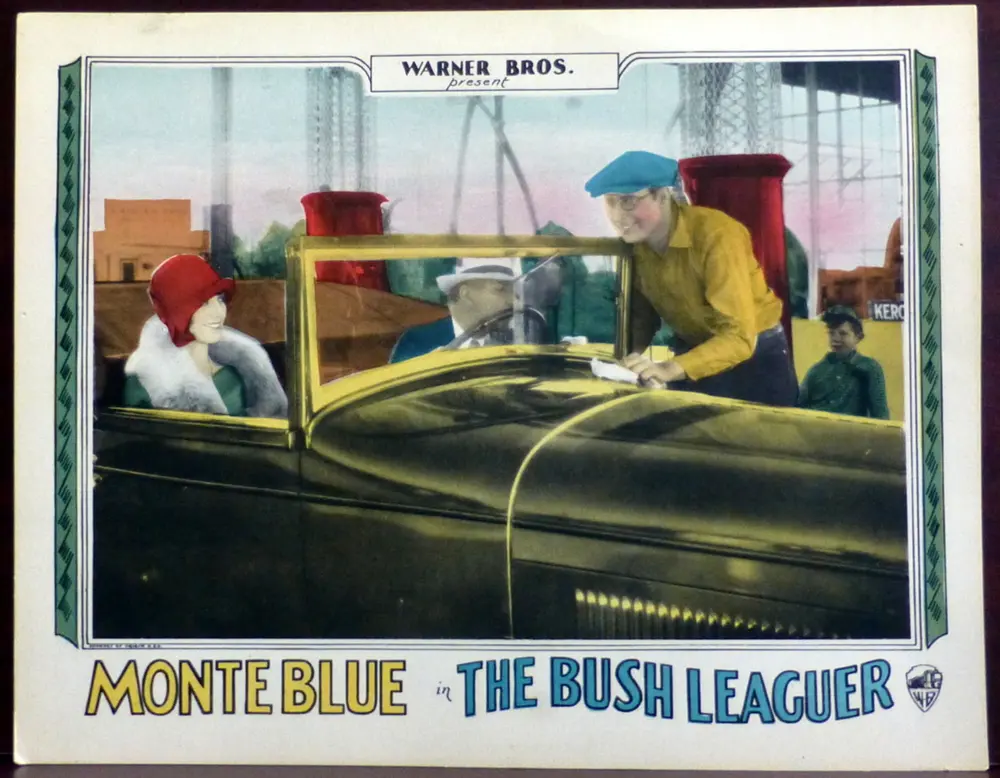
Should you spend eighty minutes watching a silent baseball comedy from 1927 in the 2020s? Short answer: yes, but primarily for its surprisingly modern take on performance anxiety rather than its athletic action. This film is a definitive find for those who enjoy character-driven silent comedies like Keep Smiling, but it will likely frustrate viewers seeking a high-stakes sports drama or fast-paced modern editing.
This film works because it pivots away from the standard 'hero athlete' trope to explore a protagonist who is fundamentally uncomfortable in his own skin, anchored by Monte Blue's nuanced physical performance.
This film fails because the third-act romantic misunderstanding relies on a level of character stupidity that feels forced even by the standards of 1920s melodrama.
You should watch it if you are a student of early cinema, a baseball historian interested in the pre-war Los Angeles Angels, or if you appreciate a protagonist who would rather fix a carburetor than win a pennant.
The Bush Leaguer is not a baseball movie. It is a movie about a mechanic who happens to be good at throwing things. This distinction is vital to understanding why the film remains watchable nearly a century later. Specs White, played with a frantic, bespectacled energy by Monte Blue, is a spiritual cousin to the characters of Harold Lloyd. He isn't a jock; he’s an intellectual trapped in a body that the world wants to commodify for entertainment. His true passion—a new gas pump—serves as a fascinating sub-plot that mirrors the industrial optimism of the era.
In one specific scene, Specs is shown under a chassis, covered in oil, looking more at peace than he ever does on the mound. When he is forced to pitch, the camera tightens on his face, capturing a genuine sense of dread. This isn't the slapstick fear of a coward; it’s the visceral reaction of an introvert being forced into the spotlight. It’s a relatable, humanizing element that elevates the film above contemporary works like Bowled Over.
The central conflict—Specs’ fear of large crowds—is handled with a surprising amount of psychological weight. While the film eventually settles for a comedic resolution to this phobia, the middle chapters treat his anxiety as a legitimate career-ending disability. This creates a tension that is rare for 1927. We see him standing on the pitcher's mound at the Angels' stadium, the background blurred to simulate his dizzying disorientation. It’s a clever use of early cinematography to put the audience in his headspace.
Compare this to the more straightforward heroics in The Right of Way. Where that film deals with external social pressures, The Bush Leaguer is an internal battle. Specs isn't fighting an antagonist; he’s fighting his own nervous system. This makes the stakes feel incredibly personal. When he finally succeeds, it’s not just a win for the team; it’s a victory over his own mind. It works. But it’s flawed.

The Bush Leaguer is worth watching for its historical value and its unique character study. It offers a rare glimpse into the Pacific Coast League's history and features a lead performance that avoids the 'tough guy' stereotypes of the 1920s. While the romantic subplots are dated, the core story of a man trying to fund his dreams through a job he dislikes is timeless. It provides a more grounded experience than the heightened reality of The Napoleonic Epics.
Monte Blue delivers a performance that is surprisingly restrained. In an era where silent actors often leaned into wild gesticulation, Blue uses his eyes and the set of his shoulders to convey Specs' discomfort. He manages to make the 'Specs' persona—complete with the stereotypical glasses—feel like a shield rather than a gimmick. It is a masterclass in quiet comedy that contrasts sharply with the more boisterous roles found in Big Chief Koko.
Leila Hyams as Alice Hobbs is equally impressive. She isn't just a love interest; she is the owner of the team. While the script eventually forces her into a standard romantic misunderstanding, her early scenes show a woman who is competent, business-minded, and empathetic. The chemistry between her and Blue is palpable, making the inevitable third-act friction all the more frustrating for the viewer. Their interaction in the dugout, where she tries to coach him through his fear, is one of the most tender moments in 1920s sports cinema.
Director Howard Bretherton captures the baseball sequences with a documentary-like clarity. There is a lack of 'movie magic' in the sports scenes that actually works in the film's favor. The pitches look real, the dirt looks real, and the sweat on the players feels authentic. This grounded aesthetic makes the moments of comedy stand out more effectively. The cinematography doesn't try to be 'artistic' in the way of Posledniy vystrel, but it is highly functional and effective.
One surprising observation: the film spends a significant amount of time on the mechanics of the gas pump. The shots of the blueprints and the prototype are filmed with the same reverence as the baseball action. This elevates the 'inventor' side of Specs' personality, ensuring the audience respects his intellect as much as his arm. It’s a rare film that treats blue-collar innovation with such sincerity.
Pros:
- Strong, relatable lead performance.
- Unique blend of sports and industrial innovation.
- Authentic 1920s baseball atmosphere.
- Progressive female lead character.
Cons:
- Predictable romantic plot points.
- Some pacing issues in the second act.
- The 'secret' phobia is resolved a bit too conveniently.
The Bush Leaguer is a fascinating relic that manages to be more than just a historical curiosity. While it shares some of the structural weaknesses of other films from the period, such as The Girl and the Graft, its focus on internal struggle makes it stand out. It’s a film that understands that the hardest game to win is the one being played inside your own head. The baseball is secondary. The invention is the goal. The man is the story. It’s a solid, charming piece of cinema that deserves a spot in the conversation about early sports films. It isn't a grand epic, but it is a deeply human one.
"A quiet triumph of character over caricature, The Bush Leaguer proves that even in 1927, the most interesting thing on a baseball field was the man afraid to be there."
IMDb 7.3
1924
Community
Log in to comment.