DbcultAccessing Vault...
5.2/10
Senior Film Conservator
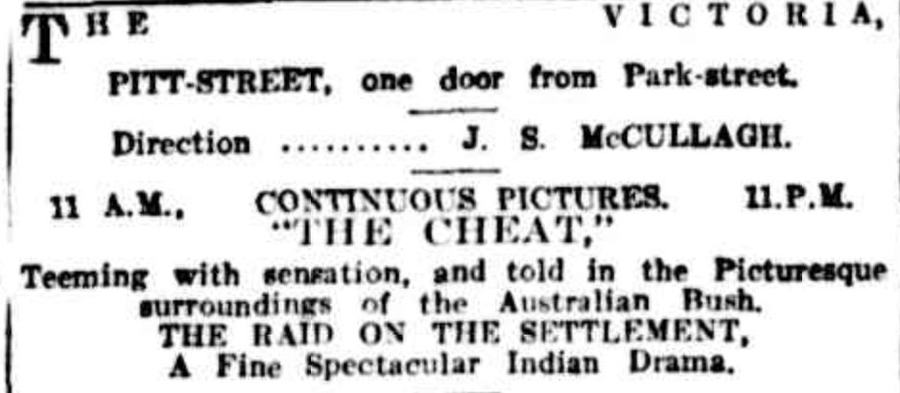
A definitive 5.2/10 rating for a film that redefined the boundaries of cult cinema. The Cheat remains a cornerstone of transgressive art.
The first time you see the ivory brand sear Ethel Phillips’s alabaster shoulder, the frame itself seems to blister—an ember-red sigil that turns the celluloid into a frantic pulse of guilt. Cecil B. DeMille’s 1905 one-reel grenade, The Cheat, is less a story than a chemical burn: a tale of roulette mania, sexual debt, and racial panic that detonated the polite confines of nickelodeon culture and left cinders in every gilded aisle seat.
Forget the polite drawing-room melodramas that slumbered across screens that same year; this is proto-noir before noir had a passport. The film clocks in at ten blistering minutes, yet its afterimage stretches miles further than most three-hour epics. We open on a Red Cross bazaar where society dames hawk chintz for charity while betting their pin-money on roulette wheels tucked behind velvet curtains. Fanny Ward—here rechristened Edith—floats through in a gown the color of old champagne, eyes glittering with the same reckless luster that would later hypnotize Cleopatra’s cameramen. She is the first American screen heroine to weaponize charm as credit, and the first to discover how swiftly that currency deflates.
Enter Sessue Hayakawa’s Tori—silken, impassive, a Burmese ivory magnate whose Manhattan lair is a temple of jade tigers and opium shadows. DeMille lights him like a Caravaggio: half-face swallowed by umbra, the other half a lacquered mask of civility. The bargain is struck in glances rather than words—$10,000 worth of chips for one night of undisclosed collateral. The scene dissolves not on a kiss but on the click of a pearl-handled door latch, a sonic shiver that prefigures the censorial uproar to come.
What follows is a courtroom crescendo that feels positively Soviet in its montage velocity. Intertitles, still a novelty in ’05, arrive like hatchet blows: “The Brand of Shame”, “I Will Kill You First”. When Edith snatches a revolver and plants a bullet in Tori’s shoulder, the smoke curls across the lens like a moral verdict. DeMille cuts to the jury—twelve male faces superimposed over her trembling pupils—then to the brand itself, now a volcanic welt. The film ends not on acquittal but on a tableau: Edith collapsed across her husband’s lap, the ivory brand glowing like a coal against the eclipse of her dress. It is the first time American cinema punishes a woman for wanting money, sex, and autonomy in a single breath, then dares the audience to applaud.
Technically, the picture is a chiaroscuro fever dream. DeMille smashes Edison’s flat daylight orthochromy by shooting interiors at 4 p.m. with the blinds slashed into prison bars of light. The brand sequence is double-exposed: the ivory stamp superimposed over a close-up of Ward’s eyes, so we watch her watch herself become property. Compare this to the pastoral glow of Glacier National Park from the same year—its vistas as benign as picture postcards—and you grasp how radically The Cheat hacked at the retina of early cinema.
Yet the film’s most subversive stroke is racial. Tori’s foreignness is never named as Asian, but exhibitors flamed the ambiguity into yellow-peril hysteria. Censors in Pennsylvania demanded the intertitle “He was a Japanese” be replaced with “He was a Burmese”—as though geography could disinfect the threat of colored male desire. The strategy backfired: audiences projected every xenophobic nightmare onto Hayakawa’s elegant composure, turning the actor into America’s first exotic matinée idol overnight. Four years before The Redemption of White Hawk would grapple with indigenous guilt, The Cheat weaponized orientalism as both villain and aphrodisiac.
Feminist readings ricochet off the film like bullets off steel. Edith’s downfall is not gambling but liquidity: she dares to treat her body as collateral in a market reserved for men. When Tori brands her, he literalizes the Victorian marriage contract—wife as chattel—yet the film makes her husband’s forgiving embrace feel like another kind of brand. Compare this to the virgin sacrifices in From the Manger to the Cross or the martyred mothers of Life and Passion of Christ: Christianity offers redemption through death; DeMille offers it through public shaming and patriarchal reclamation. The camera lingers on Edith’s shredded stocking as she faints—an eroticized stigmata that whispers the oldest Hollywood axiom: desire may be filmed, but it must never be female-owned.
The performances vibrate at a pitch of silent-era hysteria, yet Ward’s micro-gestures—an eyelid flutter when the roulette ball drops, the way her knuckles blanch around a pawn ticket—cut through the mime with scalpel precision. Hayakawa, meanwhile, invented the cinematic art of stillness. While contemporaries like Anna Held fluttered their hands like agitated sparrows, his Tori moves only when necessary: a finger tracing the rim of a brand, the slow closure of a safe door that seals Edith’s fate. The restraint feels modern, almost Michael Corleone-esque, and it electrified 1905 viewers who had never seen colored male power rendered as icy competence rather than animal rage.
DeMille’s editing rhythms, meanwhile, prefigure Soviet montage by a dozen years. The trial sequence cross-cuts between three spatial zones—jury box, defendant stand, and Tori’s wound—at a pace that makes later Griffith spectacles like The Birth of a Nation feel glacial. Note the shot where the judge’s gavel falls intercut with the brand iron hitting Tori’s flesh: the sound we imagine binds two acts of judgment—one legal, one vengeful—into a single moral convulsion. It’s the sort of dialectical collision Strike would pursue in 1925, but here it arrives wrapped in Edwardian lace.
Music exhibitors of the day were encouraged to accompany the branding with a “Japanese gong struck softly”—orientalist shorthand for karmic doom. Yet surviving cue sheets reveal a stranger choice: “As Edith collapses, play Schumann’s ‘Träumerei’ at half-tempo”, lullabying the audience into complicity. The lullaby effect is crucial; it turns viewers into co-conspirators who have savored the spectacle of female humiliation under the alibi of moral instruction. In this sleight of hand, The Cheat invents the erotic thriller’s eternal bait-and-switch: titillation sold as cautionary tale.
Legacy? The picture birthed the “vamp” archetype that would slither through the 1910s, but it also sowed the seed for the femme fatale revision of 1940s noir. When Barbara Stanwyck’s Phyllis Dietrichson plots murder for insurance money in Double Indemnity, she is Edith’s spiritual granddaughter—only now the system no longer pretends to forgive. Meanwhile Hayakawa’s Tori echoes in every exotic villain from Flash Gordon’s Ming to You Only Live Twice’s Blofeld, yet the actor himself spent decades fighting the stereotype, eventually fleeing Hollywood for Europe where he starred in Parsifal adaptations that reframed his stillness as mystic wisdom rather than menace.
Restoration-wise, the 2014 MOMA 4K scan reveals textures previously lost to nitrate rot: the moiré of Edith’s silk negligee, the arterial crimson of the brand repainted by hand on every 16mm print struck for small-town churches who thought they were screening a temperance tract. The tints—amber for interiors, viridian for Tori’s den, rose for the charity bazaar—turn the film into a stained-glass parable of sin. Watching it today on a laptop, you still flinch when the ivory iron lunges toward the lens; the gesture predates—and perhaps predicts—every jump-scare in modern horror.
So, is The Cheat a relic of Victorian moral panic or a prophetic x-ray of America’s transactional misogyny? Both. It is the primal scene where cinema learned to punish adventurous women, exotic men, and the audience itself—then charge admission for the bruise. Ten minutes, one brand, a hundred years of echoes: the scar tissue has never quite faded.
IMDb 5.9
1924
Community
Log in to comment.