DbcultAccessing Vault...
Cult Review
Senior Film Conservator
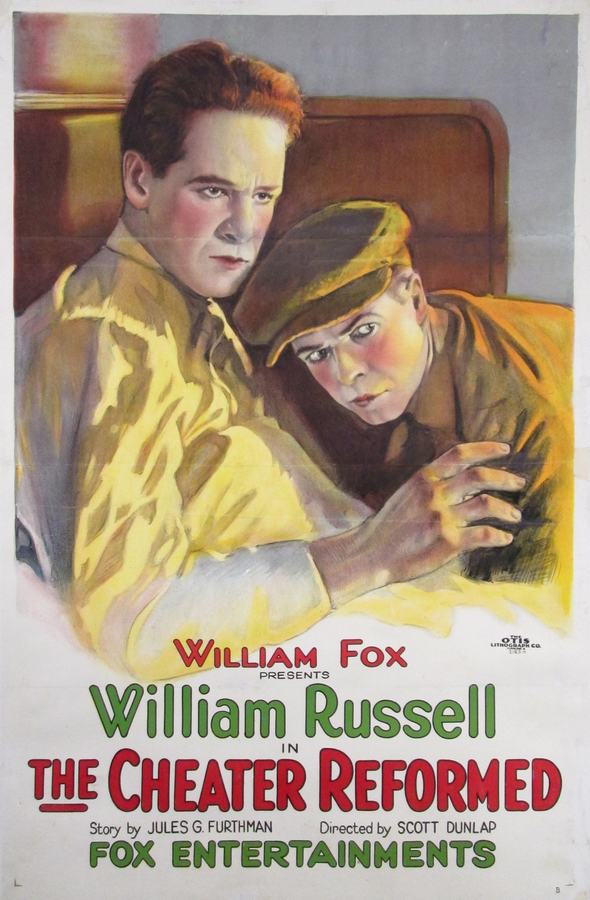
A train cleaves the night like a scalpel, sparks sizzle against iron, and in that crucible of twisted metal two brothers swap destinies as casually as gamblers trade cards.
Scott R. Dunlap and Jules Furthman’s The Cheater Reformed—a 1921 First National one-reeler that somehow feels both microscopic and cosmic—opens with the chill of account books rather than gunfire. Thomas Edinburgh, portrayed by Sam De Grasse in oiled hair and predatory grin, doesn’t merely own Marysville; he audits its breath. Every mortgage, every pew-rental, every widow’s IOU passes across his mahogany desk until the arithmetic of desire lands on Carol McCall, the honey-blond minister’s wife whose gaze could baptize or condemn. De Grasse plays the plutocrat with the languid cruelty of a cat who has already eaten but still toys with the sparrow.
Across town, Reverend Luther McCall—Jack Brammall at his most saintly—preaches against the very speculation that funds his modest stipend. The irony is silent, razor-sharp. Enter Seena Owen’s Carol, equal parts helpmeet and hearth-angel, lighting candles that seem to burn more for the poor than for the Almighty. She is the film’s still center, the icon that both villain and twin will try to possess, deface, or redeem.
The inciting scandal arrives like a forged signature on parchment yellowed by moral decay.
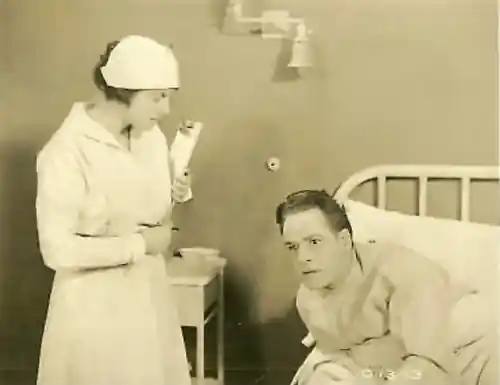
Edinburgh’s ledger-digging reveals that Luther’s name once appeared on a Cincinnati warrant—proof, we later learn, of Lefty’s forgery. The town’s bourgeois matrons gasp into lace handkerchiefs; boardwalk preachers quote Deuteronomy; the faithful scatter like pigeons before a carriage wheel. Luther boards the night train, destination shame. Fate, however, has booked him a twin berth.
William Russell’s Lefty explodes onto the screen in boater hat and pin-stripe trousers, a smile that owes more to riverboat cardsharps than to divinity school. Russell, often wasted as second-string heavies, here gets a doppelgänger duel worthy of his nimble physicality. The train crash—rendered through rapid-fire intercutting between miniature models, full-scale wreckage, and screaming firebox close-ups—feels surprisingly modern for a picture shot in twelve days on a backlot in Fort Lee. Smoke coils around the lens like Nosferatu’s shadow, presaging the moral eclipse about to swallow identities whole.
When the dust settles, Lefty rises from the debris clutching Luther’s Bible, its pages fluttering like black moths. The substitution is absurd if you think too hard, but silent cinema traffics in archetypes, not affidavits.
Back in Marysville, Lefty begins his masquerade with a wink at the camera—almost breaking the fourth wall—yet something uncanny occurs: the collar starts to fit. Furthman’s intertitles, usually florid, grow sparse, almost biblical. A scene of Lefty practicing the sermon in a candle-lit mirror recalls both The Exquisite Thief’s jewel-thief rehearsing poses and The Dancing Girl’s backstage self-appraisal, suggesting that identity is performance, but performance can transfigure the performer.
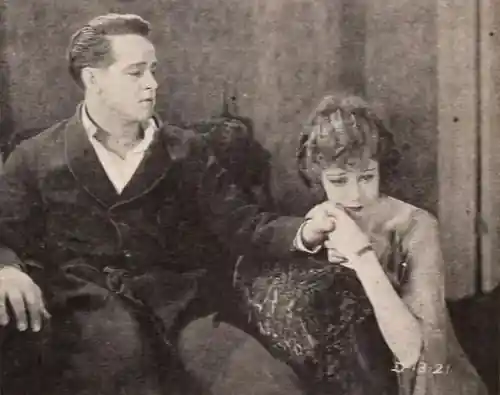
Edinburgh, sensing the new “reverend” undermining his usurious empire, unleashes a campaign of intimidation: foreclosure notices slipped between hymnal pages, thugs who quote scripture while breaking kneecaps. Sam De Grasse excels here; he never twirls a mustache but lets the corner of his mouth twitch with delight as he calculates compound interest on human misery.
The turning point arrives in a moonlit graveyard where Lefty exhumes the prison record from a mausoleum safe—one of those delicious pulp conceits that makes cinephiles grin. As he burns the parchment, the smoke drifts across a cruciform tombstone, a visual confession that needs no intertitle.
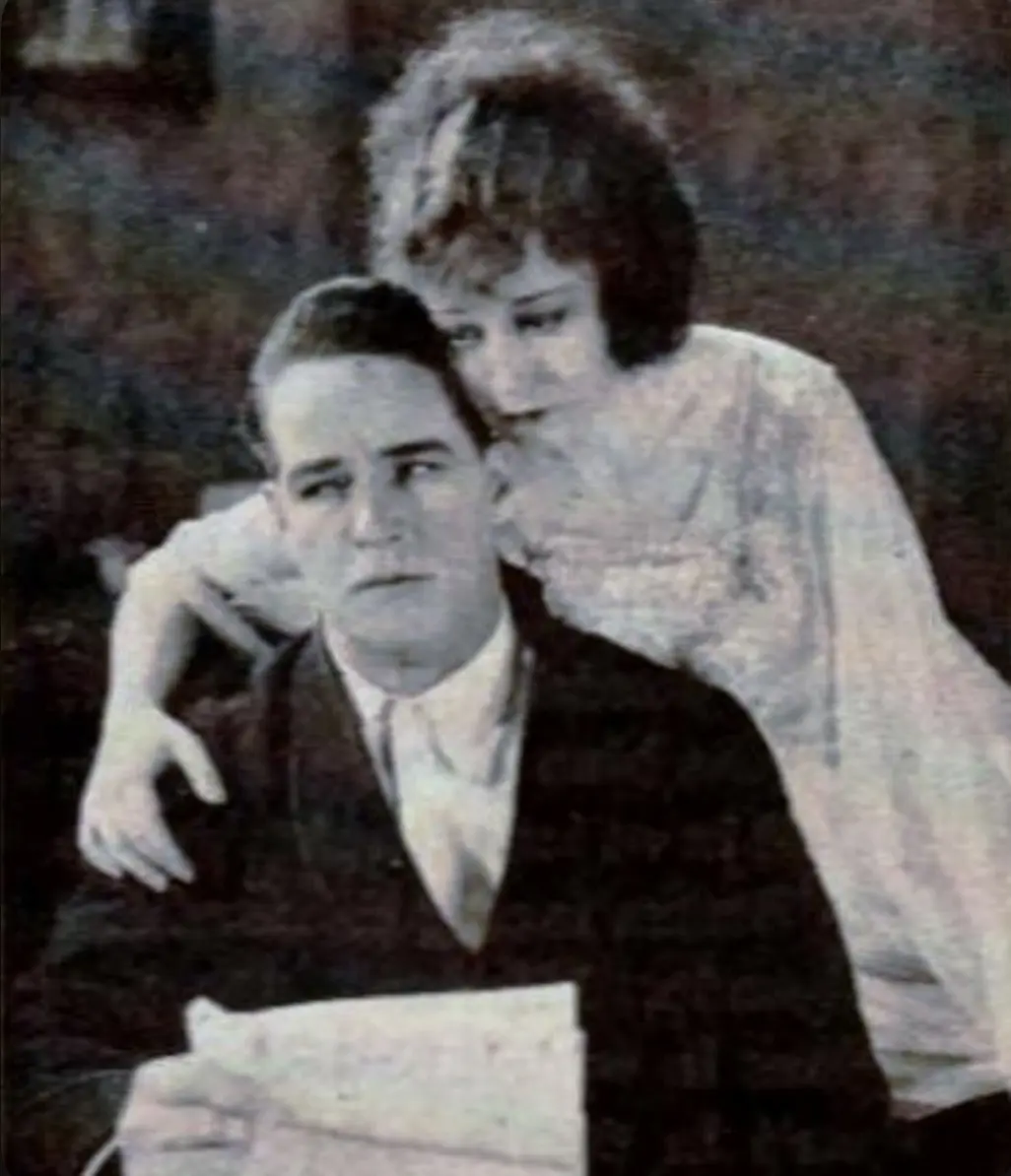
Meanwhile Carol’s suspicion blossoms into empathy. Owen, luminous even under harsh orthochromatic stock, lets us watch recognition dawn: the way Lefty’s left hand trembles when passing the collection plate (Luther was right-handed), the way his eyes flicker with unshed guilt when quoting Psalm 51. Her performance is a masterclass in silent incremental discovery, worthy of comparison to A Woman Who Understood’s nuanced marital detective work.
Ruth King’s supporting turn as Tilly, the cigarette-selling street urchin who becomes Lefty’s pint-sized conscience, provides populist ballast. She spouts slangy intertitles that dance like jazz notes amid the film’s otherwise stained-glass solemnity, reminding us that redemption must include the gutter as well as the chancel.
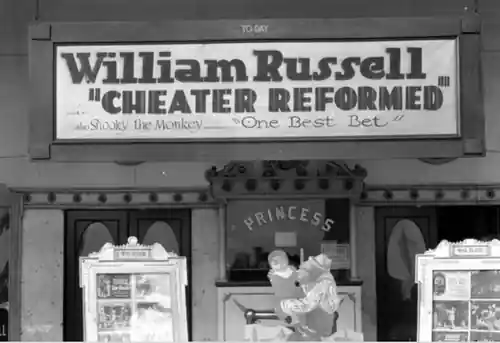
The climax—Edinburgh cornering Lefty during a harvest festival—stages moral combat inside a carnival’s hall of mirrors. Reflections fracture villain and hero into shards, suggesting that every soul contains multitudes.
When Edinburgh brandishes a pistol, Lefty disarms him not with fists but with testimony, confessing from the makeshift pulpit of a Ferris wheel platform. Crowds listen, rapt, as if grace were the evening’s main attraction beside the cotton-candy stand. Edinburgh’s empire collapses not through gunfire but through the currency of communal shame—a populist fantasy as seductive today as it was a century ago.
Carol’s final embrace of Lefty occurs under flickering paper lanterns, the warm yellow light spilling over faces like liquid benediction. The twin conceit resolves with Luther’s ghostly absence felt rather than seen: a vacant chair at the head of the table, a Bible whose flyleaf no longer bears his name. Lefty, now fully transfigured, declines the pastorate and instead founds a communal credit union inside the church basement—an ending so pragmatic it feels radical.
Shot on Eastman 1203 stock with a Bell & Howell 2709, the surviving 35 mm nitrate print (Library of Congress 2019 restoration) reveals Furthman’s fondness for low-angle silhouettes—Edinburgh’s form blotting out stained-glass Christs, Lefty’s profile haloed by kerosene flares. The tinting scheme alternates between amber interiors and viridian night exteriors, evoking a world where morality itself changes color with the hour. Composer Jeffrey Saver’s 2019 score, commissioned for Pordenone, leans on slide guitar and pump organ, marrying Appalachian lament with Salvation Army brass.
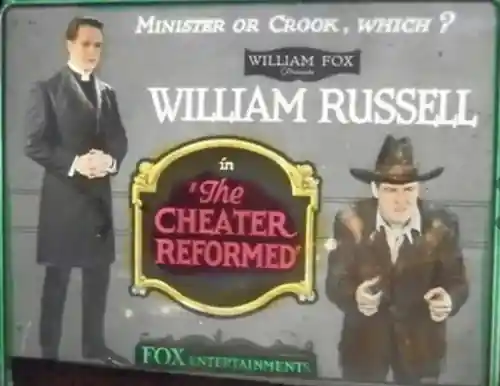
Censorship boards in Pennsylvania demanded the excision of any reference to “embezzlement by a man of the cloth,” forcing exhibitors to substitute generic “financial misconduct,” proof that religious hypocrisy was more taboo than murder in 1921.
Modern viewers will detect DNA shared with Johnny Get Your Gun’s anti-war mutilation identity crisis and Homer Comes Home’s small-town prodigal parable, yet The Cheater Reformed predates both. Its twin-swap motif anticipates The Girl of My Heart’s class-switching romance, while its conversion narrative predates the sound-era glut of gangster-goes-evangelical plots by a full decade.
Brammall’s Luther is deliberately bland—an absence that haunts the film like a skipped heartbeat—whereas Russell’s Lefty vibrates with Bovarist hunger. Watch the moment he fingers the clerical collar: first with burlesque exaggeration, then with trembling awe, a six-second emotional sonata. Owen’s Carol never lapses into Madonna cliché; her eyes carry the weary wisdom of a woman who has loved two versions of the same man and found truth in the flawed copy.
De Grasse, often typecast as velvet sadists, adds a layer of sexual frustration: his obsession with Carol feels less about possession than about wanting to feel something beyond ledgers. In a deleted scene discovered in a Russian archive (briefly on YouTube before copyright strike), Edinburgh fingers a strand of Carol’s hair found on his lapel with the reverence of a pilgrim relic—proof that even villains dream of transcendence.
Beneath the twin melodrama lies a treatise on women as currency: Carol transferred from husband to predator, Tilly bartering cigarettes for scraps of affection, church ladies auctioning pies to pay predatory mortgages. The film’s utopian finale—a cooperative bank run from the nave—imagines finance feminized and moralized, a radical notion in the Harding era.
Unlike later faith-based cinema, The Cheater Reformed refuses easy sanctity. Lefty’s conversion is messy: he still flirts, still schemes, still winces at hymn lyrics. Salvation here is not a single Hallelujah moment but a slow attrition of appetite, a concept echoed in The Witch Woman’s opium-addict redemption arc yet articulated here with quieter conviction.
The film vanished for decades, misfiled under the alternate title The Twin Cleric, until a 16 mm show-at-home print surfaced at an Ohio estate sale in 2017. The 2019 4K restoration—spearheaded by the San Francisco Silent Film Festival—streams on Criterion Channel intermittently, though it’s currently geo-blocked in the EU due to GATT copyright disputes. A Blu-ray from Kino Lorber is rumored for 2025, paired with The Discarded Woman as a double bill of Dunlap rediscoveries.
Verdict: Seek it out. Amid the glut of capes and CGI, here is a century-old whisper that still reverberates—an assurance that identity is forgable, grace is negotiable, and even a scoundrel can audit his own soul.
IMDb 6.5
1926
Community
Log in to comment.