DbcultAccessing Vault...
Cult Review
Senior Film Conservator
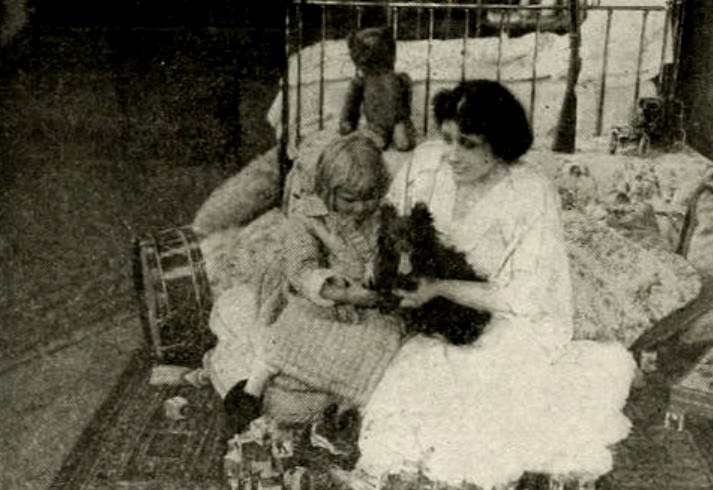
In the nascent days of cinema, when the silver screen was still finding its voice, certain narratives emerged with an almost prescient clarity, dissecting the societal anxieties and moral quandaries of their time. Among these stands "The Climbers," a film from an era often dismissed as primitive, yet one that offers a remarkably sophisticated, if melodramatic, gaze into the corrosive effects of unbridled social ambition and the fragility of financial empires. Penned by the formidable duo of Clay M. Greene and Clyde Fitch, this cinematic endeavor, much like its theatrical precursor, serves as a stark mirror reflecting the Gilded Age's relentless pursuit of status and the often-catastrophic price paid for it. It's a drama that, even through the lens of early filmmaking techniques, resonates with a timeless critique of materialism, a theme as relevant today as it was over a century ago.
At the heart of this intricate web of ambition and despair is John Hunter, portrayed with a palpable sense of beleaguered dignity by Clarence Elmer. Hunter is not inherently a villain; rather, he is a man cornered by the expectations of his own family, specifically his social-climbing wife and daughters. Their insatiable hunger for the trappings of high society—the lavish gowns, the opulent soirées, the unceasing display of wealth—drives Hunter to make increasingly reckless decisions. He is, in essence, a victim of the very lifestyle he strives to maintain, a tragic figure sacrificing his peace, and ultimately his life, at the altar of superficiality. The film subtly, yet powerfully, illustrates how external pressures can warp internal compasses, pushing individuals beyond their ethical boundaries. This theme of a protagonist ensnared by external forces, often leading to their downfall, echoes in other contemporary narratives, though perhaps less overtly financial, such as in At Bay, where characters find themselves trapped by circumstances beyond their immediate control.
Hunter's initial foray into the stock market is not born of a gambler's impulse but a desperate attempt to shore up a crumbling facade. He makes "large investments," a euphemism for high-stakes gambles, hoping to outpace the mounting expenditures of his household. The irony is bitter: his efforts to secure their accustomed lifestyle only hasten its demise. The stock market, a fickle beast then as now, crashes with devastating finality, stripping him of a significant portion of his fortune. This moment is a pivotal turning point, not merely for Hunter's finances but for his very psyche. The weight of his impending ruin, the specter of his family's judgment, begins to press down upon him with crushing force.
As if the market's betrayal were not enough, Hunter is confronted with a more personal, and perhaps more profound, treachery: his son-in-law, Dick Sterling, a character whose moral compass seems perpetually misaligned, has lost an additional three million dollars making investments in Hunter's name. Peter Lang, in his portrayal of Sterling, embodies a certain feckless charm masking a dangerous lack of judgment and accountability. This revelation is the ultimate catalyst, the final straw that breaks Hunter's spirit. It is not just the financial loss, staggering though it is, but the profound violation of trust, the egregious misuse of his identity and reputation, that pushes him to the brink. The film, through this narrative twist, explores the deep-seated anxieties of financial insecurity and the devastating impact of misplaced trust within the family unit. The sheer audacity of Sterling's actions, coupled with the profound impact on Hunter, lends a tragic gravitas to the story that transcends simple melodrama.
Hunter's subsequent suicide is depicted not as an act of cowardice but as the tragic culmination of a man utterly overwhelmed and stripped of all hope. It’s a stark, uncompromising depiction of the psychological toll exacted by financial ruin and social disgrace in an era where public image was paramount. The film doesn't shy away from the grim realities, presenting a world where the loss of wealth can equate to the loss of self, a sentiment that resonates with the desperate struggles seen in films like His Last Dollar, where the value of human life and dignity is often tied to monetary worth. This moment, though brief, is perhaps the most powerful in the film, cementing its status as a poignant social commentary rather than mere entertainment.
In the aftermath of Hunter's tragic demise, the family faces utter destitution. Enter the wealthy aunt, a character who embodies both salvation and a new form of control. Her offer to bail out the family comes with a stringent condition: the money must be placed under Sterling's "strict control." This is where the narrative truly complicates itself, shifting from a tale of financial ruin to one of intricate power dynamics and simmering resentments. Eleanor Barry, as the formidable aunt, projects an aura of shrewdness and unyielding resolve, her benevolence tempered by a clear-eyed understanding of the family's past follies.
The irony of Sterling, the very architect of their latest financial catastrophe, being entrusted with the family's new lifeline is not lost on the audience, nor on the characters themselves. This arrangement creates a volatile crucible of emotions: the wife and daughters, accustomed to their extravagant habits, now find themselves beholden to the man who brought them low. Sterling, suddenly imbued with newfound authority, navigates his role with a mixture of newfound confidence and lingering insecurity. The film deftly explores how wealth, or the lack thereof, can dramatically alter familial hierarchies and expose the raw nerves of dependency and resentment. The complications that ensue are a masterclass in psychological tension, as each character grapples with their diminished circumstances and the uncomfortable proximity to the source of their undoing. This theme of enforced dependency and the psychological toll it takes on characters is also explored, albeit in a different context, in films like Ingeborg Holm, where external forces dictate the fate and dignity of individuals.
While early cinema often prioritized narrative over nuanced character development, "The Climbers" benefits from a cast that, within the stylistic conventions of the era, manages to convey the emotional core of their roles. Clarence Elmer's John Hunter is the anchor, his slow descent into despair being the film's tragic heartbeat. Peter Lang's Dick Sterling, while perhaps initially appearing as a cad, evolves into a figure of complex authority, albeit one born of circumstance rather than inherent merit. Eleanor Barry's aunt is a force of nature, her presence commanding attention and driving much of the post-suicide narrative.
The supporting cast, including Alan Quinn, William H. Turner, Ferdinand Tidmarsh, Walter Hitchcock, John Smiley, Betty Brice, Frankie Mann, Gladys Hanson, Florence Hackett, Ruth Bryan, Walter Law, George Clarke, Dorothy DeWolfe, Bernard Siegel, Charles Brandt, George Soule Spencer, Mildred Gregory, and Edith Ritchie, contribute to the tapestry of this Gilded Age drama. Their collective performances, though often broad by modern standards, effectively communicate the societal pressures and class distinctions that underpin the film's central conflict. These actors, many of whom were stalwarts of the early cinematic landscape, bring a certain authenticity to their roles, embodying the archetypes of the ambitious socialite, the concerned friend, or the indifferent observer, each playing their part in the unfolding tragedy.
The enduring strength of "The Climbers" lies significantly in its source material. The play by Clyde Fitch, adapted for the screen by Clay M. Greene, was a considerable success on the stage, known for its sharp dialogue and incisive social commentary. Fitch, a prolific and popular playwright of his time, was celebrated for his ability to capture the nuances of American high society, its hypocrisies, and its hidden sorrows. Greene's adaptation for the screen skillfully translates this theatrical essence into a visual narrative, even within the nascent limitations of early film.
The collaborative effort ensures that the narrative maintains its dramatic tension and character motivations, a testament to the power of well-crafted storytelling. While early film often relied on spectacle, "The Climbers" demonstrates a commitment to character-driven drama, a hallmark of both Fitch's original work and Greene's cinematic translation. The themes of social climbing, financial ruin, and familial betrayal are woven into a compelling tapestry, ensuring that the film transcends its historical context to speak to universal human experiences. This meticulous adaptation process, converting a successful stage play into a coherent and impactful film, is a challenge that even modern filmmakers grapple with, as seen in the varied success of adaptations from Hamlet (1911) to more contemporary works.
As an artifact of early cinema, "The Climbers" provides a fascinating glimpse into the evolution of film as an art form. While it lacks the sophisticated editing and camera work that would come to define later eras, it effectively uses what was available: clear, often static shots that frame the action, allowing the performers' expressions and gestures to convey much of the emotional weight. The film relies heavily on tableau vivants and dramatic staging, reflecting its theatrical origins. Yet, within these constraints, it manages to build genuine suspense and emotional resonance.
The film's enduring relevance lies in its unflinching examination of themes that remain potent. The relentless pursuit of wealth and status, the corrosive impact of debt, the breakdown of familial trust, and the psychological fragility of those caught in the maelstrom of financial crisis—these are not relics of a bygone era but persistent struggles that continue to define contemporary society. "The Climbers" serves as a cautionary tale, a stark reminder that true wealth lies not in material possessions but in integrity, genuine relationships, and peace of mind. The narrative, despite its age, feels remarkably modern in its critique of consumerism and the performative aspects of social life.
Comparing it to other films of its period, "The Climbers" stands out for its direct engagement with the financial anxieties of the middle and upper classes. Unlike the more escapist fare or overt melodramas, this film delves into the moral complexities of economic ambition. It avoids simplistic good-versus-evil dichotomies, instead presenting characters driven by a mix of understandable desires and fatal flaws. This nuanced approach, rare for its time, elevates it beyond a mere historical curiosity. It's a film that asks profound questions about value, sacrifice, and the true cost of societal acceptance. The dramatic tension surrounding financial collapse and the subsequent struggle for survival can be seen as a precursor to later, more elaborate narratives like Sangue blu, which also explored the decline of aristocratic families.
The portrayal of the family's fall from grace, and the subsequent efforts to regain some semblance of stability, also speaks to the resilience and fragility of human nature. The film doesn't offer easy answers, nor does it present a neatly tied up conclusion. Instead, it leaves the audience to ponder the long-term implications of the aunt's intervention and Sterling's newfound, yet perhaps undeserved, power. This ambiguity adds another layer of depth, suggesting that even when immediate financial crises are averted, the scars of betrayal and loss linger. It's a testament to the writers' foresight that they understood the psychological aftermath of such events, making the story more than just a plot; it's a study in human endurance and moral compromise.
In conclusion, "The Climbers" is far more than a historical footnote in the annals of silent film. It is a powerful, if melancholic, drama that dissects the social fabric of its era with surprising acuity. Its exploration of ambition, financial folly, and the complex dynamics of family remains compelling. For anyone interested in the social history embedded within early cinema, or simply a well-told story of human fallibility and resilience, "The Climbers" offers a rich and rewarding viewing experience. It serves as a potent reminder that the pursuit of status, unchecked by prudence and integrity, can lead to a precipitous fall from grace, leaving behind a trail of devastation that no amount of inherited wealth can truly mend. The film's message, delivered through the expressive performances of its cast and the robust narrative provided by Greene and Fitch, is as resonant today as it was when it first graced the flickering screens, inviting us to reflect on our own values and the true cost of climbing.

IMDb 8
1934
Community
Log in to comment.