DbcultAccessing Vault...
Cult Review
Senior Film Conservator
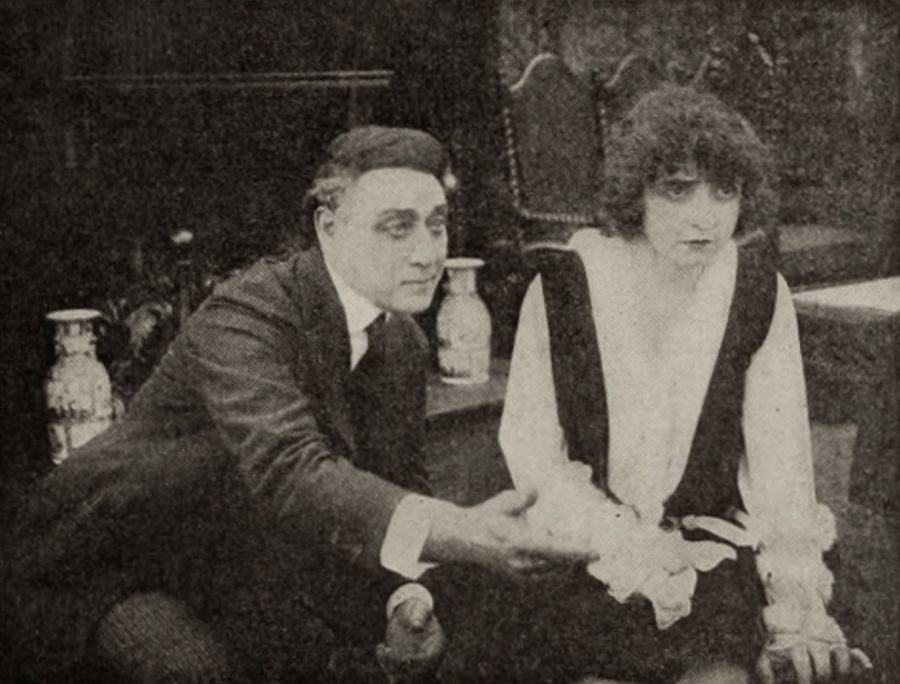
From the first iris-in on a Lower-East-Side curbstone, where a ragged urchin slaps blacking on a banker’s spat, The Conqueror announces itself as a celluloid symphony of upward venom. Director Reginald Barker, armed with Gardner Sullivan’s scalpel-sharp intertitles, lets the camera loiter on shoes the way fetishists linger on silk ankles; every cut reveals strata of leather, lacquer, and later, ticker tape—proof that America lets you climb so long as you leave your fingerprints on the ladder rungs.
Mark Horn’s biography is edited like a ruthless montage: the scrape of bristle brushes syncopated with the clatter of elevated trains, the boy’s eyes absorbing the predatory calculus of Park Avenue panjandrums. By the time we leap to the present, the adult Horn—incarnated with cobra-like magnetism by Willard Mack—has already conquered the market; the film skips his rise, assuming we know that every fortune is a fossil of someone else’s extinction. What interests Barker is the aftermath: how a kingpin spends his resentment once the charts flatten.
The scheme to bankrupt Wayne Madison unfolds via a series of off-screen short sells and whispered rumors, dramatized through looming intertitles that flicker like ransom notes. Madison, played by J. Barney Sherry with the stately fatigue of an empire exhaling its last breath, wanders marble corridors already echoing like mausoleums. When the ultimatum arrives—surrender your daughter or your ledger—Madison’s consent feels less like melodrama than the resigned shrug of a dying species.
Cinematographer Lucien Andriot treats light as liquid capital. In the Madison ballroom sequence, he floods the frame with tapers until gold leaf turns molten, then lets the spectrum decay into frigid blues once Horn’s victory calcifies. Note the moment Viva (Margaret Thompson) descends the staircase: the camera tilts upward so her gown consumes the screen like a breaking wave, only for the next insert to reveal Horn’s pupils contracting—lust refracted through the prism of net-worth arithmetic.
Interiors were shot at the San Mateo estate of William Randolph Hearst, and the palace envy is palpable: vaulted ceilings dwarf human drama, asserting that architecture itself is a character complicit in the swindle. Exterior tableaux—Battery docks shrouded in noir mist—serve as counterweights, reminding us every fortune has a loading dock origin reeking of brine and graft.
Thompson’s Viva could have been a pawn in pearls, yet she plays the role like a pawn who’s read the entire chessboard. Watch her eyes during the pre-nuptial tête-à-tête: they glide over Horn’s shoulder toward a portrait of her ancestor, as though calculating how many generations of Madisons this parvenu must erase to balance the scales. Her final close-up—a lingering iris that swallows the screen—communicates not triumph nor pity but the numb recognition that history is a revolving door.
Enid Markey, as Viva’s irreverent cousin, dispenses flapper sarcasm that feels anachronistically modern; she’s the chorus who knows the opera will end in gunfire yet keeps sipping contraband gin. Meanwhile, Louise Brownell’s turn as Horn’s secretary (and covert chronicler) injects a proto-feminist undertone: she wields a stenograph the way later heroines wield revolvers.
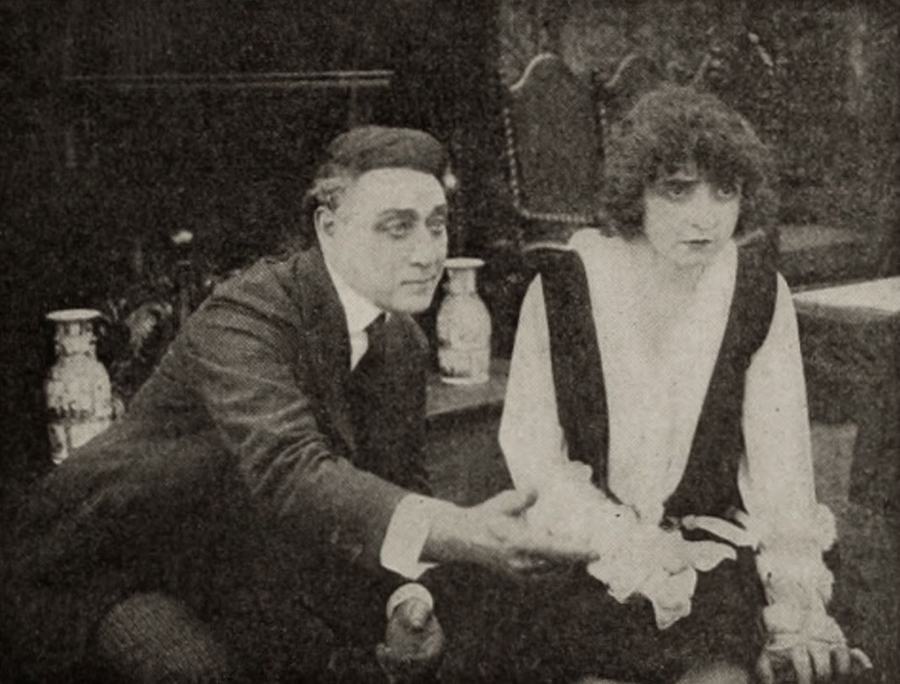
Although originally released without official score, contemporary exhibitors stitched together Wagner, Irving Berlin, and Civil War marches—whatever the orchestra pit could sight-read. The tonal whiplash oddly serves the narrative: horns of plenty collapsing into funeral dirges mirror the protagonist’s internal ticker. Modern restorations favor a through-composed motif that mutates from ragtime exuberance to atonal dread, culminating in a single piano chord held so long it feels like solvent dissolving celluloid.
Place The Conqueror beside The Upstart and you see two divergent odes to social scalping: both track parvenus toppling old money, yet where the latter relishes comeuppance, Barker’s film wallows in the aftertaste, suggesting conquest is merely self-cannibalization in a tuxedo.
Stack it against The Opium Runners and you detect a mirrored narcotic: instead of chasing poppy dreams, Horn mainlines liquidity, each margin call a spike in the vein. Meanwhile, His Wife offers the marital flipside—there, wealth is the dowry; here, it is the weapon.
Post-war audiences, still giddy on installment-plan prosperity, could treat Horn as avatar—proof that grit trumps pedigree. Yet the epilogue, in which he strokes a marriage certificate with the same rag he once used on boots, insinuates that class mobility is a Möbius strip. The rich devour the poor, the poor metastasize into nouveau riche, and the cycle reboots with fresh corpses.
35 mm elements survive in the Library of Congress paper-print collection, transferred at 18 fps with tinting extrapolated from Russian export reels. Kino’s 4K release adds a cyan sheen to night scenes, arguing that cyan is the color of speculative panic. Stream it onCriterion Channel or snag theMasters of Cinema Blu-ray which packs an audio essay by critic Moira Finnie that dissects Horn’s wardrobe palette as semaphore for liquidity ratios.
The Conqueror is less a moral lesson than a poisoned prospectus: buy low on vengeance, sell high on emptiness. Its genius lies in refusing catharsis; the last shot frames Horn against a curtained window whose pleats resemble balance-sheet columns. He’s won everything, yet the camera dollies back until he becomes another asset in the portfolio of history—an entry to be written off at the next market crash.
See it for the choreography of capital, for Margaret Thompson’s ocular sonnet, for Barker’s lesson that America will sell you the rope to hang your past—then charge interest on the noose.
IMDb 5.8
1926
Community
Log in to comment.